Rodents
Long-tailed chinchilla
chinchilla lanigera
IUCN Red ListEndangered
Audio guide
Listen to the story of this animal
0:000:00
Long-tailed chinchilla
- Description
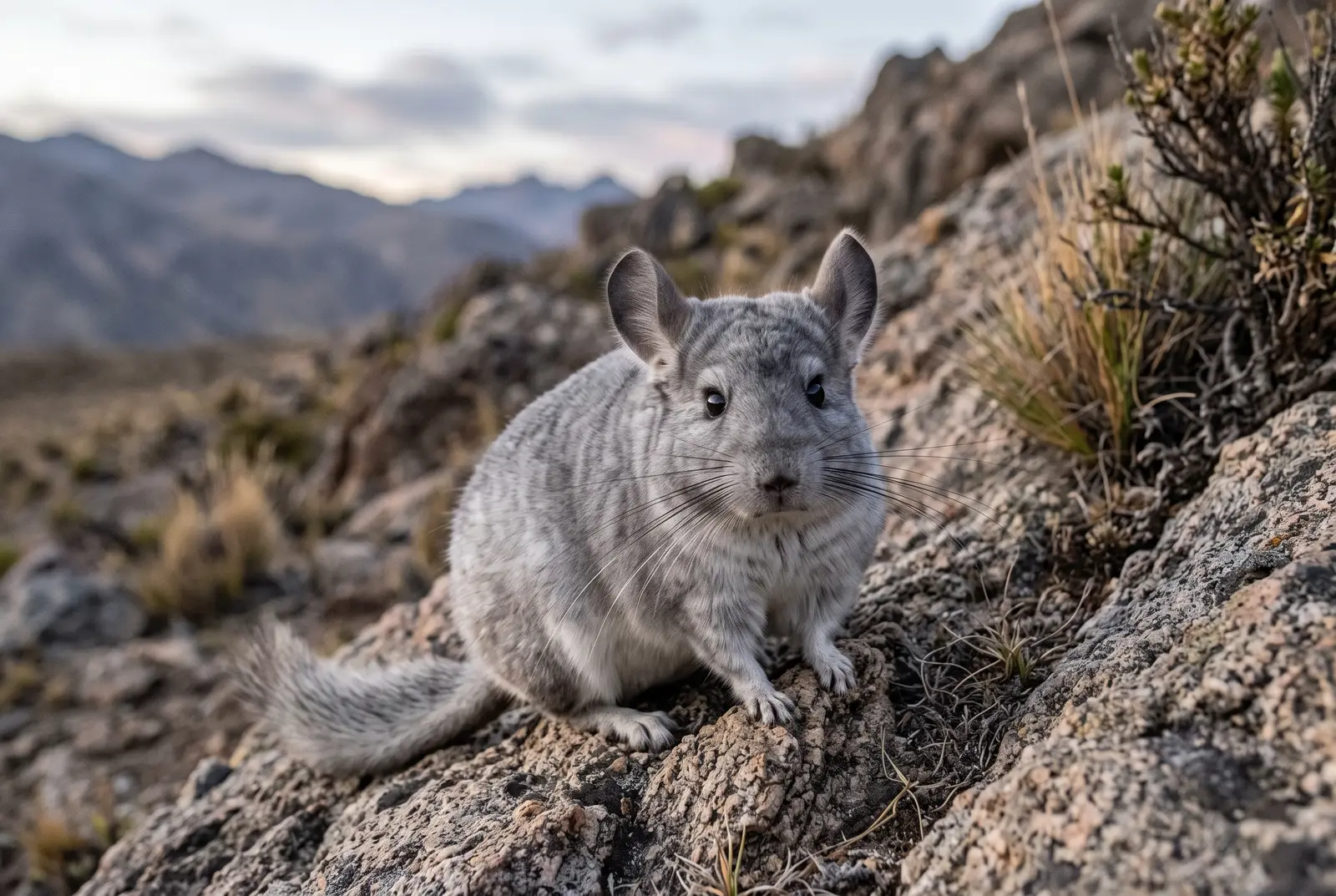
- The long-tailed chinchilla is a small rodent famous for having the densest fur of any land mammal, with more than fifty fine hairs growing from a single follicle. Its body measures about 22–38 cm, the bushy tail adds another 8–15 cm, and it weighs roughly 400–600 g, with females larger than males. It has large dark eyes, long whiskers, rounded ears and powerful hind legs built for leaping.
- Habitat
- It is native to the Andes of northern Chile, where it lives on rocky slopes and dry scrubland at altitudes of roughly 1,000–3,000 m. It shelters in rock crevices and burrows and lives socially in colonies that can number dozens of animals.
- Diet
- A herbivore, it feeds on grasses, herbs, seeds, leaves and fleshy cacti. It holds food in its front paws to nibble, and needs plenty of hay and coarse fibre for healthy digestion while avoiding moist foods.
- Reproduction
- Gestation is unusually long for a rodent, around 111 days. Females usually give birth to one to three well-developed young that are born furred, with open eyes and able to move about soon after birth, producing one or two litters a year.
- Lifespan
- Around 8–10 years in the wild, commonly 15 years in human care and occasionally over 20.
- Did you know?
- A chinchilla never bathes in water but rolls in fine volcanic dust; the dust bath cleans its coat and absorbs excess oils, because its dense fur would mat and grow mould if it ever became soaked.
Homeland & habitat
Where the long-tailed chinchilla lives
Spin the globe to see where the species comes from and where it lives today.
Northern Chile (Andes)The long-tailed chinchilla comes from the high Andes of northern Chile, where it inhabits rocky slopes and dry scrubland.
Loading globe…
Native range
Drag to rotate · double-click to recentre on the homeland
10 facts about the long-tailed chinchilla
The cards keep rotating — hover with your mouse to pause them.
- GroupRodentsHlodavci (Rodentia) · Činčilovití (Chinchillidae)
- Scientific namechinchilla lanigeraLatin name of the species
- Homeland & habitatPochází z vysokohorských And severního Chile, kde obývá skalnaté svahy a suché křovinaté stráně v nadmořských výškách zhruba 1 000–3 000 m. Ukrývá se ve skalních štěrbinách a norách a žije společensky v koloniích, které mohou čítat i desítky zvířat.
- DietBýložravec – živí se travami, bylinami, semeny, listy a dužnatými kaktusy. Potravu si přidržuje v předních tlapkách a okusuje ji; pro správné trávení potřebuje dostatek sena a hrubé vlákniny a nesmí přijímat příliš vlhkou stravu.
- ReproductionBřezost je na hlodavce neobvykle dlouhá, přibližně 111 dní. Samice rodí nejčastěji jedno až tři dobře vyvinutá mláďata, která přicházejí na svět osrstěná, s otevřenýma očima a brzy pohyblivá. Ročně mívá jeden až dva vrhy.
- LifespanV přírodě se dožívá kolem 8–10 let, v lidské péči běžně 15 let a výjimečně i přes 20 let.
- Conservation statusEndangeredAccording to the IUCN Red List
- Did you know…?Činčila se nekoupe ve vodě, ale v jemném sopečném prachu – popelová lázeň jí čistí srst a odstraňuje z ní přebytečný maz. Ve vlhku by se totiž její hustá srst zaplstila a začala plesnivět.
- Where in the zooArea A — aviaries and exhibits
- How many we keep♂ 1 · ♀ 0total: 1
Conservation status
Species vulnerability index
Least Concern
Near Threatened
Vulnerable
Endangered
Critically Endangered
Support the care of our animals
A symbolic adoption contributes to feeding, veterinary care and the development of the exhibits — and you get a certificate and updates about your animal.
Browse adoptions