Rodents
Red-rumped agouti
Dasyprocta leporina
Audio guide
Listen to the story of this animal
0:000:00
Red-rumped agouti
- Description
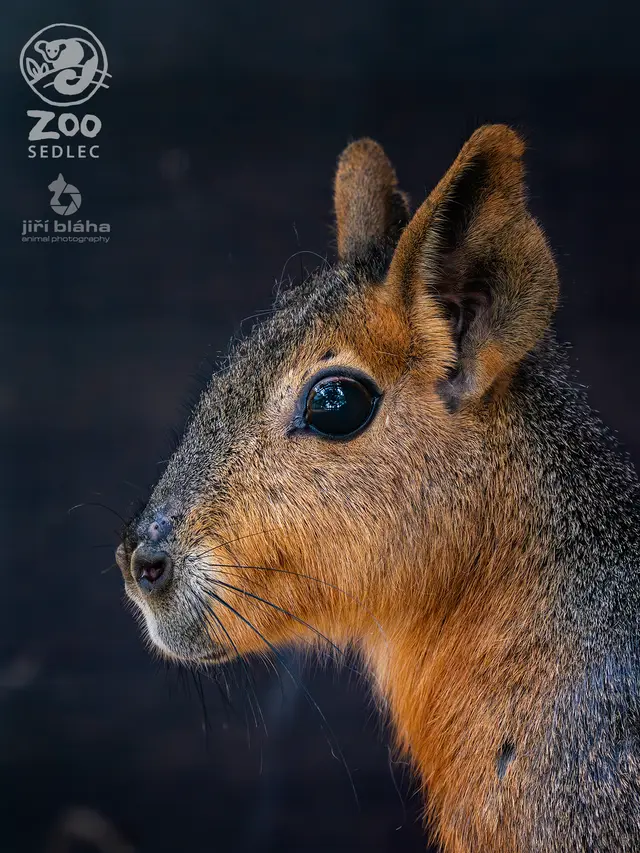
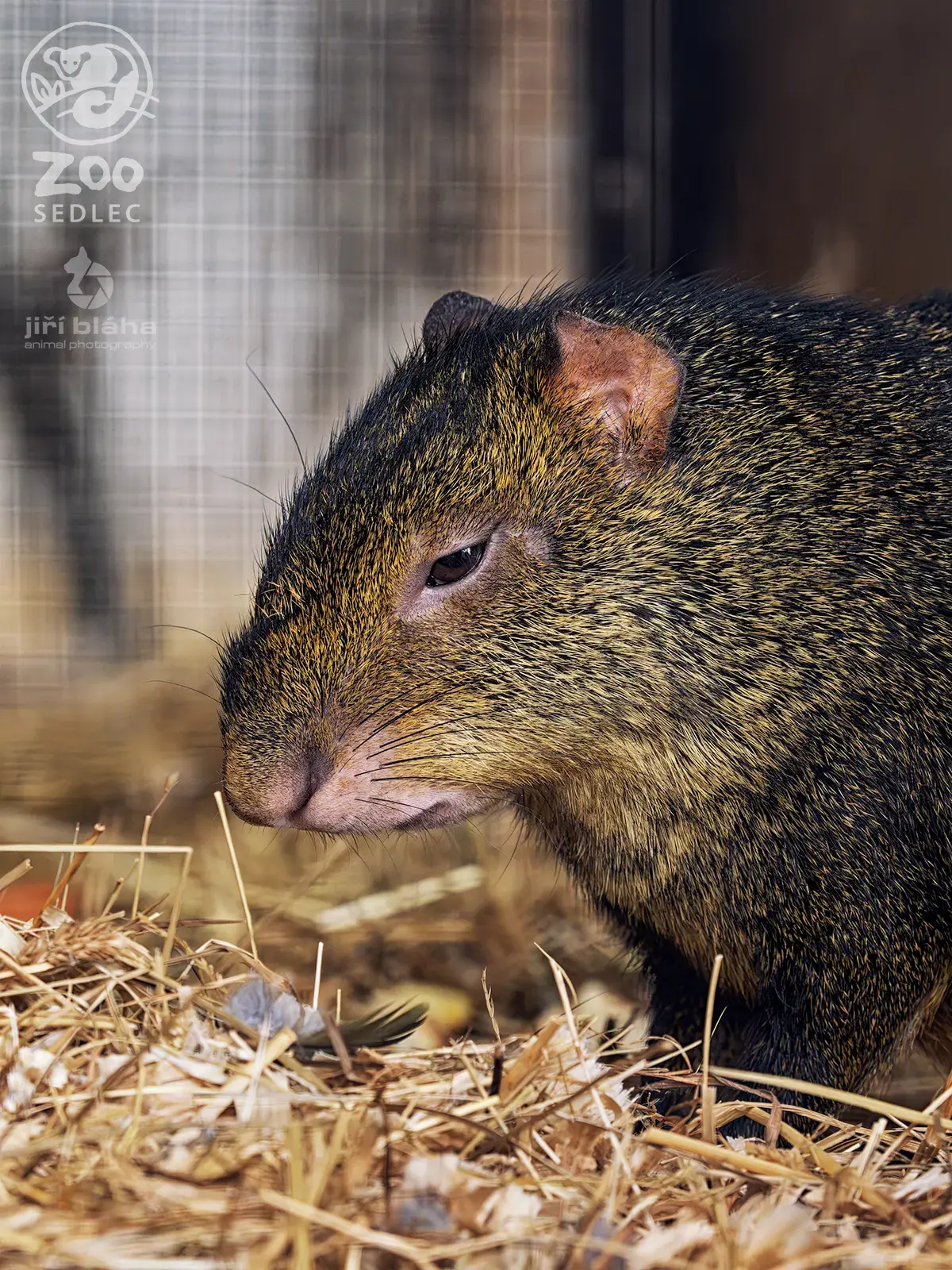
- The red-rumped agouti (also called golden-rumped agouti) is a medium-sized rodent with a compact, hare-like body set on long, slender legs. It measures roughly 48 to 64 cm in length and weighs about 3 to 6 kg. The head and shoulders are olive-brown with fine black speckling, while the rump glows in warm shades of orange to reddish-gold, giving the animal its name.
- Habitat
- This agouti is native to northeastern South America, ranging across Venezuela, Guyana, Suriname, French Guiana and northeastern Brazil, as well as the Caribbean islands of Trinidad and Tobago and Saint Lucia. It favours a variety of forest habitats, including tropical rainforest, secondary woodland and gallery forest, and often ventures into plantations and gardens.
- Diet
- Red-rumped agoutis are herbivores that feed mainly on fallen fruits, seeds and nuts, supplemented by leaves, roots and pulp. When plant food is scarce they will also take insect larvae. Like squirrels, they bury surplus seeds to eat later, which makes them important seed dispersers in tropical forests.
- Reproduction
- Females breed throughout the year and typically produce two litters annually, with no fixed breeding season. After a gestation of roughly 104 to 120 days, one to four well-developed young are born, already covered in fur and able to move about soon after birth.
- Lifespan
- In human care red-rumped agoutis can live around 15 to 20 years, though their lifespan in the wild is considerably shorter due to predators.
- Did you know?
- The agouti is one of the very few animals with teeth strong enough to gnaw open the woody pods of the Brazil nut tree, and the seeds it forgets after burying them help new trees grow.
Homeland & habitat
Where the red-rumped agouti lives
Spin the globe to see where the species comes from and where it lives today.
Northeastern South AmericaThe red-rumped agouti inhabits humid tropical forests of northeastern South America from Venezuela and the Guianas to northern and eastern Brazil, and was introduced by humans to the Lesser Antilles.
Loading globe…
Native rangeIntroduced / also today
Drag to rotate · double-click to recentre on the homeland
9 facts about the red-rumped agouti
The cards keep rotating — hover with your mouse to pause them.
- GroupRodents
- Scientific nameDasyprocta leporinaLatin name of the species
- Homeland & habitatV přírodě obývá severovýchodní Jižní Ameriku — Venezuelu, Guyanu, Francouzskou Guyanu, Surinam a severní a východní Brazílii; člověkem byl vysazen také na Malé Antily. Vyhledává vlhké tropické deštné lesy, ale žije i v galeriových lesích a na okrajích savan poblíž vody. Otevřeným plochám s řídkou vegetací se vyhýbá a přes den vyhledává úkryt v hustém porostu.
- DietŽiví se převážně rostlinnou potravou — hlavně opadanými plody a semeny, doplňuje ji o kořínky, listy a mladé výhonky. Přebytečná semena si ukrývá do půdy jako zásobu, na řadu z nich ale zapomene, a stává se tak důležitým šiřitelem lesních stromů. Občas přijme i drobné bezobratlé.
- ReproductionRozmnožuje se po celý rok, za příznivých podmínek i dvakrát ročně. Březost trvá přibližně 104–120 dní a samice rodí nejčastěji jedno až tři mláďata (obvykle dvě). Mláďata se rodí dobře vyvinutá, osrstěná a vidomá a matku opouštějí přibližně po dvaceti týdnech.
- LifespanV lidské péči se aguti zlatý dožívá vysokého věku, i více než 15 let. V přírodě je jeho život kvůli predátorům podstatně kratší.
- Did you know…?Aguti patří mezi mála zvířat, která svými ostrými hlodáky dokážou rozlousknout tvrdou skořápku plodů, například i para ořechů. Semena, jež si zahrabe do země a nestačí sníst, pak vyklíčí — díky tomu tento hlodavec pomáhá obnově deštného lesa.
- Where in the zooArea A — aviaries and exhibits
- How many we keep♂ 1 · ♀ 1total: 2
Adopting the red-rumped agouti helps far beyond the zoo
A symbolic adoption contributes to feeding, veterinary care and the development of the exhibits — and you get a certificate and updates about your animal.
Adopt: Red-rumped agouti