Farm animals
Kholmogory
anser anser f. domestica
Species originDomesticated
Audio guide
Listen to the story of this animal
0:000:00
Kholmogory
- Description
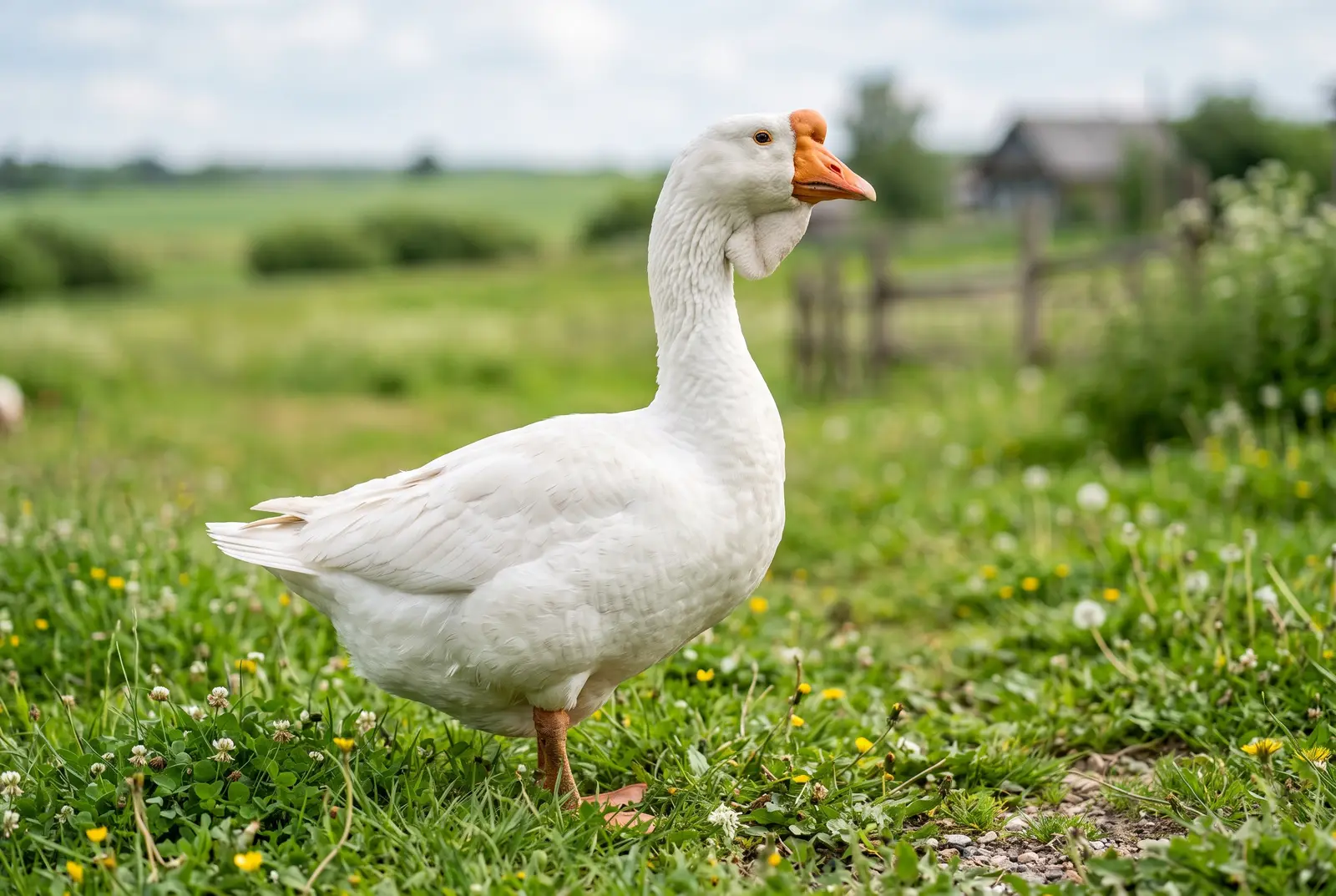
- The Kholmogory is one of the oldest and largest of the Russian goose breeds. Sturdy ganders reach 10 to 12 kg and geese 7 to 9 kg. Its hallmarks are a prominent knob at the base of the bill and a folded dewlap of skin under the throat; the plumage is usually white or grey-and-white pied.
- Habitat
- This is not a wild species but a domesticated breed kept on farms and smallholdings around the world. It was developed in the Kholmogory district of northern Russia and, like all domestic geese, descends from the wild greylag goose (Anser anser). Its hardiness lets it cope well with cold, harsh conditions.
- Diet
- A grazing herbivore feeding on grass, clover and other green plants, supplemented with grains, cereals and vegetables. On good pasture it can gather much of its own food simply by grazing.
- Reproduction
- A goose usually lays around 15 to 40 eggs over a season and incubates them for roughly 28 to 30 days. The breed is fairly prolific, and the parents attentively lead and defend their goslings.
- Lifespan
- Domestic geese are long-lived birds, commonly reaching 15 to 20 years and sometimes more with good care.
- Did you know?
- The forehead knob and throat dewlap that distinguish this breed develop fully only with age, so an older gander looks noticeably more imposing and 'ornamented' than a young bird.
Homeland & habitat
Where the kholmogory lives
Spin the globe to see where the species comes from and where it lives today.
Russia (Kholmogory region)An old Russian goose breed developed in the Kholmogory region of northern Russia and now kept on farms worldwide.
Loading globe…
Native range
Drag to rotate · double-click to recentre on the homeland
10 facts about the kholmogory
The cards keep rotating — hover with your mouse to pause them.
- GroupFarm animalsvrubozobí (Anseriformes) · kachnovití (Anatidae)
- Scientific nameanser anser f. domesticaLatin name of the species
- Homeland & habitatNejde o volně žijící druh, ale o domestikované plemeno chované na statcích a v drobnochovech po celém světě. Vzniklo v Cholmogorské oblasti na severu Ruska a stejně jako ostatní domácí husy pochází z divoké husy velké (Anser anser). Díky své otužilosti dobře snáší chladné a drsné podmínky.
- DietBýložravec spásající trávu, jetel a další zelené rostliny, doplňkově obiloviny, zrniny a zeleninu. Na dobré pastvě si velkou část potravy obstará sama.
- ReproductionHusa snáší obvykle 15 až 40 vajec za sezonu a sedí na nich přibližně 28 až 30 dní. Plemeno je poměrně plodné a rodiče své housata pečlivě vodí a brání.
- LifespanDomácí husy patří mezi dlouhověké ptáky – běžně se dožívají 15 až 20 let, při dobré péči i více.
- Conservation statusDomesticatedA domesticated form — not found in the wild
- Did you know…?Nápadná boule na čele a podbradní lalok se u tohoto plemene plně vyvinou až s věkem, takže starší houser působí výrazně mohutnějším a „vznešenějším“ dojmem než mladá zvířata.
- Where in the zooArea A — the farm animal yard
- How many we keep♂ 1 · ♀ 0total: 1
Support the care of our animals
A symbolic adoption contributes to feeding, veterinary care and the development of the exhibits — and you get a certificate and updates about your animal.
Browse adoptions