Farm animals
Sebastopol goose
anser anser f. domestica
Species originDomesticated
Audio guide
Listen to the story of this animal
0:000:00
Sebastopol goose
- Description
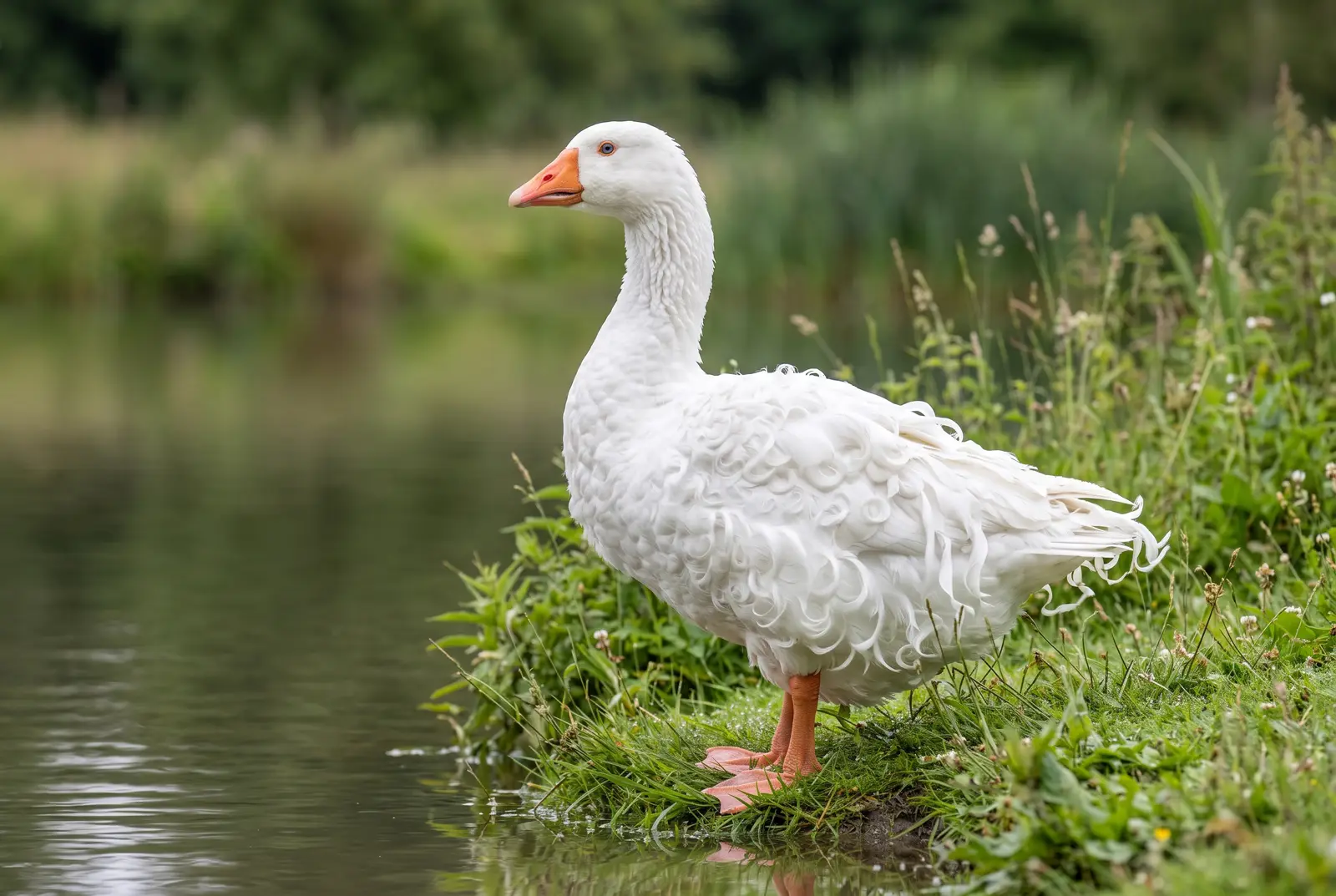
- The Sebastopol goose (husa kadeřavá) is a striking ornamental breed of domestic goose, instantly recognisable by its long, soft, curling feathers that spiral loosely over the body, wings and tail and in some birds almost trail on the ground. It is most often pure white with an orange bill and legs and vivid blue eyes, though grey and buff varieties also occur. It is a medium-heavy breed: ganders weigh roughly 5.5–7 kg and geese a little less, around 4.5–6 kg.
- Habitat
- The Sebastopol is not a wild species but a domesticated form of the greylag goose (Anser anser). The breed developed in south-eastern Europe around the Black Sea and the lower Danube, and takes its name from the Crimean port of Sevastopol. It spread to Western Europe in the mid-19th century and is today kept mainly for ornament and for exhibition. Because its soft, loose plumage offers little protection from cold and wet, it needs access to clean bathing water and a well-sheltered, insulated house in winter.
- Diet
- The Sebastopol goose is a herbivore. Its diet is based on grass, which it grazes throughout the day, supplemented with herbs, seeds, grain and aquatic plants; in captivity vegetables and waterfowl feed are added. Only occasionally does it take small animal matter.
- Reproduction
- A goose usually lays around 25–35 eggs per season and incubates the clutch for roughly 28–34 days. Sebastopol geese are reliable broody birds and attentive mothers. The goslings imprint readily after hatching, on their parent or even on their keeper, whom they then follow faithfully.
- Lifespan
- Geese are long-lived birds, and with good care a Sebastopol goose commonly reaches 15–25 years. Clean water and protection of the plumage from dirt are essential, as the long curls tangle and soil easily.
- Did you know?
- Because of its soft, twisted flight feathers the Sebastopol goose cannot fly – the feathers have lost the firm structure needed for flight and turned into decorative curls. That very trait makes it a popular, unflappable ornament for gardens and ponds, since it simply cannot fly away.
Homeland & habitat
Where the sebastopol goose lives
Spin the globe to see where the species comes from and where it lives today.
Southeastern Europe (Black Sea region)A domestic breed of the greylag goose with ornamental curly plumage, developed in south-eastern Europe around the Black Sea and the lower Danube.
Loading globe…
Native rangeIntroduced / also today
Drag to rotate · double-click to recentre on the homeland
10 facts about the sebastopol goose
The cards keep rotating — hover with your mouse to pause them.
- GroupFarm animalsVrubozobí · Kachnovití
- Scientific nameanser anser f. domesticaLatin name of the species
- Homeland & habitatHusa kadeřavá není volně žijící druh, ale zdomácnělá forma husy velké (Anser anser). Plemeno vzniklo v jihovýchodní Evropě v oblasti kolem Černého moře a dolního Dunaje a své jméno v mnoha jazycích dostalo podle krymského přístavu Sevastopol. Do západní Evropy se rozšířilo v polovině 19. století a dnes se chová hlavně pro okrasu a na výstavách. Kvůli jemnému, měkkému peří, které dobře nechrání před chladem a mokrem, potřebuje přístup k čisté vodě ke koupeli a v zimě zateplený přístřešek.
- DietHusa kadeřavá je býložravec. Základ potravy tvoří tráva, kterou spásá po celý den, doplněná bylinami, semeny, obilím a vodními rostlinami; v chovu se přidává i zelenina a krmná směs pro vodní drůbež. Živočišnou složku přijímá jen okrajově.
- ReproductionHusa snáší zpravidla 25–35 vajec za sezonu a na snůšce sedí přibližně 28–34 dní. Kadeřavé husy patří mezi spolehlivé sedavé matky, které o housata dobře pečují. Ta se po vylíhnutí snadno vtisknou na rodiče – nebo i na svého chovatele, kterého pak věrně následují.
- LifespanHusy patří mezi dlouhověké ptáky a v dobré péči se husa kadeřavá běžně dožívá 15–25 let. Zásadní je pro ni čistá voda a ochrana peří před znečištěním, protože dlouhé kadeře se snadno zamotají a ušpiní.
- Conservation statusDomesticatedA domesticated form — not found in the wild
- Did you know…?Husa kadeřavá kvůli svým měkkým, zkrouceným letkám nedokáže létat – peří ztratilo pevnou stavbu potřebnou k letu a proměnilo se v ozdobné kadeře. Právě proto je oblíbenou ozdobou zahrad a rybníčků: odletět totiž nemůže.
- Where in the zooArea A — the farm animal yard
- How many we keep♂ 2 · ♀ 4total: 6
Support the care of our animals
A symbolic adoption contributes to feeding, veterinary care and the development of the exhibits — and you get a certificate and updates about your animal.
Browse adoptions