Waterfowl
Lesser white-fronted goose
anser erythropus
IUCN Red ListVulnerable
Audio guide
Listen to the story of this animal
0:000:00
Lesser white-fronted goose
- Description
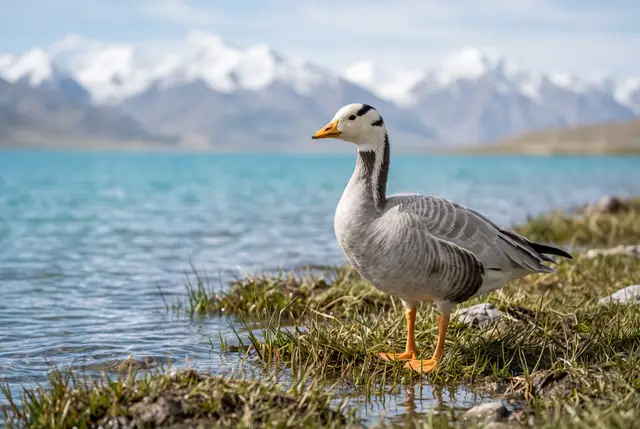
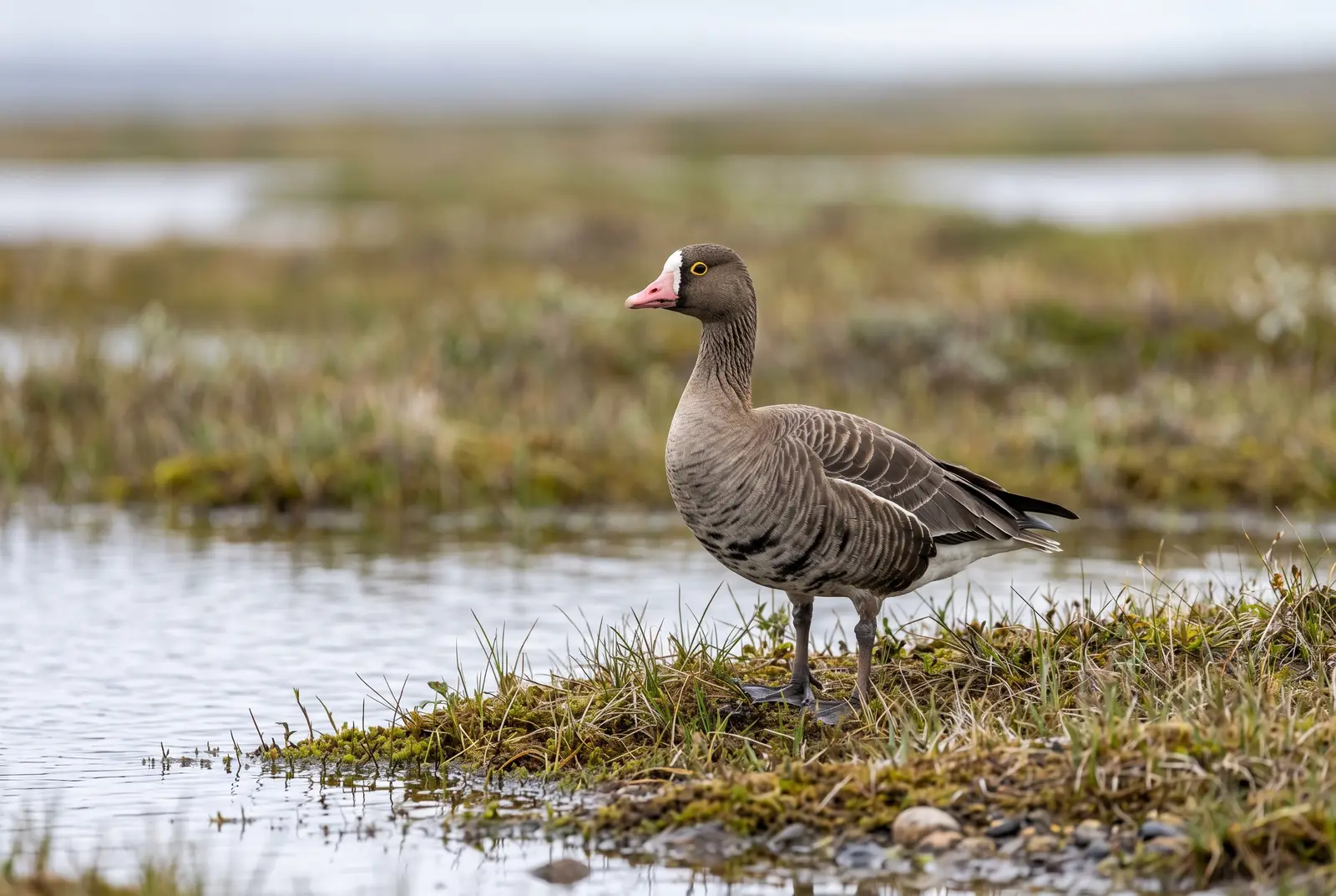
- The lesser white-fronted goose is the smallest of the 'grey geese' of the genus Anser, growing to just 53–66 cm with a wingspan close to 130 cm. It is best told apart from the similar greater white-fronted goose by its shorter pink bill, a bold white forehead blaze that reaches higher between the eyes, and a striking yellow ring around each eye. Small as it is, it is a tireless migrant that crosses thousands of kilometres each year between its Arctic breeding grounds and its southern wintering sites.
- Habitat
- It breeds on open Arctic and subarctic tundra, among low scrubby vegetation and on mountain slopes near the rivers and lakes of northern Scandinavia and Siberia. In winter it moves to steppe pastures, wetlands and the shores of shallow lakes in south-eastern Europe and Central Asia.
- Diet
- Almost entirely vegetarian, it grazes on grasses, sedges, herbs and fresh shoots, supplementing its diet with crop residues on farmland during the winter.
- Reproduction
- It forms faithful, long-lasting pairs. The female usually lays 4 to 6 eggs in a shallow, grass-lined nest on the ground and incubates them alone for about 25 to 28 days. Both parents tend the downy goslings, and the family stays together until the following spring.
- Lifespan
- Typically 15 to 20 years in the wild, and often longer under human care.
- Did you know?
- It is one of Europe's most endangered birds; captive-breeding and reintroduction projects help young geese learn their migration routes from foster flocks.
Homeland & habitat
Where the lesser white-fronted goose lives
Spin the globe to see where the species comes from and where it lives today.
Arctic tundra of northern EurasiaIt breeds on the Arctic tundra of northern Scandinavia and Siberia and winters in south-eastern Europe and Central Asia.
Loading globe…
Native range
Drag to rotate · double-click to recentre on the homeland
10 facts about the lesser white-fronted goose
The cards keep rotating — hover with your mouse to pause them.
- GroupWaterfowlvrubozobí (Anseriformes) · kachnovití (Anatidae)
- Scientific nameanser erythropusLatin name of the species
- Homeland & habitatHnízdí na otevřené arktické a subarktické tundře, v pásu nízké keříčkovité vegetace a na horských svazích poblíž řek a jezer severní Skandinávie a Sibiře. Zimu tráví na stepních pastvinách, v mokřadech a u mělkých jezer jihovýchodní Evropy a střední Asie.
- DietJe téměř výhradně býložravá. Spásá trávy, ostřice, byliny a čerstvé výhonky, na zimovištích si jídelníček doplňuje i posklizňovými zbytky na polích.
- ReproductionTvoří věrné, dlouhodobé páry. Samice snáší nejčastěji 4 až 6 vajec do mělkého, trávou vystlaného hnízda na zemi a sama je zahřívá zhruba 25 až 28 dnů. O vodivá mláďata pečují oba rodiče a rodina drží pohromadě až do následujícího jara.
- LifespanV přírodě zpravidla 15 až 20 let, v lidské péči i déle.
- Conservation statusVulnerableAccording to the IUCN Red List
- Did you know…?Patří k nejohroženějším ptákům Evropy — k jejímu návratu do skandinávské přírody pomáhají záchovné odchovy, při nichž se mladé husy učí správné tažné trasy od pěstounských hejn.
- Where in the zooArea A — the water-lily pond
- How many we keep♂ 1 · ♀ 0total: 1
Conservation status
Species vulnerability index
Least Concern
Near Threatened
Vulnerable
Endangered
Critically Endangered
Support the care of our animals
A symbolic adoption contributes to feeding, veterinary care and the development of the exhibits — and you get a certificate and updates about your animal.
Browse adoptions