Waterfowl
Cape Barren goose
cereopsis novaehollandiae
IUCN Red ListLeast Concern
Audio guide
Listen to the story of this animal
0:000:00
Cape Barren goose
- Description
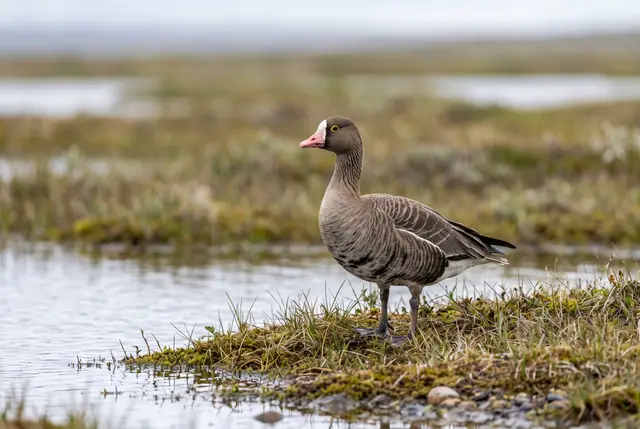
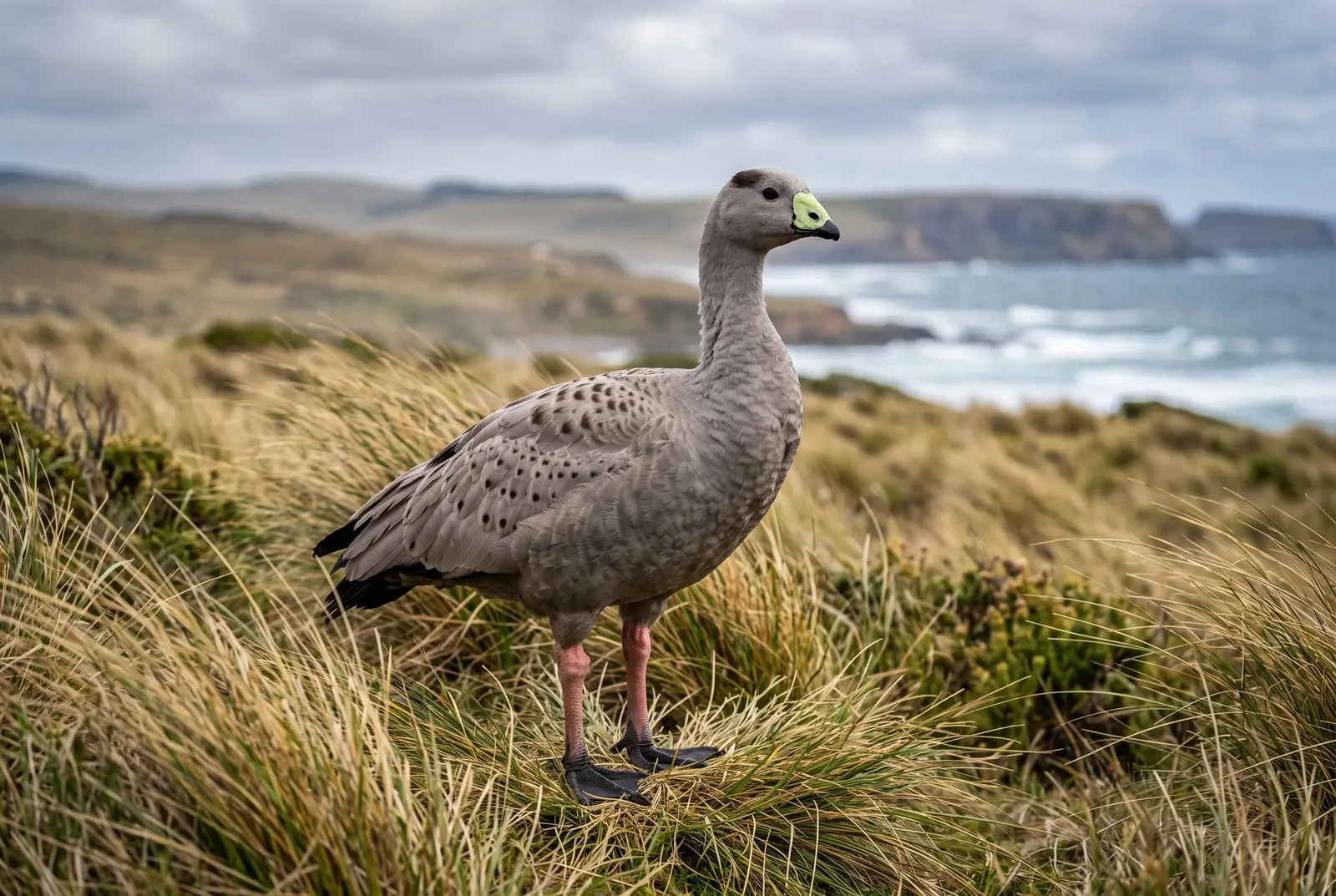
- The Cape Barren goose is a bulky, thickset goose with ash-grey plumage flecked with small dark spots across the wings, and a short black bill almost entirely hidden beneath a striking greenish-yellow cere. Its legs are pink with black webbed feet. It stands about 75–100 cm long and weighs 3 to 6 kg, with the gander a little larger than the goose. It is one of the most terrestrial of all geese and rarely takes to the water.
- Habitat
- It inhabits grassy coastal islands, dunes and pastures across southern Australia, especially the islands of the Bass Strait and off South and Western Australia. It spends most of its time on land grazing and seeks out quiet, predator-free islands on which to nest.
- Diet
- It is almost entirely herbivorous, grazing on grasses, herbs, sedges and young shoots and favouring legumes and green winter forage; on pasture it grazes for much of the day. It needs almost no fresh water, as salt glands in its head let it drink brackish and even salt water.
- Reproduction
- It breeds unusually in autumn and winter. The goose lays 4 to 6 creamy-white eggs in a grass-and-plant nest lined with down and incubates them for about 34 to 37 days while the gander fiercely guards the site. Both parents then lead the striped goslings.
- Lifespan
- In the wild it lives around ten years, while under good care in human hands it commonly reaches 20 years or more.
- Did you know?
- One of the rarest geese in the world, the Cape Barren goose can live on islands with no fresh water at all: special salt glands near the base of its bill excrete excess salt, so it can drink brackish or even sea water.
Homeland & habitat
Where the cape barren goose lives
Spin the globe to see where the species comes from and where it lives today.
Southern AustraliaThe Cape Barren goose lives on grassy coastal islands and pastures across southern Australia, especially on the islands of the Bass Strait.
Loading globe…
Native range
Drag to rotate · double-click to recentre on the homeland
10 facts about the cape barren goose
The cards keep rotating — hover with your mouse to pause them.
- GroupWaterfowlVrubozobí · Kachnovití
- Scientific namecereopsis novaehollandiaeLatin name of the species
- Homeland & habitatObývá travnaté pobřežní ostrovy, duny a pastviny na jihu Austrálie, především ostrovy v Bassově průlivu a při pobřeží Jižní a Západní Austrálie. Většinu času tráví na souši, kde spásá vegetaci, a k hnízdění vyhledává klidné ostrovy bez pozemních predátorů.
- DietJe téměř výhradně býložravá. Spásá trávy, byliny, ostřice a mladé výhonky, pochutná si na jetelovinách a zeleném zimním krmivu a ve výběhu tráví pastvou velkou část dne. Sladkou vodu skoro nepotřebuje – díky solným žlázám v hlavě dokáže pít i vodu brakickou a slanou.
- ReproductionHnízdí netypicky na podzim a v zimě. Husa snáší 4–6 krémově bílých vajec do hnízda z trávy a rostlin vystlaného prachovým peřím a sedí na nich asi 34–37 dní, zatímco houser hnízdo urputně brání. Pruhovaná housata pak vodí oba rodiče.
- LifespanVe volné přírodě se dožívá kolem deseti let, v lidské péči se při dobré péči běžně dožívá 20 let i více.
- Conservation statusLeast ConcernAccording to the IUCN Red List
- Did you know…?Husa kuří patří mezi nejvzácnější husy světa a dokáže žít i na ostrovech bez sladké vody – přebytečnou sůl vylučuje zvláštními žlázami u kořene zobáku, takže si vystačí i s vodou brakickou nebo mořskou.
- Where in the zooArea A — the water-lily pond
- How many we keep♂ 1 · ♀ 1total: 2
Conservation status
Species vulnerability index
Least Concern
Near Threatened
Vulnerable
Endangered
Critically Endangered
Support the care of our animals
A symbolic adoption contributes to feeding, veterinary care and the development of the exhibits — and you get a certificate and updates about your animal.
Browse adoptions