Farm animals
Pomeranian goose
anser anser f. domestica
Species originDomesticated
Audio guide
Listen to the story of this animal
0:000:00
Pomeranian goose
- Description
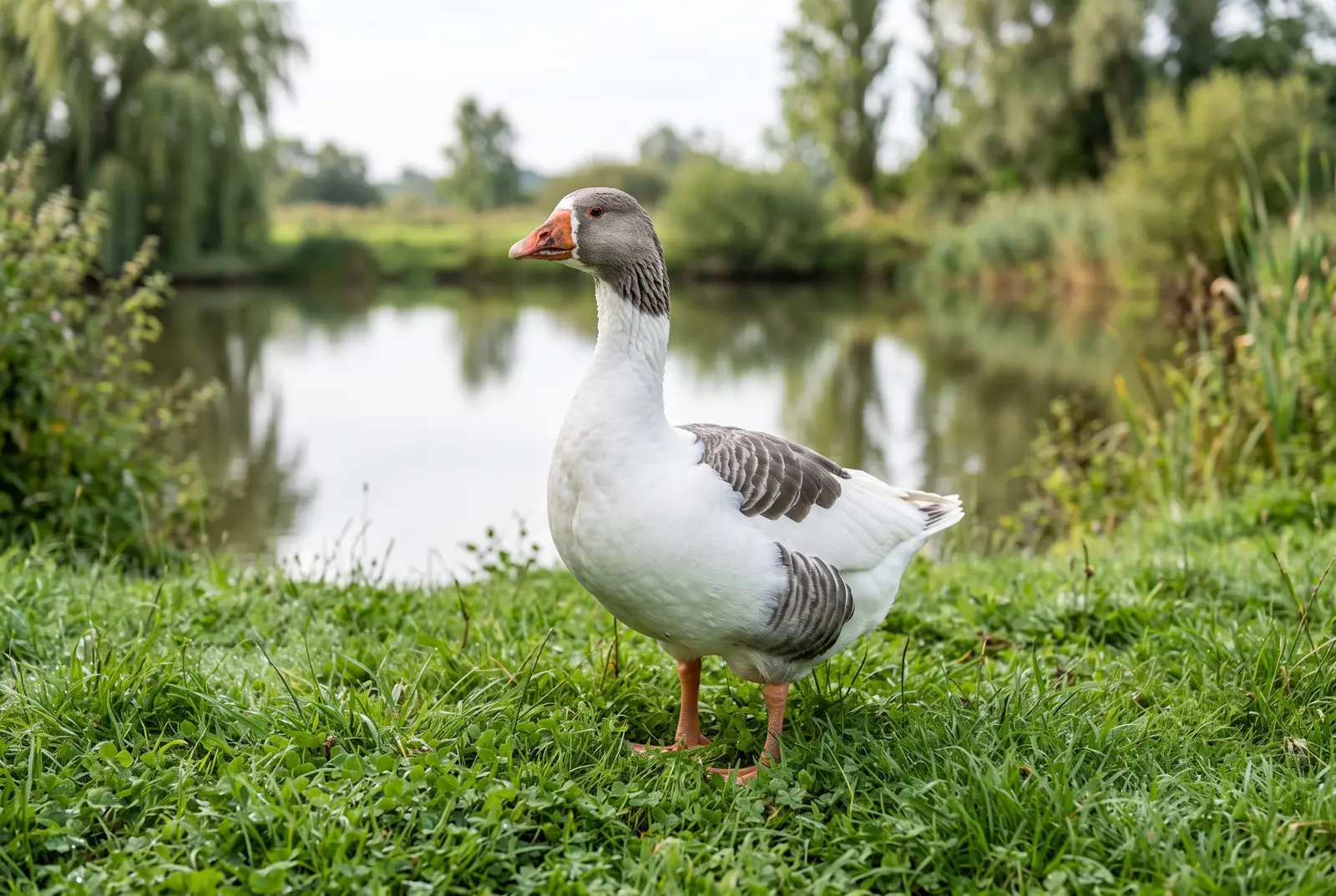
- The Pomeranian goose is an old German breed of domestic goose descended from the wild greylag. It is a medium-to-large breed, with ganders weighing around 6 to 8 kg and geese a little less. The best-known form is the saddleback, a white bird with grey or buff patches on the head and back, though solid white and solid grey birds also exist. Its reddish-orange bill and legs are striking, and unlike many breeds it carries only a single lobe of skin on the belly rather than a double one.
- Habitat
- A domesticated breed kept on farms and smallholdings, mainly across Central and Northern Europe. It does best on grassy pasture with access to a pond or other water where it can bathe and forage.
- Diet
- It grazes mostly on grass and herbs but also takes grain, vegetables and aquatic plants. Like most geese it is an excellent forager and finds much of its own food out on the range.
- Reproduction
- Breeding takes place in spring. A goose lays roughly 10 to 15 large white eggs and incubates them for about 28 to 31 days. Pairs bond strongly and both parents help raise the goslings.
- Lifespan
- Usually 15 to 20 years, occasionally longer.
- Did you know?
- In Germany it is traditionally tied to the 'Martinsgans', the roast goose eaten on St. Martin's Day; today it is also listed as an endangered livestock breed.
Homeland & habitat
Where the pomeranian goose lives
Spin the globe to see where the species comes from and where it lives today.
Pomerania (Germany and Poland)An old German goose breed developed in the coastal Pomerania region on the Baltic Sea, now kept across Central and Northern Europe.
Loading globe…
Native rangeIntroduced / also today
Drag to rotate · double-click to recentre on the homeland
10 facts about the pomeranian goose
The cards keep rotating — hover with your mouse to pause them.
- GroupFarm animalsvrubozobí (Anseriformes) · kachnovití (Anatidae)
- Scientific nameanser anser f. domesticaLatin name of the species
- Homeland & habitatDomestikované plemeno chované na farmách a menších hospodářstvích, především ve střední a severní Evropě. Potřebuje pastvinu s trávou a přístup k vodní ploše, kde se koupe a shání potravu.
- DietPřevážně spásá trávu a byliny, přijímá ale i obiloviny, zeleninu a vodní rostliny. Jako většina hus je vynikající pastevec a velkou část potravy si obstará sama na výběhu.
- ReproductionRozmnožuje se na jaře. Husa snáší přibližně 10 až 15 velkých bílých vajec, na kterých sedí zhruba 28 až 31 dní. Páry drží pevně pohromadě a o housata se rodiče starají společně.
- LifespanObvykle 15 až 20 let, výjimečně i více.
- Conservation statusDomesticatedA domesticated form — not found in the wild
- Did you know…?V Německu je tradičně spojována s martinskou husou – pečení husy na svátek svatého Martina. Zároveň je dnes vedena jako ohrožené plemeno hospodářských zvířat.
- Where in the zooArea A — the farm animal yard
- How many we keep♂ 1 · ♀ 1total: 2
Support the care of our animals
A symbolic adoption contributes to feeding, veterinary care and the development of the exhibits — and you get a certificate and updates about your animal.
Browse adoptions