Farm animals
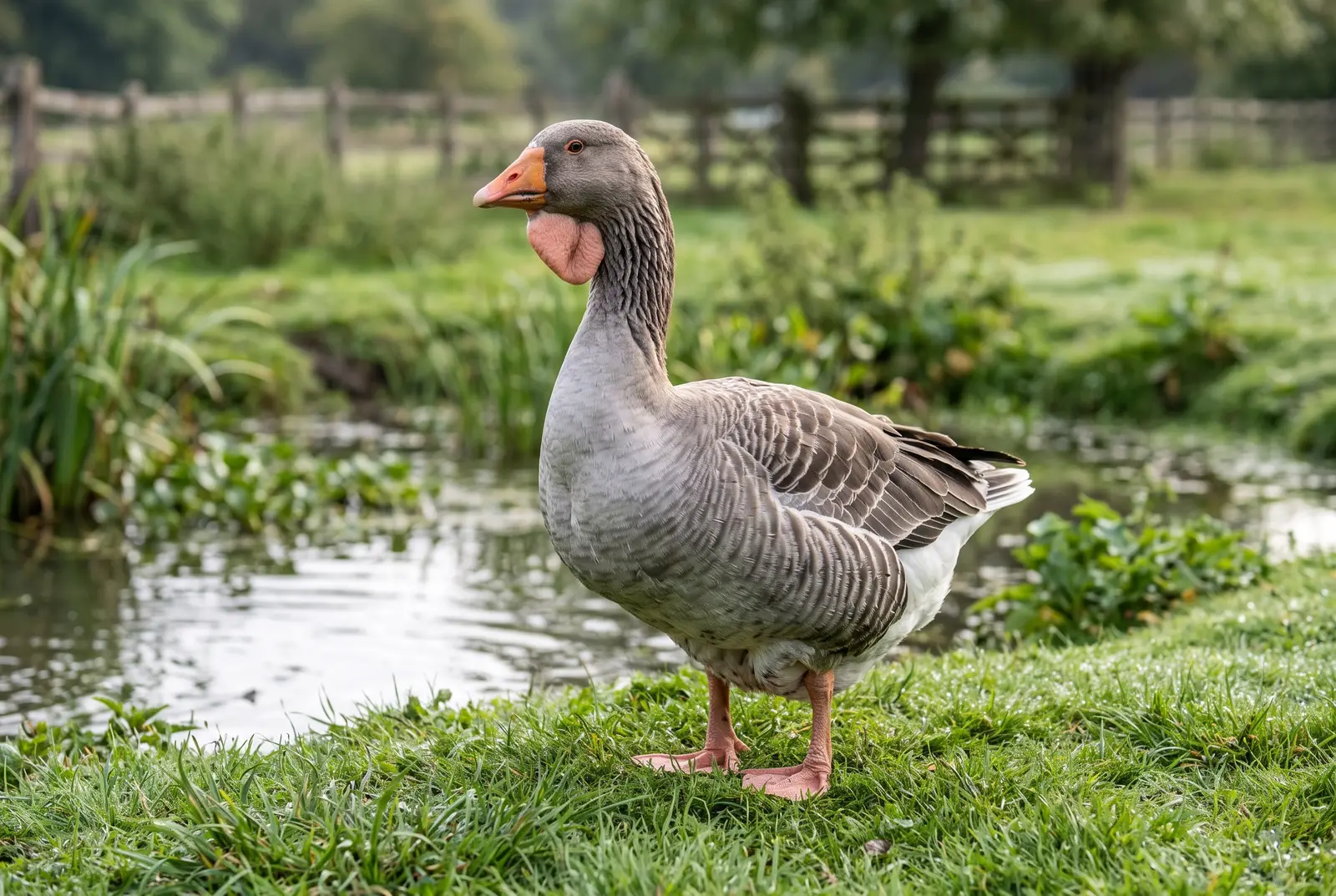
Toulouse goose
anser anser f. domestica
Species originDomesticated
Audio guide
Listen to the story of this animal
0:000:00
Toulouse goose
- Description
- The Toulouse goose is one of the heaviest domestic goose breeds, developed around the city of Toulouse in south-western France. Calm and slow-moving, it wears grey plumage and, in exhibition strains, a pronounced dewlap beneath the bill and a deep abdominal keel. It is kept for meat, liver and ornament.
- Habitat
- A domestic breed derived from the wild greylag goose. It lives on farmyards, smallholdings and in breeding collections with access to grass, shallow water and shelter.
- Diet
- A herbivore that grazes grass and herbs, supplemented with grain, vegetables and pellets; it needs small grit to help digestion.
- Reproduction
- A goose lays roughly 20 to 40 large white eggs a year, with incubation lasting about 30 days. Heavy exhibition strains are less fertile and often struggle to hatch eggs naturally.
- Lifespan
- Usually 15 to 20 years, occasionally longer.
- Did you know?
- The fatty liver of Toulouse geese was historically a foundation of French foie gras, and the heaviest show birds carry such a deep dewlap that they are nicknamed giant Toulouse geese.
Homeland & habitat
Where the toulouse goose lives
Spin the globe to see where the species comes from and where it lives today.
Toulouse, southern FranceA domestic goose breed developed around Toulouse in France and now kept worldwide.
Loading globe…
Native rangeIntroduced / also today
Drag to rotate · double-click to recentre on the homeland
10 facts about the toulouse goose
The cards keep rotating — hover with your mouse to pause them.
- GroupFarm animalsVrubozobí · Kachnovití
- Scientific nameanser anser f. domesticaLatin name of the species
- Homeland & habitatDomácí plemeno odvozené od divoké husy velké. Žije na dvorcích, farmách a v chovatelských kolekcích, kde má přístup k pastvě, mělké vodě a úkrytu.
- DietBýložravec. Spásá trávu a byliny, krmivo doplňuje obilím, zeleninou a granulemi; k trávení potřebuje drobný písek (grit).
- ReproductionHusa snáší přibližně 20 až 40 velkých bílých vajec za rok, sezení trvá kolem 30 dnů. Těžké výstavní typy bývají méně plodné a hůře se u nich daří přirozené líhnutí.
- LifespanZpravidla 15 až 20 let, výjimečně i více.
- Conservation statusDomesticatedA domesticated form — not found in the wild
- Did you know…?Tučná játra tuluských hus byla historicky jedním ze základů francouzské foie gras a nejtěžší výstavní ptáci mají tak hluboký lalok, že se jim přezdívá obří tuluská husa.
- Where in the zooArea A — the farm animal yard
- How many we keep♂ 1 · ♀ 0total: 1
Support the care of our animals
A symbolic adoption contributes to feeding, veterinary care and the development of the exhibits — and you get a certificate and updates about your animal.
Browse adoptions