Farm animals
Cayuga
anas platyrhynchos f. domestica
Species originDomesticated
Cayuga
- Description
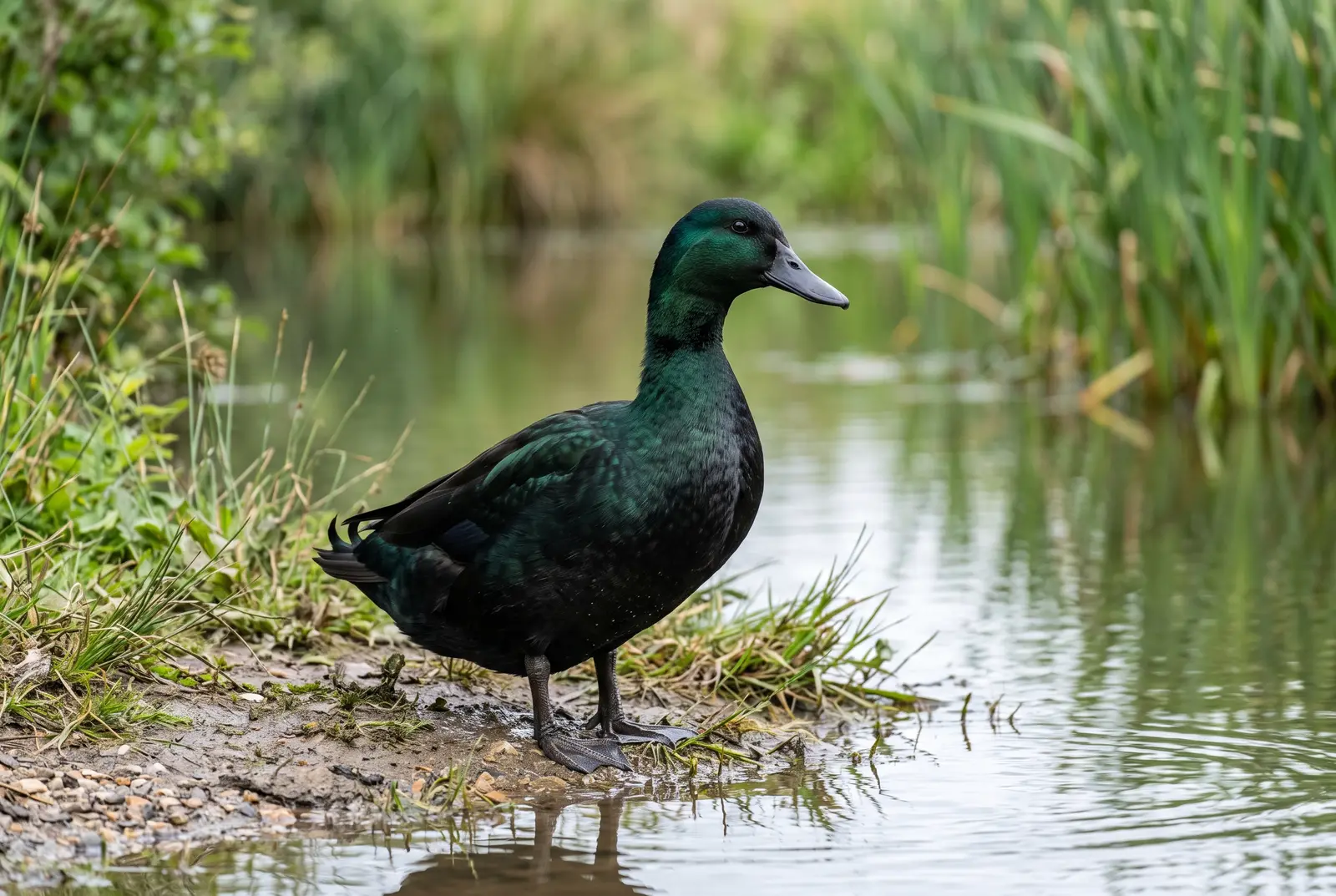
- The Cayuga, sometimes called the emerald duck, is a sturdy domestic breed derived from the mallard. Drakes weigh around 3.5 kg and ducks about 3 kg. The whole body is covered in black plumage with a striking metallic-green (beetle-green) sheen that gives the breed its name, while the bill and legs are dark. Older females often turn increasingly white, developing patches of white feathers with age.
- Habitat
- As a domestic breed it is kept worldwide on farms, in gardens and in zoo parks. It thrives near water and needs a pond or basin where it can dabble, splash and preen its feathers.
- Diet
- Omnivorous. It grazes on grass and aquatic plants, gathers seeds and grain, and readily hunts insects, slugs, snails and worms, making it a useful controller of garden pests.
- Reproduction
- A hen lays roughly 100–150 eggs a year; the first eggs of the season are dark grey to almost black and gradually lighten as laying continues. She incubates them for about 28 days and is usually an attentive mother.
- Lifespan
- Typically 8–12 years.
- Did you know?
- The breed is named after Lake Cayuga in New York State and is one of the few duck breeds developed in the United States. It is notably cold-hardy and calm in temperament.
Homeland & habitat
Where the cayuga lives
Spin the globe to see where the species comes from and where it lives today.
North America (USA)The Cayuga is a domestic breed of the mallard developed in the mid-19th century in the Finger Lakes region of New York State and now kept worldwide.
Loading globe…
Native rangeIntroduced / also today
Drag to rotate · double-click to recentre on the homeland
10 facts about the cayuga
The cards keep rotating — hover with your mouse to pause them.
Support the care of our animals
A symbolic adoption contributes to feeding, veterinary care and the development of the exhibits — and you get a certificate and updates about your animal.
Browse adoptions