Farm animals
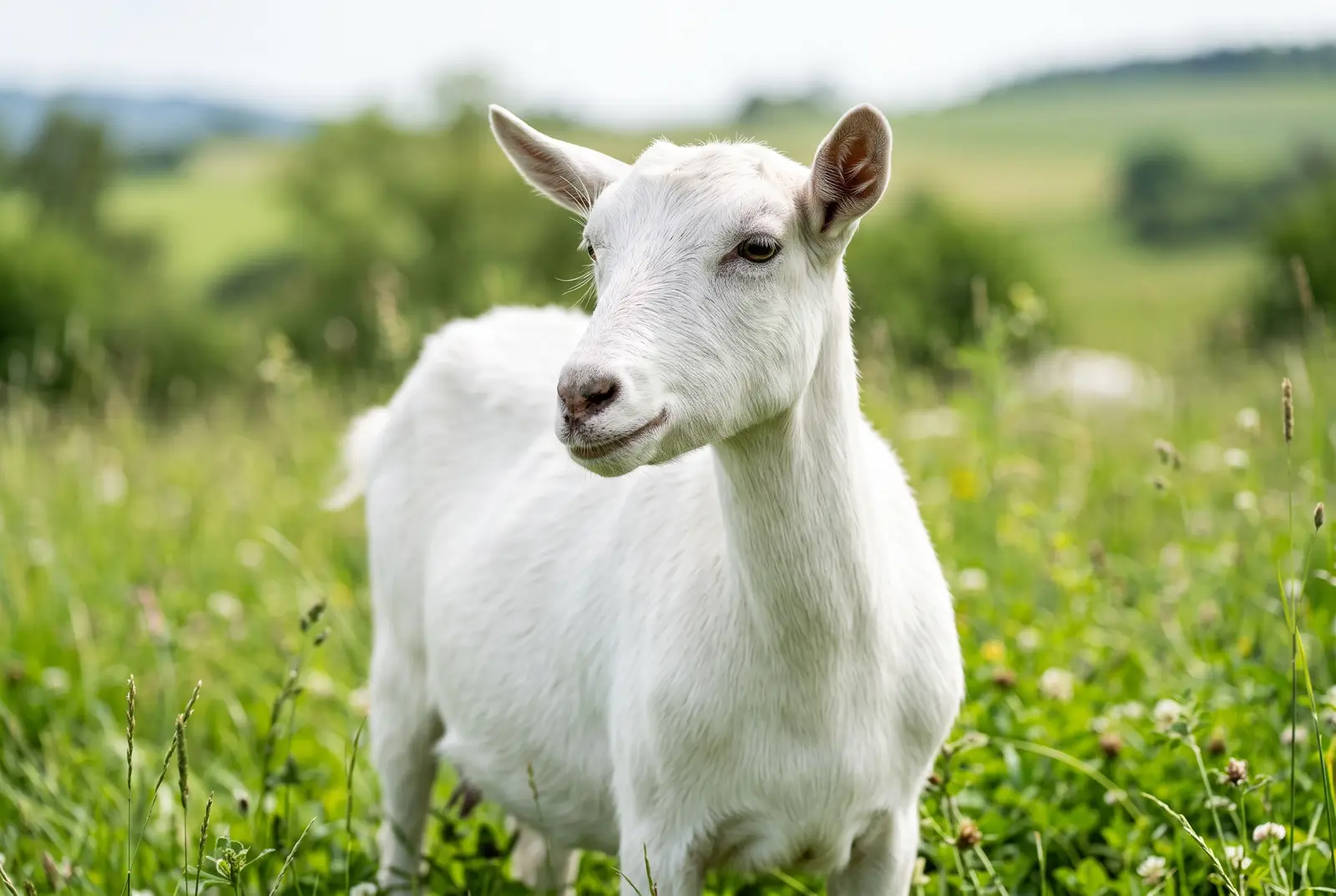
Czech White Shorthaired goat
capra aegagrus f. hircus
Species originDomesticated
Audio guide
Listen to the story of this animal
0:000:00
Czech White Shorthaired goat
- Description
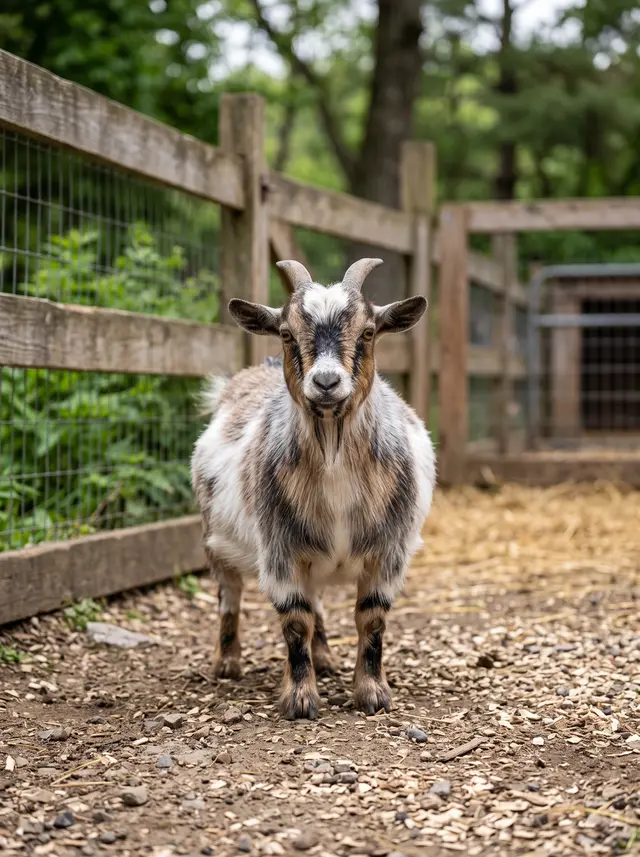
- The Czech White Shorthaired goat (also called the white domestic goat) is a medium-to-large dairy breed with a pure white, short and smooth coat. Does weigh 50–65 kg and bucks over 80 kg, standing around 70–85 cm at the withers. Most animals are naturally polled (hornless), with a fine head, a straight facial profile and often small skin tassels, known as wattles, on the neck. The breed is valued for its friendly, curious temperament and high milk yield.
- Habitat
- A domesticated breed kept on farms, smallholdings and petting zoos across Czechia and Central Europe. Its wild ancestor, the bezoar goat, inhabits rocky mountain slopes of the Near East.
- Diet
- A herbivore that browses grass, herbs, leaves, twigs and hay, and readily takes vegetables, fruit and grain feed.
- Reproduction
- Gestation lasts about 150 days. Does usually give birth to 1–3 kids, with twins being common; the young are lively and playful soon after birth.
- Lifespan
- Around 10–15 years in good conditions.
- Did you know?
- It is one of the most productive Czech dairy breeds — a good doe can yield over 800 litres of milk in a single lactation.
Homeland & habitat
Where the czech white shorthaired goat lives
Spin the globe to see where the species comes from and where it lives today.
CzechiaThe Czech White Shorthaired goat is a dairy breed developed in the Czech lands in the early 20th century and now kept on farms across Czechia and Central Europe.
Loading globe…
Native rangeIntroduced / also today
Drag to rotate · double-click to recentre on the homeland
10 facts about the czech white shorthaired goat
The cards keep rotating — hover with your mouse to pause them.
- GroupFarm animalsSudokopytníci · Turovití
- Scientific namecapra aegagrus f. hircusLatin name of the species
- Homeland & habitatDomestikované plemeno chované na farmách, statcích a v kontaktních zoo po celém Česku a ve střední Evropě. Jeho divoký předek, koza bezoárová, obývá skalnaté horské svahy Přední Asie.
- DietBýložravec – spásá trávu, byliny, listy, větvičky a seno; ochotně přijímá také zeleninu, ovoce a jadrné krmivo.
- ReproductionBřezost trvá přibližně 150 dní. Koza rodí nejčastěji 1–3 kůzlata, běžná jsou dvojčata; mláďata jsou krátce po narození čilá a hravá.
- LifespanV dobrých podmínkách se dožívá 10–15 let.
- Conservation statusDomesticatedA domesticated form — not found in the wild
- Did you know…?Patří k nejmléčnějším českým plemenům – dobrá dojnice nadojí za jednu laktaci klidně přes 800 litrů mléka.
- Where in the zooArea A — the farm animal yard
- How many we keep♂ 1 · ♀ 2 · 2 youngtotal: 5
Support the care of our animals
A symbolic adoption contributes to feeding, veterinary care and the development of the exhibits — and you get a certificate and updates about your animal.
Browse adoptions