Farm animals
Angora rabbit
Oryctolagus cuniculus f. domesticus
Species originDomesticated
Angora rabbit
- Description
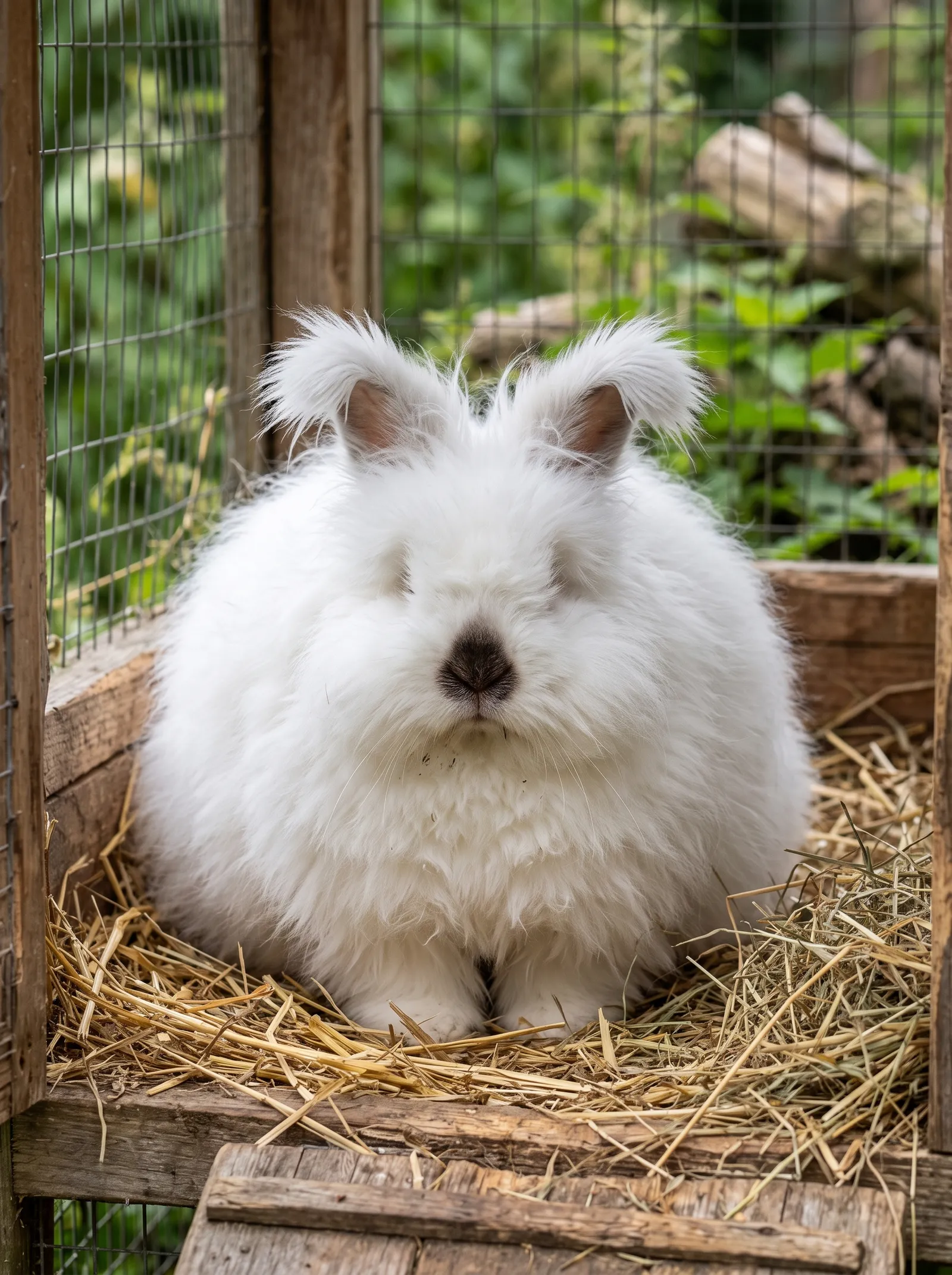
- A breed kept for its long, fine wool. The coat grows continuously at some two centimetres a month and, left unshorn, reaches twenty-five centimetres, so the animal resembles a furry ball from which only the nose and ear tips protrude. Depending on the variety — English, French, satin or giant — an adult weighs 2.5 to 5 kg.
- Habitat
- A domestic breed that does not occur in the wild. It comes from the area of present-day Ankara in Türkiye, reached France in the 18th century and spread from there across Europe.
- Diet
- A herbivore with the same needs as other rabbits: hay, grass, herbs, vegetables and pellets. It needs even more fibre than other breeds — while grooming it swallows a good deal of wool, which can ball up in its digestive tract.
- Reproduction
- Gestation lasts about 31 days and a litter holds 4–8 young. They are born naked and blind; the characteristic long coat only starts to show after several weeks.
- Lifespan
- 7–12 years.
- Did you know?
- The wool is clipped three or four times a year and yields between 250 grams and a full kilogram per rabbit annually. Clipping is not a breeder's whim but a necessity — an unshorn coat mats and the animal suffers in it.
Homeland & habitat
Where the angora rabbit lives
Spin the globe to see where the species comes from and where it lives today.
Ankara (Türkiye)The breed comes from the area of present-day Ankara in Türkiye and spread across Europe via France in the 18th century. It is kept for its long, fine wool.
Loading globe…
Native rangeIntroduced / also today
Drag to rotate · double-click to recentre on the homeland
9 facts about the angora rabbit
The cards keep rotating — hover with your mouse to pause them.
- GroupFarm animalsZajíci (Lagomorpha) · Zajícovití (Leporidae)
- Scientific nameOryctolagus cuniculus f. domesticusLatin name of the species
- Homeland & habitatDomácí plemeno, ve volné přírodě se nevyskytuje. Pochází z oblasti dnešní turecké Ankary, odkud se v 18. století dostalo do Francie a odtud do zbytku Evropy.
- DietBýložravec se stejnými nároky jako ostatní králíci: seno, tráva, byliny, zelenina a granule. Vlákniny potřebuje ještě víc než jiná plemena — při čištění srsti spolyká hodně vlny a ta se mu může v trávicím traktu shluknout.
- ReproductionBřezost trvá přibližně 31 dní, ve vrhu bývá 4–8 mláďat. Rodí se holá a slepá; typická dlouhá srst se začne projevovat až po několika týdnech.
- Lifespan7–12 let.
- Conservation statusDomesticatedA domesticated form — not found in the wild
- Did you know…?Vlna se stříhá třikrát až čtyřikrát ročně a z jednoho králíka jí za rok padne 250 gramů až celý kilogram. Stříhání není libůstka chovatele, ale nutnost — nestříhaná srst se splstnatí a zvíře v ní trpí.
- Where in the zooArea A — the farm animal yard
Support the care of our animals
A symbolic adoption contributes to feeding, veterinary care and the development of the exhibits — and you get a certificate and updates about your animal.
Browse adoptions