Farm animals
Dwarf rabbit
Oryctolagus cuniculus f. domesticus
Species originDomesticated
Dwarf rabbit
- Description
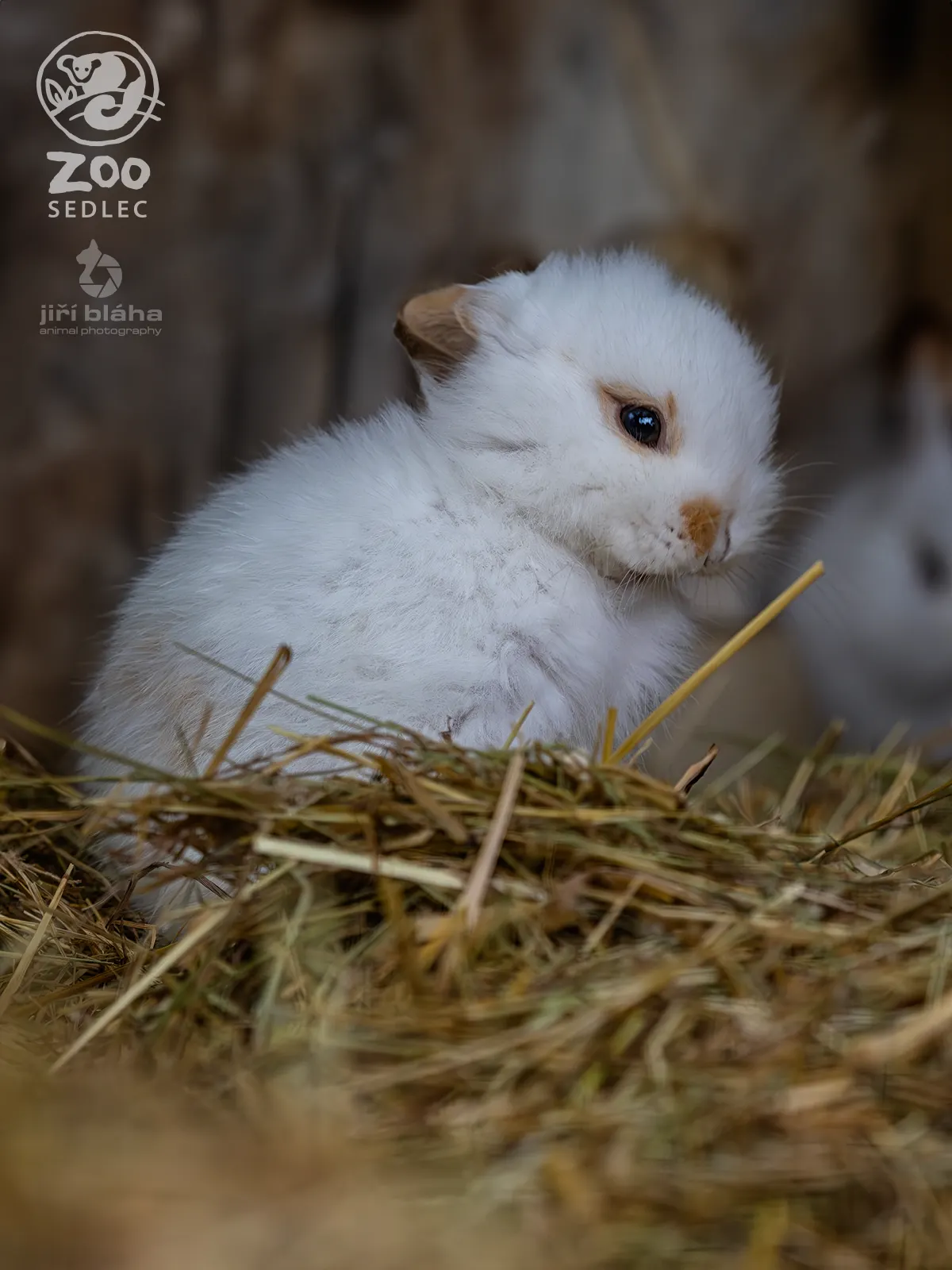
- The smallest of the kept rabbits. An adult usually weighs 1–1.5 kg and has a stocky body with a broad chest, a short neck and a strikingly round head with large eyes. The ears are short and upright, only 5–7 cm long. The coat is dense and soft and is recognised in dozens of colour varieties.
- Habitat
- A domestic breed that does not live in the wild. Its ancestor is the wild rabbit of the western Mediterranean. Dwarf breeds were developed in the Netherlands in the 20th century and quickly spread worldwide as pets and show animals.
- Diet
- A herbivore. The staple is good hay, which must always be available, supplemented by fresh grass, herbs and vegetables. Rabbit pellets are added; fruit is given only occasionally as a treat.
- Reproduction
- Gestation lasts about 31 days. A litter holds 2–5 young, fewer than in the large breeds. They are born naked and blind, weighing some 30–40 g, and are weaned at around two months.
- Lifespan
- 8–12 years with good care; small rabbit breeds generally live longer than large ones.
- Did you know?
- A rabbit's teeth grow continuously throughout its life, by roughly two millimetres a week. They are worn down mainly by long chewing of hay — which is exactly why hay must always be within reach, or the teeth overgrow.
Homeland & habitat
Where the dwarf rabbit lives
Spin the globe to see where the species comes from and where it lives today.
The NetherlandsDwarf rabbit breeds were developed in the Netherlands in the 20th century from the wild rabbit native to the western Mediterranean. The breed does not live in the wild.
Loading globe…
Native rangeIntroduced / also today
Drag to rotate · double-click to recentre on the homeland
10 facts about the dwarf rabbit
The cards keep rotating — hover with your mouse to pause them.
- GroupFarm animalsZajíci (Lagomorpha) · Zajícovití (Leporidae)
- Scientific nameOryctolagus cuniculus f. domesticusLatin name of the species
- Homeland & habitatDomácí plemeno, které ve volné přírodě nežije. Jeho předkem je králík divoký ze západního Středomoří. Zakrslá plemena vznikla ve 20. století v Nizozemsku a rychle se rozšířila po celém světě jako společenská a výstavní zvířata.
- DietBýložravec. Základem je kvalitní seno, které musí mít stále k dispozici, doplněné čerstvou trávou, bylinami a zeleninou. Přidávají se granule určené králíkům, ovoce se podává jen výjimečně jako pamlsek.
- ReproductionBřezost trvá přibližně 31 dní. Ve vrhu bývají 2–5 mláďat, tedy méně než u velkých plemen. Rodí se holá a slepá, o hmotnosti kolem 30–40 g, a odstavují se zhruba do dvou měsíců.
- LifespanPři dobré péči se dožívá 8–12 let; drobná plemena králíků se obecně dožívají vyššího věku než velká.
- Conservation statusDomesticatedA domesticated form — not found in the wild
- Did you know…?Králičí zuby rostou nepřetržitě po celý život, zhruba dva milimetry týdně. Obrušují se hlavně dlouhým žvýkáním sena — a právě proto ho králík musí mít stále po ruce, jinak mu zuby přerostou.
- Where in the zooArea A — the farm animal yard
- How many we keep♂ 2 · ♀ 2 · 2 youngtotal: 6
Support the care of our animals
A symbolic adoption contributes to feeding, veterinary care and the development of the exhibits — and you get a certificate and updates about your animal.
Browse adoptions