Farm animals
Domestic turkey
meleagris gallopavo f. domestica
Species originDomesticated
Audio guide
Listen to the story of this animal
0:000:00
Domestic turkey
- Description
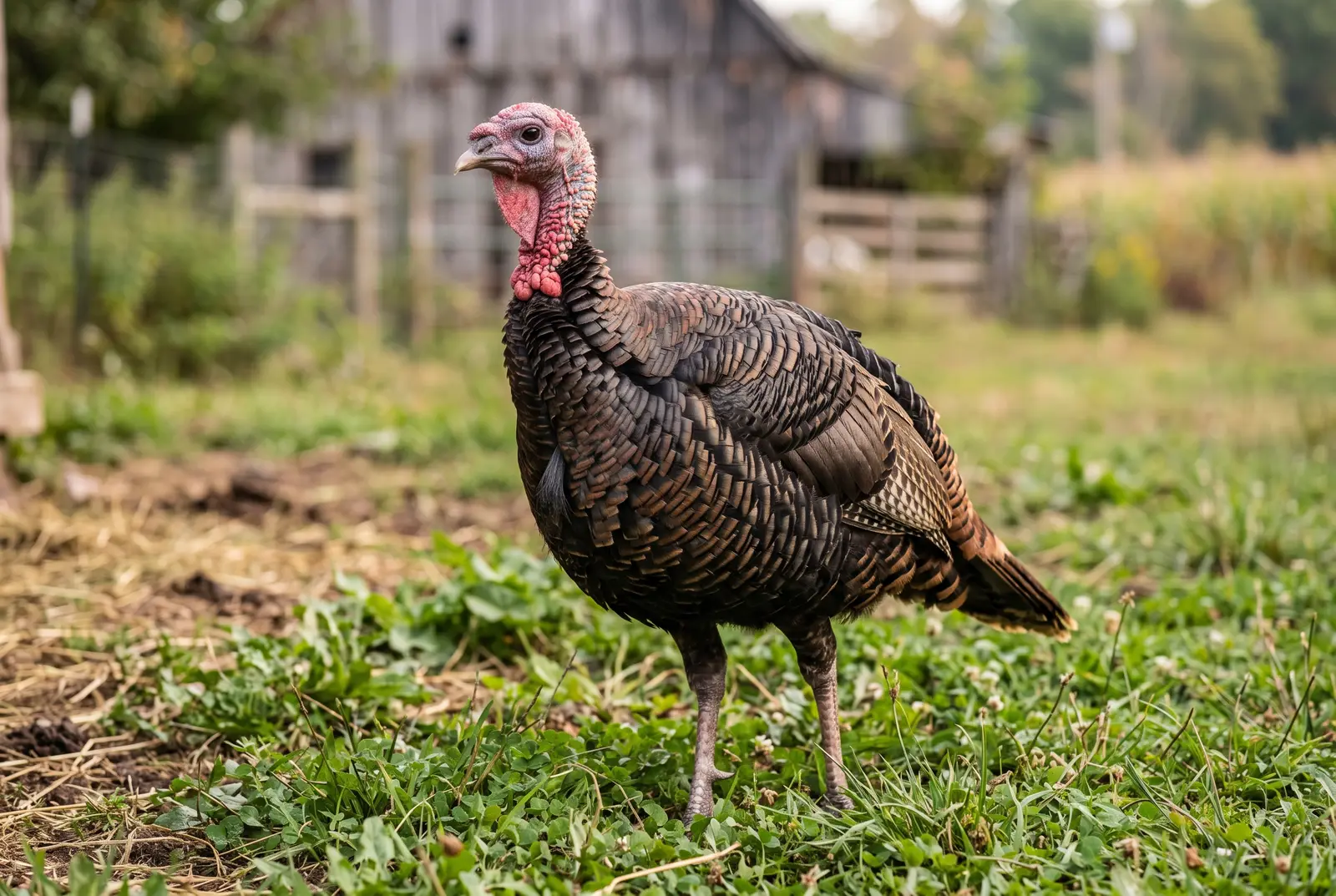
- The domestic turkey is a large ground fowl bred from the North American wild turkey. In heavy strains the males (toms) exceed 15 kg, while hens are much smaller at around 4–9 kg. The bald head and neck are covered in red and bluish skin adorned with fleshy wattles and a soft fingerlike snood above the beak. During display the tom fluffs his plumage, spreads his tail into a fan and gobbles loudly.
- Habitat
- As a domestic bird it is kept on farms, smallholdings and in backyard flocks worldwide. Its wild ancestor inhabits the deciduous and mixed woodlands and forest edges of North America.
- Diet
- Omnivorous. It forages for seeds, grain, green plants, acorns and small invertebrates; kept birds are given cereals and pelleted feed.
- Reproduction
- A hen lays 8–15 eggs and incubates them for about 28 days. The precocial poults leave the nest soon after hatching but stay close to their mother.
- Lifespan
- With good care it can live around 10 years, though meat breeds are usually raised for only a few months.
- Did you know?
- The English word "turkey" comes from a mix-up — Europeans confused the new bird with guinea fowl imported through Turkey, and the name stuck.
Homeland & habitat
Where the domestic turkey lives
Spin the globe to see where the species comes from and where it lives today.
Mexico and North AmericaThis domestic breed descends from the wild turkey domesticated by the peoples of Mexico and the North American Southwest, and is now kept worldwide.
Loading globe…
Native rangeIntroduced / also today
Drag to rotate · double-click to recentre on the homeland
10 facts about the domestic turkey
The cards keep rotating — hover with your mouse to pause them.
- GroupFarm animalsHrabaví (Galliformes) · Bažantovití (Phasianidae)
- Scientific namemeleagris gallopavo f. domesticaLatin name of the species
- Homeland & habitatJako domácí zvíře se chová na farmách, statcích a v drobných chovech po celém světě. Divoký předek obývá listnaté a smíšené lesy a okraje mýtin Severní Ameriky.
- DietVšežravec. Sbírá semena, zrní, zelené rostliny, žaludy i drobné bezobratlé; v chovech dostává obiloviny a granulované krmivo.
- ReproductionKrůta snáší 8–15 vajec, na kterých sedí přibližně 28 dní. Mláďata (krůťata) jsou nekrmivá, brzy po vylíhnutí opouštějí hnízdo, ale zůstávají u matky.
- LifespanV dobrých podmínkách se dožívá zhruba 10 let; výkrmová plemena se však chovají jen několik měsíců.
- Conservation statusDomesticatedA domesticated form — not found in the wild
- Did you know…?Anglický název „turkey“ vznikl omylem – Evropané si nového ptáka spletli s perličkou dováženou přes Turecko, a jméno mu už zůstalo.
- Where in the zooArea A — the farm animal yard
- How many we keep♂ 0 · ♀ 1total: 1
Support the care of our animals
A symbolic adoption contributes to feeding, veterinary care and the development of the exhibits — and you get a certificate and updates about your animal.
Browse adoptions