Farm animals
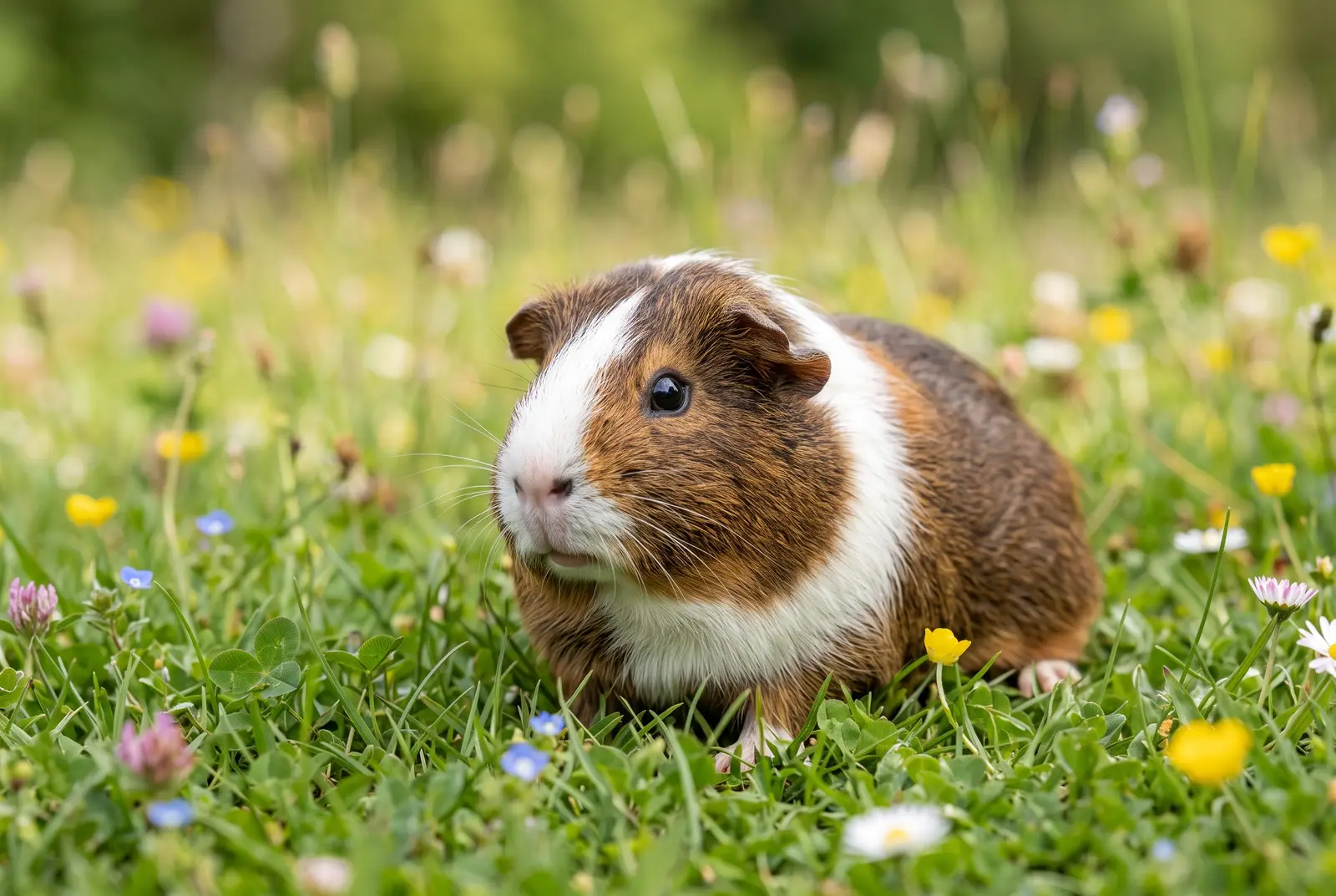
Domestic guinea pig
cavia porcellus
Species originDomesticated
Audio guide
Listen to the story of this animal
0:000:00
Domestic guinea pig
- Description
- The domestic guinea pig is a stocky, tailless rodent weighing about 700–1200 g and measuring 20–25 cm. It was domesticated in the Andes as early as 5000 BC from wild cavies of the genus Cavia. Today it comes in many coat colours and types, from short-haired to rosetted (Abyssinian) and long-haired Peruvian varieties. It is a sociable, vocal animal that communicates through a wide range of squeaks and purrs.
- Habitat
- A domesticated breed kept worldwide as a pet; its wild ancestors inhabit grassy slopes and rocky areas of the South American Andes.
- Diet
- A herbivore feeding mainly on hay and fresh grass, supplemented with vegetables and herbs; it needs a steady supply of vitamin C, which it cannot produce itself.
- Reproduction
- Gestation is relatively long, 59–72 days. Litters of one to six young are born fully furred, with open eyes, and start eating solid food within a few days.
- Lifespan
- Usually 4–8 years.
- Did you know?
- Like humans, guinea pigs cannot synthesise their own vitamin C and must obtain it from their diet.
Homeland & habitat
Where the domestic guinea pig lives
Spin the globe to see where the species comes from and where it lives today.
Andes (South America)The domestic guinea pig originates from the South American Andes, where it was bred from wild cavies thousands of years ago, and is now kept worldwide as a popular pet.
Loading globe…
Native range
Drag to rotate · double-click to recentre on the homeland
10 facts about the domestic guinea pig
The cards keep rotating — hover with your mouse to pause them.
- GroupFarm animalsHlodavci (Rodentia) · Morčatovití (Caviidae)
- Scientific namecavia porcellusLatin name of the species
- Homeland & habitatDomestikované plemeno chované po celém světě jako mazlíček; divocí předci obývají travnaté svahy a skalnaté oblasti And v Jižní Americe.
- DietBýložravec – základ tvoří seno a čerstvá tráva doplněné zeleninou a bylinami; nezbytný je pravidelný přísun vitaminu C, který si morče neumí samo vytvořit.
- ReproductionBřezost trvá na hlodavce poměrně dlouho, 59–72 dní. Rodí se 1–6 mláďat, která přicházejí na svět plně osrstěná, s otevřenýma očima a už po pár dnech přijímají tuhou potravu.
- LifespanObvykle 4–8 let.
- Conservation statusDomesticatedA domesticated form — not found in the wild
- Did you know…?Podobně jako člověk si morče neumí vytvořit vlastní vitamin C, a musí ho proto přijímat v potravě.
- Where in the zooArea A — the farm animal yard
- How many we keep♂ 3 · ♀ 4total: 7
Support the care of our animals
A symbolic adoption contributes to feeding, veterinary care and the development of the exhibits — and you get a certificate and updates about your animal.
Browse adoptions