Carnivores
Striped skunk
mephitis mephitis
When to see us feeding
Regular schedule outside weekend events
- Monday ·
10 October – 1 November 2026 · Open every day, 9:00–18:00, on weekdays and weekends. The special October programme takes place at weekends.
The regular feeding schedule continues on weekdays throughout October. On weekends from 10 October to 1 November, check the programme and the entrance for times.
Audio guide
Listen to the story of this animal
Striped skunk
- Description
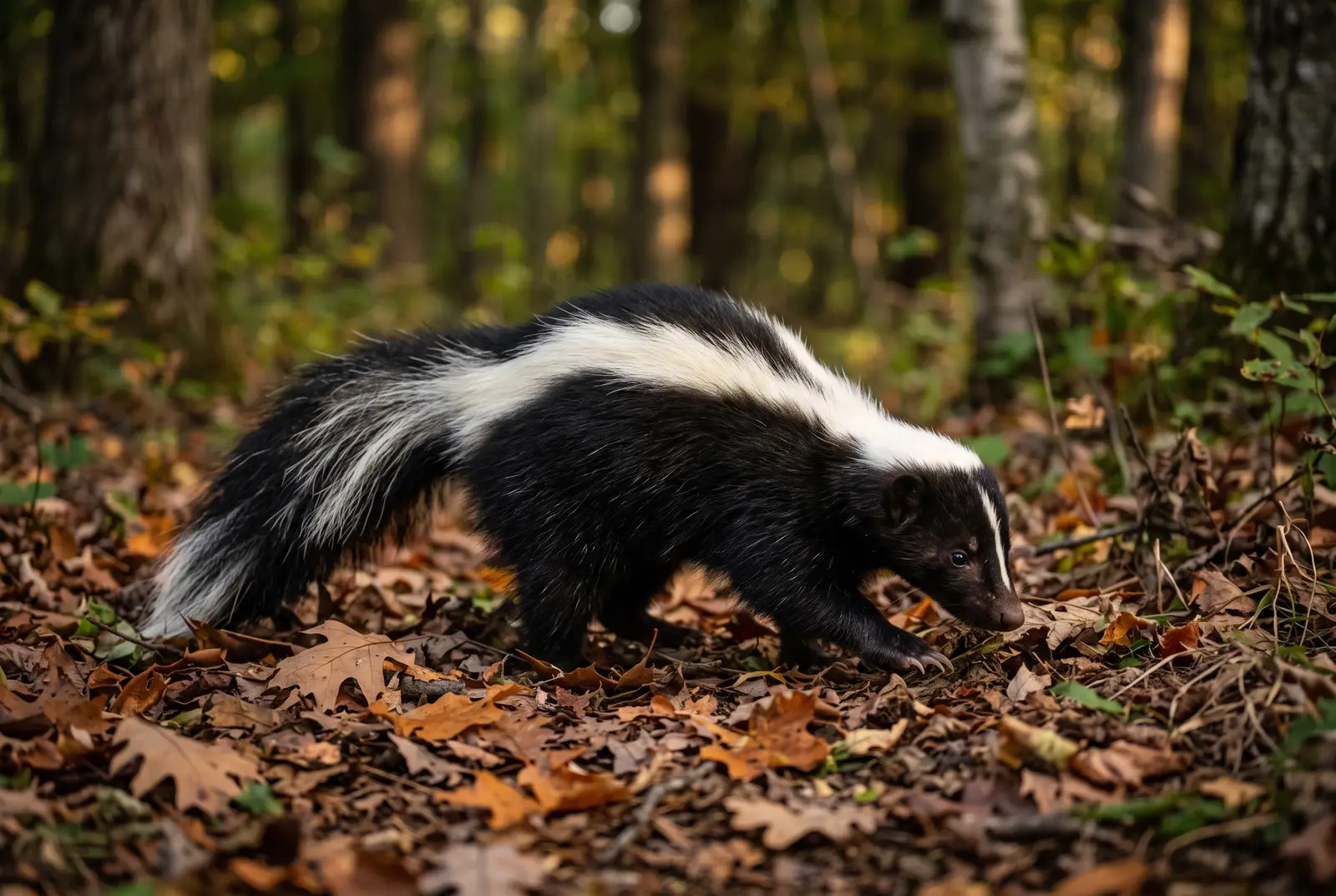
- The striped skunk is a cat-sized North American carnivore with glossy black fur marked by two bold white stripes. These meet in a thin line on the forehead and widen across the back onto the bushy tail. It measures 52–77 cm including the tail and usually weighs 1.2–4 kg. It is best known for its defence: paired glands beneath the tail can spray a pungent, foul-smelling musk up to three metres.
- Habitat
- It lives across a wide range of North American landscapes, from deciduous woodland and grassy plains to semi-desert, farmland and the edges of towns. By day it shelters in burrows, hollows or beneath buildings, becoming active mainly at dusk and during the night.
- Diet
- An omnivore with a strong taste for insects, it eats beetles, grubs and earthworms as well as small rodents, eggs, frogs, nestlings, fruit and seeds. It uses its strong claws to dig through the soil in search of larvae and other invertebrates.
- Reproduction
- Mating takes place in February and March, and gestation lasts about 60–75 days. The female typically gives birth to 4–7 blind kits, which stay in the den and nurse for roughly two months, becoming independent by autumn.
- Lifespan
- In the wild it usually lives only 2–3 years, occasionally 6–7, while in human care it commonly reaches 10 years or more.
- Did you know?
- Before spraying, a skunk warns intruders by stamping its front feet, raising its fur and lifting its tail — only if that fails does it turn and fire. The scent can be detected hundreds of metres away.
Homeland & habitat
Where the striped skunk lives
Spin the globe to see where the species comes from and where it lives today.
North AmericaThe striped skunk ranges across forests, meadows, semi-deserts and the edges of human settlements from southern Canada through the United States to northern Mexico.
Drag to rotate · double-click to recentre on the homeland
10 facts about the striped skunk
The cards keep rotating — hover with your mouse to pause them.
- GroupCarnivoresŠelmy (Carnivora) · Skunkovití (Mephitidae)
- Scientific namemephitis mephitisLatin name of the species
- Homeland & habitatŽije v pestré mozaice krajin Severní Ameriky – od listnatých lesů a travnatých plání přes polopouště až po zemědělskou krajinu a okraje měst. Přes den se ukrývá v norách, dutinách nebo pod stavbami a aktivní je hlavně za soumraku a v noci.
- DietJe všežravec s převahou hmyzu. V jídelníčku má brouky, larvy a žížaly, ale i drobné hlodavce, vejce, žáby, ptáčata, plody a semena. Silnými drápy hrabe v půdě, kde vyhledává larvy a další bezobratlé.
- ReproductionPáří se v únoru a březnu, březost trvá přibližně 60–75 dní. Samice rodí zpravidla 4 až 7 slepých mláďat, která zůstávají v noře a matka je kojí asi dva měsíce. Na podzim už jsou samostatná.
- LifespanV přírodě se dožívá většinou jen 2–3 let, výjimečně 6–7 let. V lidské péči se běžně dožívá 10 i více let.
- Conservation statusLeast ConcernAccording to the IUCN Red List
- Did you know…?Než skunk zaútočí páchnoucím sekretem, varuje dupáním předních tlapek, ježením srsti a zdvižením ocasu – teprve když to nezabere, otočí se zadkem a vystřelí. Zápach je cítit na stovky metrů daleko.
- Where in the zooArea B — enclosures among the pools
- How many we keep♂ 1 · ♀ 2total: 3
Conservation status
Species vulnerability index
Support the care of our animals
A symbolic adoption contributes to feeding, veterinary care and the development of the exhibits — and you get a certificate and updates about your animal.
Browse adoptionsWho you'll meet nearby
Full encyclopaedia