Primates
Silvery marmoset
Mico argentatus
When to see us feeding
Primate feeding
Regular schedule outside weekend events
- Daily ·
10 October – 1 November 2026 · Open every day, 9:00–18:00, on weekdays and weekends. The special October programme takes place at weekends.
The regular feeding schedule continues on weekdays throughout October. On weekends from 10 October to 1 November, check the programme and the entrance for times.
Silvery marmoset
- Description
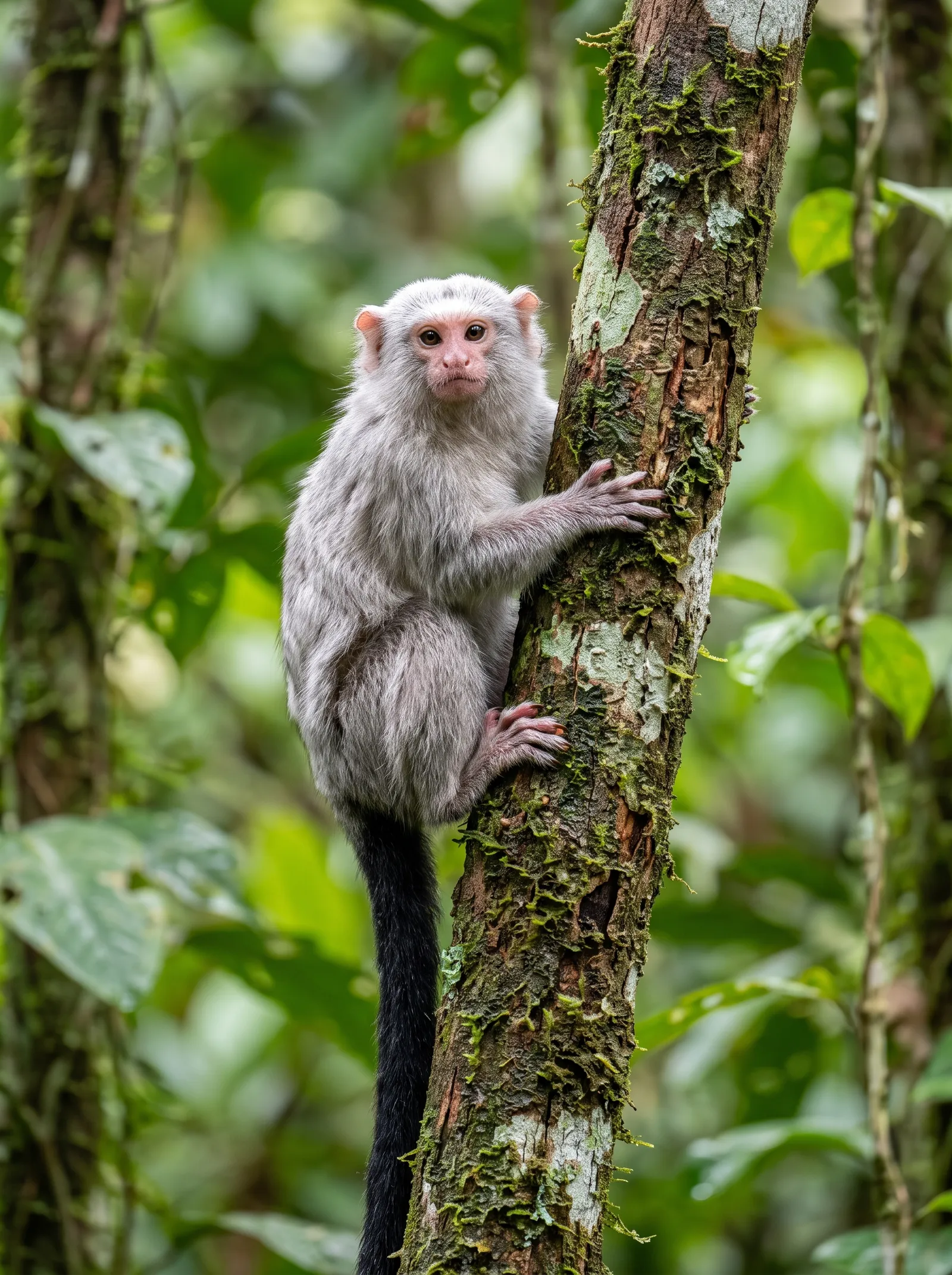
- A tiny monkey with a body 18–28 cm long, a tail of 26–38 cm and a weight of just 300–400 g. The fur is silvery white to pearl grey, the tail contrastingly dark to black. The face and ears are bare and pink to flesh-coloured. Instead of nails the fingers bear claws, with which it clings to bark.
- Habitat
- Eastern Amazonia in Brazil, south of the Amazon. It inhabits lowland rainforest, its margins and secondary growth, moving through the lower storeys of the trees.
- Diet
- The staple is tree gum, which it gouges from the bark with specially adapted lower incisors. The diet is rounded out by fruit, flowers, insects, spiders and small vertebrates.
- Reproduction
- Only the dominant pair in a group breeds. Gestation lasts about 145 days and twins are usual. The whole group helps raise the young, but most of the carrying is done by the male, who hands them to the mother only to nurse.
- Lifespan
- About 10 years in the wild, 16 years or more in human care.
- Did you know?
- Members of a group communicate in thin whistles, a good part of which lie above the range of human hearing — people catch only a fraction of the conversation. The lower incisors grow throughout life because they are constantly worn down against tree bark.
Homeland & habitat
Where the silvery marmoset lives
Spin the globe to see where the species comes from and where it lives today.
Eastern Amazonia (Brazil)It lives in lowland rainforest south of the Amazon, along its margins and in secondary growth, moving through the lower storeys of the trees.
Drag to rotate · double-click to recentre on the homeland
9 facts about the silvery marmoset
The cards keep rotating — hover with your mouse to pause them.
- GroupPrimatesPrimáti (Primates) · Kosmanovití (Callitrichidae)
- Scientific nameMico argentatusLatin name of the species
- Homeland & habitatVýchodní Amazonie v Brazílii, jižně od toku Amazonky. Obývá nížinné deštné lesy, jejich okraje a druhotné porosty, kde se pohybuje v nižších patrech stromů.
- DietZákladem je klovatina — mízu vykusuje z kůry zvláště upravenými dolními řezáky. Jídelníček doplňují plody, květy, hmyz, pavouci a drobní obratlovci.
- ReproductionVe skupině se rozmnožuje jen dominantní pár. Březost trvá asi 145 dní a rodí se obvykle dvojčata. O mláďata se stará celá skupina, nejvíc ale samec, který je nosí a matce je předává jen ke kojení.
- LifespanVe volné přírodě kolem 10 let, v lidské péči 16 let i více.
- Conservation statusLeast ConcernAccording to the IUCN Red List
- Did you know…?Členové skupiny se dorozumívají tenkými hvizdy, jejichž značná část leží nad hranicí lidského sluchu — člověk z jejich rozhovoru slyší jen zlomek. Dolní řezáky jim rostou po celý život, protože se neustále obrušují o kůru stromů.
- Where in the zooArea A + the new monkey pavilion
Conservation status
Species vulnerability index
Podle IUCN málo dotčený druh (Least Concern).
Support the care of our animals
A symbolic adoption contributes to feeding, veterinary care and the development of the exhibits — and you get a certificate and updates about your animal.
Browse adoptionsWho you'll meet nearby
Full encyclopaedia