Primates
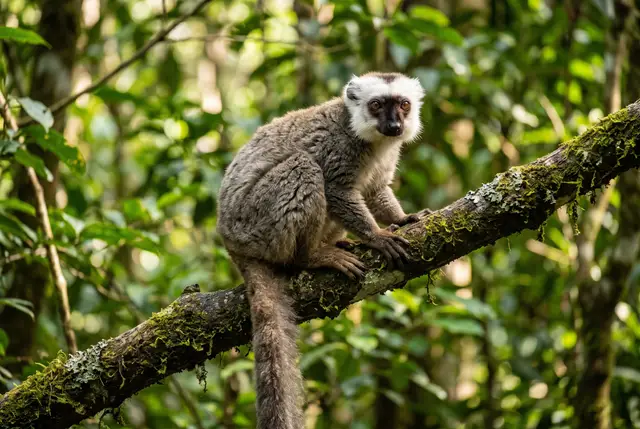
Common brown lemur
eulemur fulvus
When to see us feeding
Primate feeding
Regular schedule outside weekend events
- Daily ·
10 October – 1 November 2026 · Open every day, 9:00–18:00, on weekdays and weekends. The special October programme takes place at weekends.
The regular feeding schedule continues on weekdays throughout October. On weekends from 10 October to 1 November, check the programme and the entrance for times.
Audio guide
Listen to the story of this animal
Common brown lemur
- Description
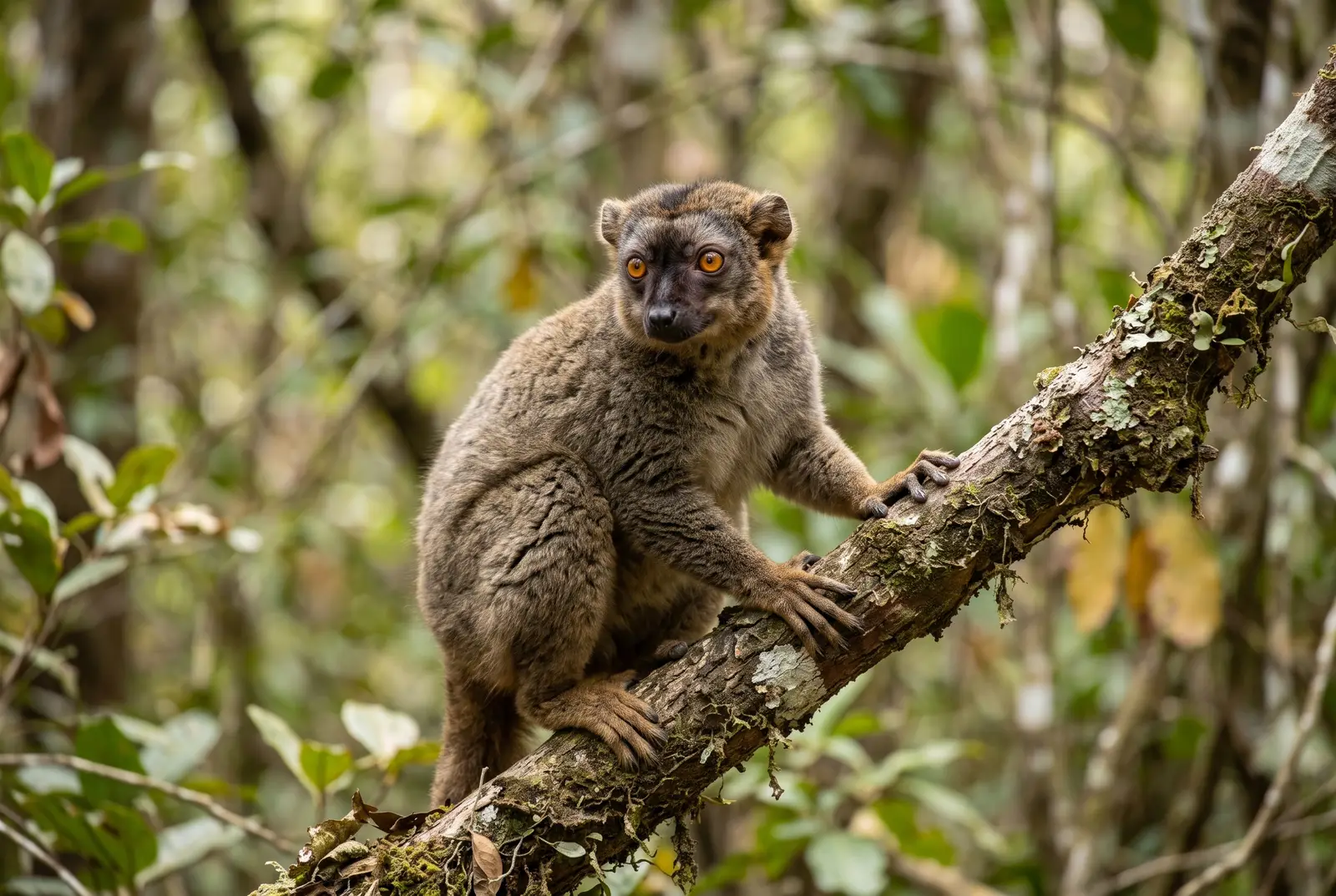
- The common brown lemur is a medium-sized prosimian primate from Madagascar. Its body measures about 40 to 50 cm, with a bushy tail — used for balance — adding another 45 to 55 cm, and it weighs around 2 to 3 kg. The fur is brownish-grey with a paler belly and a dark face marked by striking orange eyes. Unlike many other lemurs, males and females look almost identical.
- Habitat
- It lives only on Madagascar, inhabiting tropical rainforests as well as dry deciduous forests in the north, west and east of the island. It spends most of its time high in the canopy, moving through the trees in fairly large, mixed groups. A small introduced population also survives on the nearby island of Mayotte.
- Diet
- It is mainly a frugivore, feeding above all on ripe fruit and supplementing it with leaves, flowers, buds and nectar. Occasionally it also eats bark, fungi or small insects, and licks soil to help neutralise plant toxins.
- Reproduction
- Breeding is seasonal, usually in spring. After a gestation of about 120 days the female gives birth to a single infant, rarely twins. The newborn first clings to its mother's belly, later riding on her back, and becomes independent within a few months.
- Lifespan
- In the wild it lives around 20 to 25 years. Under human care, protected from predators and given regular veterinary attention, it can live for more than 30 years.
- Did you know?
- The common brown lemur is cathemeral — active during both day and night. This unusual round-the-clock rhythm, rare among primates, lets it exploit food and avoid competitors and predators at any hour of the day.
Homeland & habitat
Where the common brown lemur lives
Spin the globe to see where the species comes from and where it lives today.
MadagascarThe common brown lemur inhabits tropical and dry deciduous forests of northern, western and eastern Madagascar, with an introduced population surviving on the island of Mayotte.
Drag to rotate · double-click to recentre on the homeland
10 facts about the common brown lemur
The cards keep rotating — hover with your mouse to pause them.
- GroupPrimatesprimáti (Primates) · lemurovití (Lemuridae)
- Scientific nameeulemur fulvusLatin name of the species
- Homeland & habitatŽije výhradně na Madagaskaru, kde obývá tropické deštné i suché opadavé lesy v severní, západní a východní části ostrova. Většinu času tráví v korunách stromů, kde se pohybuje v početnějších smíšených skupinách. Malá introdukovaná populace žije také na nedalekém ostrově Mayotte.
- DietJe převážně frugivor – základ jídelníčku tvoří zralé ovoce, které doplňuje listy, květy, poupaty a nektarem. Příležitostně pozře i kůru, houby nebo drobný hmyz a olizuje hlínu, jež mu pomáhá neutralizovat rostlinné toxiny.
- ReproductionPáření probíhá sezónně, obvykle na jaře. Po přibližně 120 dnech březosti rodí samice zpravidla jediné mládě, výjimečně dvojčata. Novorozeně se zprvu drží matce na břiše, později jí jezdí na zádech a osamostatňuje se během několika měsíců.
- LifespanVe volné přírodě se dožívá kolem 20 až 25 let. V lidské péči, chráněn před predátory a s pravidelnou veterinární péčí, může žít i více než 30 let.
- Conservation statusVulnerableAccording to the IUCN Red List
- Did you know…?Lemur hnědý patří mezi takzvané katemerální živočichy – je aktivní ve dne i v noci. Tento neobvyklý denní rytmus, mezi primáty vzácný, mu umožňuje hledat potravu i vyhýbat se konkurenci a predátorům kdykoli během čtyřiadvaceti hodin.
- Where in the zooArea A + the new monkey pavilion
- How many we keep♂ 0 · ♀ 1total: 1
Conservation status
Species vulnerability index
Support the care of our animals
A symbolic adoption contributes to feeding, veterinary care and the development of the exhibits — and you get a certificate and updates about your animal.
Browse adoptionsWho you'll meet nearby
Full encyclopaedia