Waterfowl
Black-necked swan
cygnus melancoryphus
IUCN Red ListLeast Concern
Audio guide
Listen to the story of this animal
0:000:00
Black-necked swan
- Description
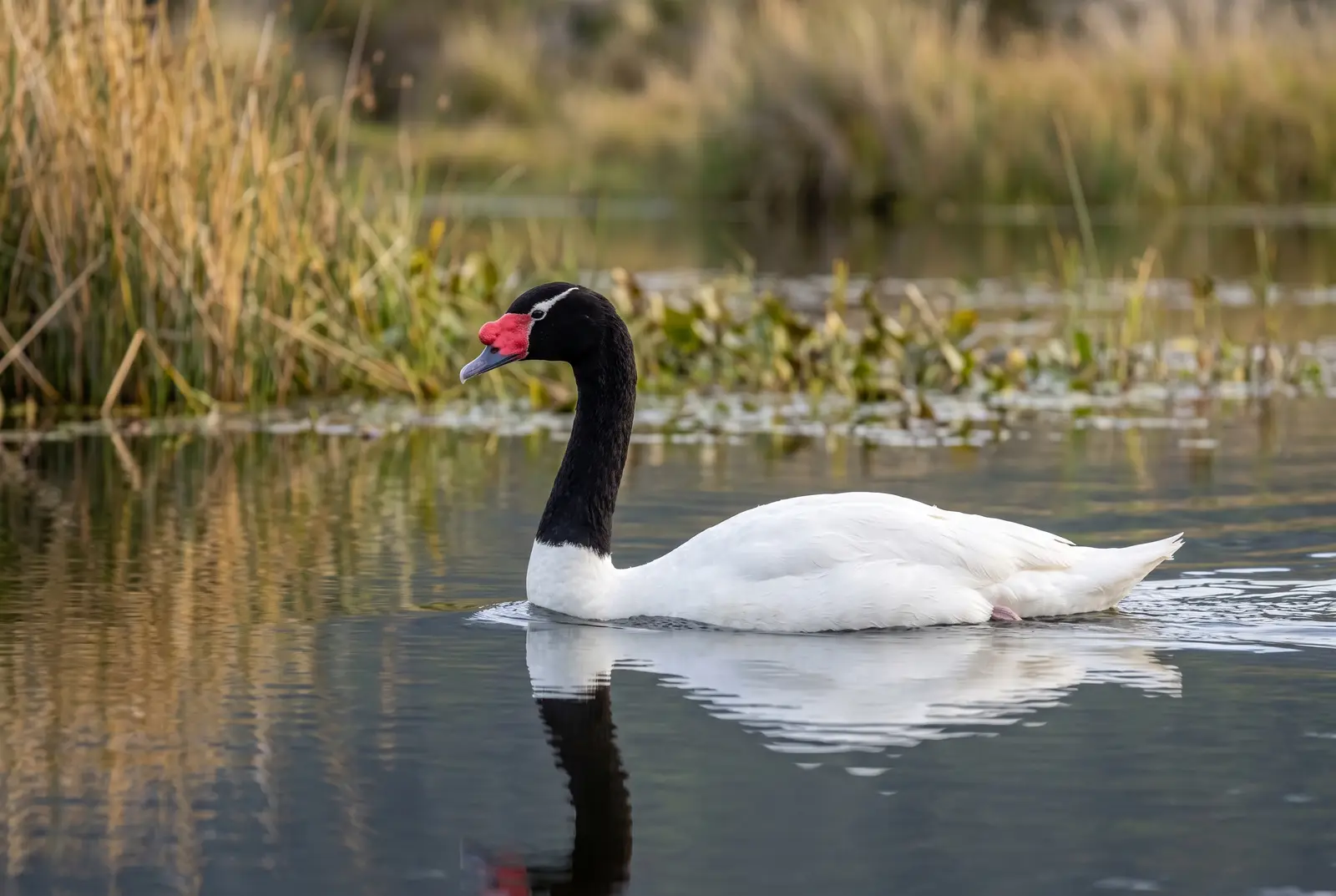
- The black-necked swan is the largest waterfowl in South America. It grows to 102–124 cm long, with males weighing up to 6.7 kg. The body is snow-white while the head and long neck are velvety black, broken only by a thin white stripe behind the eye. A striking red fleshy knob (caruncle) sits at the base of the bill, larger in males and swelling during the breeding season.
- Habitat
- It inhabits freshwater and slightly brackish marshes, lagoons, lakes and sheltered coasts across southern South America. It spends most of its life on the water, where it is remarkably graceful; on land it moves clumsily and reluctantly.
- Diet
- Largely herbivorous, it grazes on submerged plants, algae and soft vegetation, filtering food and dipping its head beneath the surface. It also takes small aquatic invertebrates and insects.
- Reproduction
- Pairs are monogamous and usually bond for life. The female builds a bulky mound nest of vegetation in shallow water and lays 4–6 eggs, incubating them for about 34–36 days while the male stands guard nearby. Newly hatched cygnets often ride on their parents' backs.
- Lifespan
- In the wild it lives roughly 10–20 years, and over 30 years under human care.
- Did you know?
- Parents carry their grey cygnets on their backs, tucked into the plumage for warmth and safety, gliding across the water like little living boats.
Homeland & habitat
Where the black-necked swan lives
Spin the globe to see where the species comes from and where it lives today.
South AmericaLives in the wetlands, lagoons and lakes of southern South America.
Loading globe…
Native range
Drag to rotate · double-click to recentre on the homeland
10 facts about the black-necked swan
The cards keep rotating — hover with your mouse to pause them.
- GroupWaterfowlvrubozobí (Anseriformes) · kachnovití (Anatidae)
- Scientific namecygnus melancoryphusLatin name of the species
- Homeland & habitatObývá sladkovodní i mírně brakické mokřady, laguny, jezera a chráněná pobřeží jižní části Jižní Ameriky. Většinu času tráví na vodě, kde je nesmírně obratná; na souši se pohybuje jen neochotně a kolébavě.
- DietJe převážně býložravá — spásá ponořené vodní rostliny, řasy a měkké části bylin, které sbírá cezením a nořením hlavy pod hladinu. Doplňkově pozře drobné vodní bezobratlé a hmyz.
- ReproductionVytváří pevné, zpravidla celoživotní páry. Objemné hnízdo z rostlin staví na mělčině nebo na plovoucí vegetaci a samice do něj klade 4–6 vajec. Na snůšce sedí přibližně 34–36 dní, zatímco samec hlídá okolí. Čerstvě vylíhlá mláďata se často vozí na hřbetech rodičů.
- LifespanVe volné přírodě se dožívá zhruba 10–20 let, v lidské péči i přes 30 let.
- Conservation statusLeast ConcernAccording to the IUCN Red List
- Did you know…?Rodiče nosí šedá mláďata na zádech — schoulená v peří brázdí hladinu jako živé člunky, chráněná před chladem i predátory.
- Where in the zooArea A — the water-lily pond
- How many we keep♂ 1 · ♀ 0total: 1
Conservation status
Species vulnerability index
Least Concern
Near Threatened
Vulnerable
Endangered
Critically Endangered
Support the care of our animals
A symbolic adoption contributes to feeding, veterinary care and the development of the exhibits — and you get a certificate and updates about your animal.
Browse adoptions