Primates
Ring-tailed lemur
lemur catta
When to see us feeding
Primate feeding
Regular schedule outside weekend events
- Daily ·
10 October – 1 November 2026 · Open every day, 9:00–18:00, on weekdays and weekends. The special October programme takes place at weekends.
The regular feeding schedule continues on weekdays throughout October. On weekends from 10 October to 1 November, check the programme and the entrance for times.
Audio guide
Listen to the story of this animal
Ring-tailed lemur
- Description
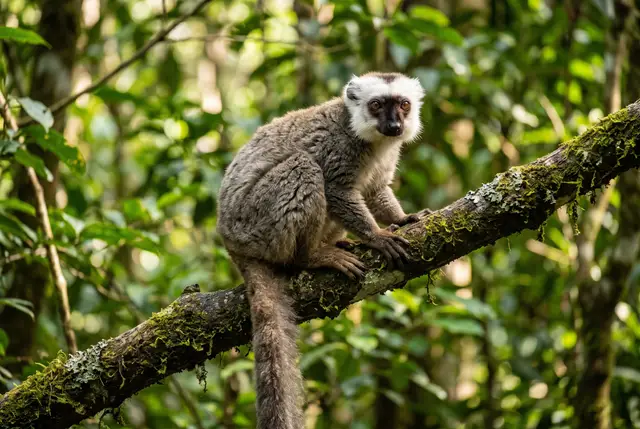
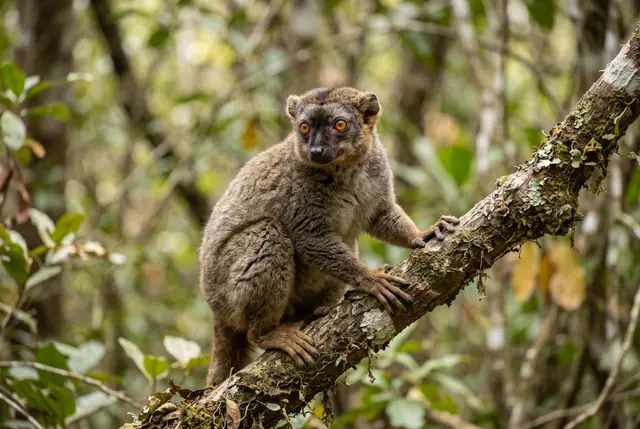
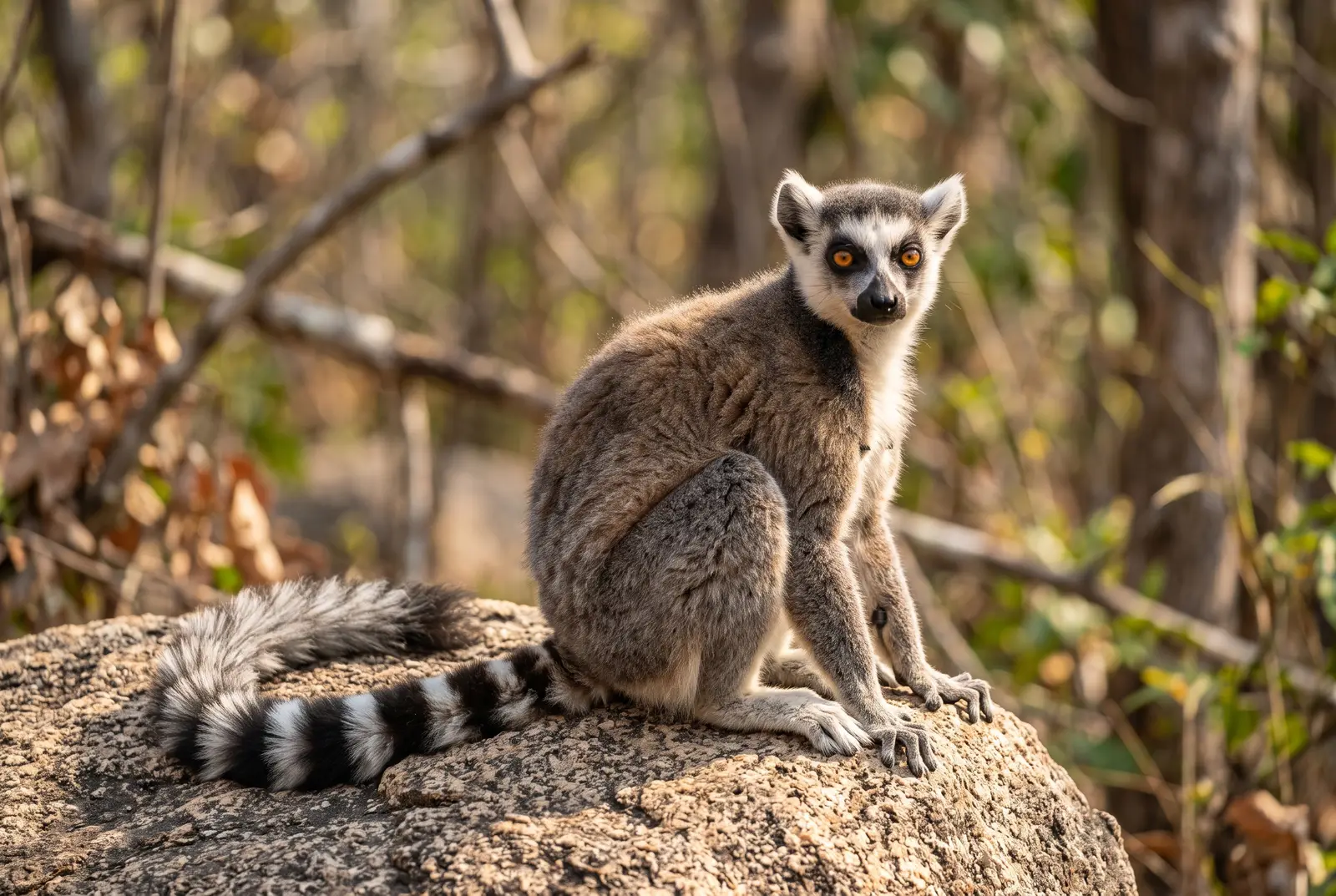
- The ring-tailed lemur is the most recognisable of Madagascar's lemurs, instantly known by its long tail ringed with 13 to 14 alternating black and white bands. Its fur is grey to rosy-brown with a white belly and a striking black-and-white face mask around bright orange eyes. The body measures around 40 cm, the tail is even longer at roughly 55 to 60 cm, and adults weigh about 2.2 kg. Unlike most lemurs, it spends much of the day on the ground.
- Habitat
- It lives only in southern and south-western Madagascar, in dry deciduous forests, spiny thickets and gallery forests along rivers. It also tolerates rocky, semi-desert terrain and copes with wider temperature swings than other lemurs. Habitat loss, hunting and the pet trade have made it an endangered species.
- Diet
- It is an omnivore with a mainly plant-based diet. Fruit and leaves form the core of its menu, above all the fruit and foliage of the tamarind tree, supplemented by flowers, herbs, bark, sap and the occasional insect. During the dry season it relies heavily on tamarind.
- Reproduction
- Breeding is strictly seasonal. After a gestation of about 135 days a single infant is usually born, twins less often. The young lemur first clings to its mother's belly and later rides on her back. Females live in matriarchal troops in which they dominate the males.
- Lifespan
- In the wild it lives around 16 years, while in human care it commonly exceeds 20 years and exceptionally reaches about 27.
- Did you know?
- Males hold so-called "stink fights": they coat their tails with strongly scented secretions from glands on their wrists and waft them at rivals to drive them off. Ring-tailed lemurs also love to sunbathe sitting upright with their arms spread wide, as if meditating.
Homeland & habitat
Where the ring-tailed lemur lives
Spin the globe to see where the species comes from and where it lives today.
MadagascarFound only in southern and south-western Madagascar.
Drag to rotate · double-click to recentre on the homeland
10 facts about the ring-tailed lemur
The cards keep rotating — hover with your mouse to pause them.
- GroupPrimatesPrimáti · Lemurovití
- Scientific namelemur cattaLatin name of the species
- Homeland & habitatŽije výhradně na jihu a jihozápadě Madagaskaru, v suchých opadavých lesích, trnitých křovinách a v galeriových lesích podél řek. Snáší i skalnaté polopouštní oblasti a lépe než ostatní lemuři si poradí s většími výkyvy teplot. Kvůli ničení stanovišť, lovu a odchytu do zajetí patří k ohroženým druhům.
- DietJe všežravec s převahou rostlinné potravy. Základ jídelníčku tvoří ovoce a listy, především plody a listí tamarindu; doplňkově požírá květy, byliny, kůru, mízu i drobný hmyz. V období sucha se spoléhá právě na tamarind.
- ReproductionRozmnožování je přísně sezónní. Po březosti trvající přibližně 135 dní se rodí obvykle jediné mládě, méně často dvojčata. Malý lemur se zprvu drží matce na břiše a později se vozí na jejích zádech. Samice žijí v matriarchální skupině, kde dominují nad samci.
- LifespanVe volné přírodě se dožívá zhruba 16 let, v lidské péči běžně přes 20 let a výjimečně i kolem 27 let.
- Conservation statusEndangeredAccording to the IUCN Red List
- Did you know…?Samci vedou takzvané „páchnoucí souboje“: potřou si ocas silně vonícím sekretem ze žláz na zápěstích a mávají jím proti soupeři, aby ho zahnali. Skupina lemurů kata se také ráda vyhřívá na slunci vsedě s roztaženými předními končetinami, jako by meditovala.
- Where in the zooArea A + the new monkey pavilion
- How many we keep♂ 2 · ♀ 2total: 4
Conservation status
Species vulnerability index
Support the care of our animals
A symbolic adoption contributes to feeding, veterinary care and the development of the exhibits — and you get a certificate and updates about your animal.
Browse adoptionsWho you'll meet nearby
Full encyclopaedia