Primates
Red ruffed lemur
varecia rubra
When to see us feeding
Primate feeding
Regular schedule outside weekend events
- Daily ·
10 October – 1 November 2026 · Open every day, 9:00–18:00, on weekdays and weekends. The special October programme takes place at weekends.
The regular feeding schedule continues on weekdays throughout October. On weekends from 10 October to 1 November, check the programme and the entrance for times.
Audio guide
Listen to the story of this animal
Red ruffed lemur
- Description
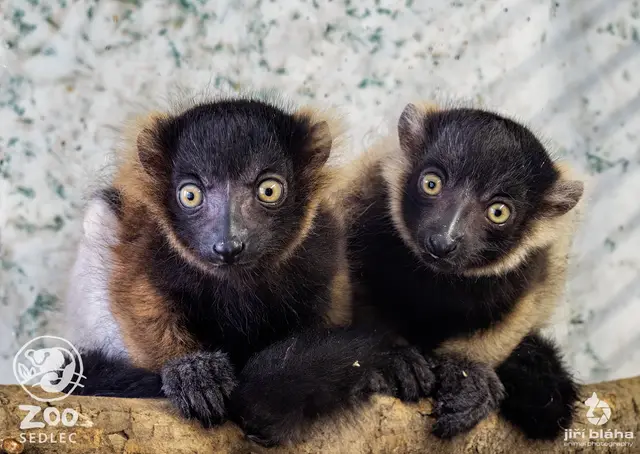
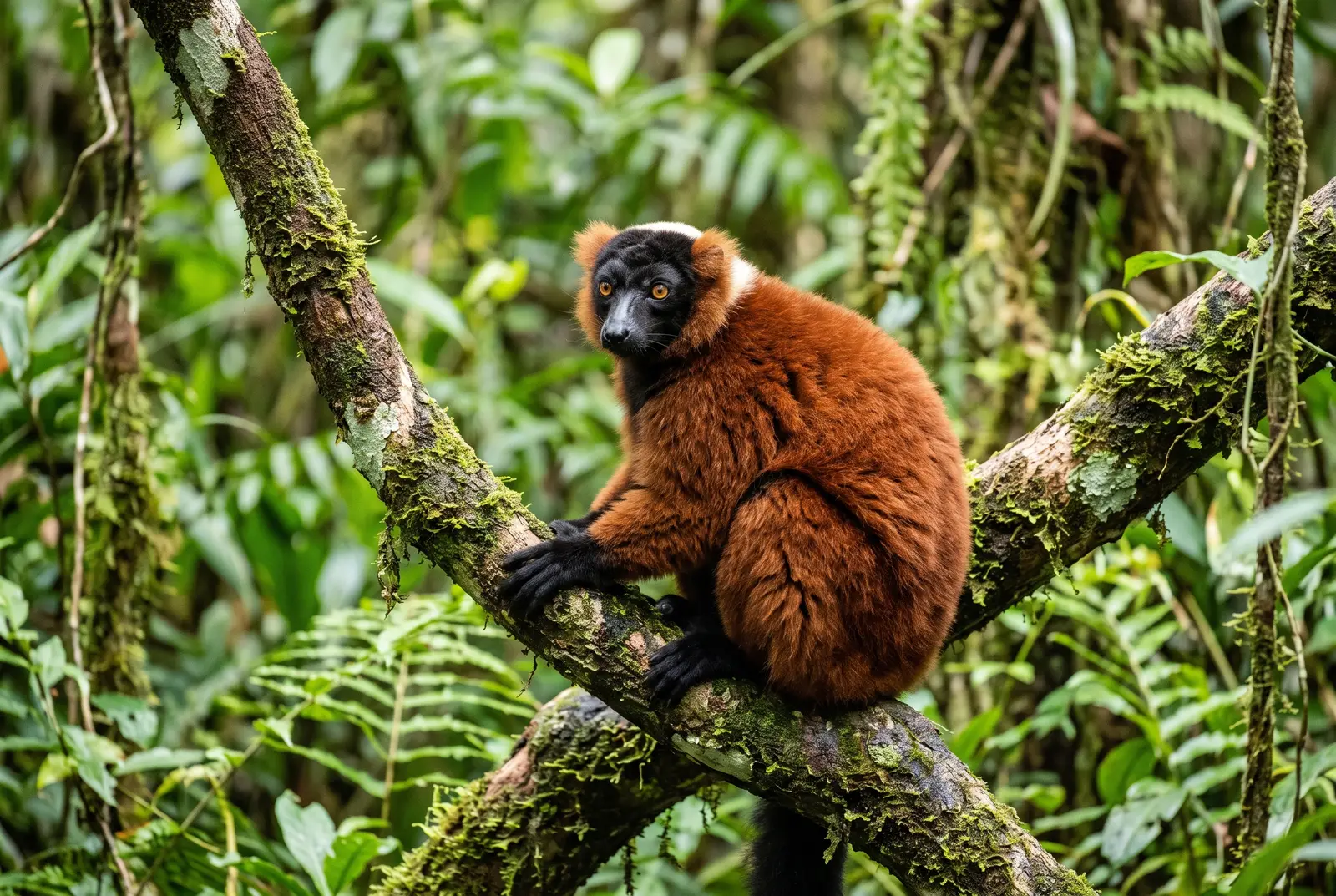
- The red ruffed lemur is one of the largest lemurs of Madagascar. Its body measures around 50 cm and the bushy tail is even longer, with adults weighing roughly 3 to 4 kg. It is unmistakable for its deep rust-red coat, which contrasts sharply with the black face, limbs, belly and tail, set off by a white patch on the nape.
- Habitat
- It occurs only in north-eastern Madagascar, in a single location — the Masoala Peninsula. There it inhabits humid tropical rainforest and spends most of its life high in the canopy. Because of its tiny range and shrinking forests, it is classed as critically endangered.
- Diet
- It is chiefly a fruit-eater, with ripe fruit making up the vast majority of its diet. It supplements this with nectar, pollen, flowers, leaves and seeds, moving nimbly along slender branches in the upper canopy in search of food.
- Reproduction
- The female is pregnant for about 100 days and, before giving birth, builds a nest of twigs and leaves in the treetops. She usually bears two young, exceptionally up to six. Newborns cannot yet cling to their mother's fur, so they stay hidden in the nest, where the parents return to tend them.
- Lifespan
- In human care it commonly lives to around 25 years, and occasionally more than 30. In the wild its life is shorter, as it faces predators and the loss of its forest home.
- Did you know?
- The red ruffed lemur is regarded as one of the world's largest pollinators: as it laps nectar from the big flowers of the Madagascan traveller's palm with its long tongue, pollen sticks to its fur and is carried from bloom to bloom.
Homeland & habitat
Where the red ruffed lemur lives
Spin the globe to see where the species comes from and where it lives today.
Masoala, MadagascarLives only in the rainforests of the Masoala Peninsula in north-eastern Madagascar.
Drag to rotate · double-click to recentre on the homeland
10 facts about the red ruffed lemur
The cards keep rotating — hover with your mouse to pause them.
- GroupPrimatesPrimáti · lemurovití
- Scientific namevarecia rubraLatin name of the species
- Homeland & habitatVyskytuje se pouze na severovýchodě Madagaskaru, a to na jediném místě — na poloostrově Masoala. Obývá zde vlhké tropické deštné lesy a život tráví převážně vysoko v korunách stromů. Kvůli velmi omezenému areálu a mizení pralesa patří ke kriticky ohroženým druhům.
- DietJe to především plodožravec — zralé ovoce tvoří naprostou většinu jeho jídelníčku. Doplňkově saje nektar, sbírá pyl, květy, listy a semena. Za potravou se hbitě pohybuje po tenkých větvích ve svrchním patře lesa.
- ReproductionSamice je březí přibližně 100 dní a před porodem si staví v koruně stromu hnízdo z větviček a listí. Rodí zpravidla dvě mláďata, výjimečně až šest. Novorozeňata se zprvu nedokážou zachytit v srsti matky, a proto zůstávají ukrytá v hnízdě, kam za nimi rodiče docházejí.
- LifespanV lidské péči se běžně dožívá kolem 25 let, výjimečně i přes 30 let. V přírodě je jeho život kratší, protože ho ohrožují predátoři i úbytek pralesů.
- Conservation statusCritically EndangeredAccording to the IUCN Red List
- Did you know…?Lemur vari červený je považován za jednoho z největších opylovačů na světě: když svým dlouhým jazykem saje nektar z velkých květů madagaskarské „palmy cestovatelů“, ulpí mu na srsti pyl, který pak přenáší z květu na květ.
- Where in the zooArea A + the new monkey pavilion
- How many we keep♂ 1 · ♀ 1total: 2
Conservation status
Species vulnerability index
Support the care of our animals
A symbolic adoption contributes to feeding, veterinary care and the development of the exhibits — and you get a certificate and updates about your animal.
Browse adoptionsWho you'll meet nearby
Full encyclopaedia