Waterfowl
Yellow-billed pintail
anas georgica
IUCN Red ListLeast Concern
Audio guide
Listen to the story of this animal
0:000:00
Yellow-billed pintail
- Description
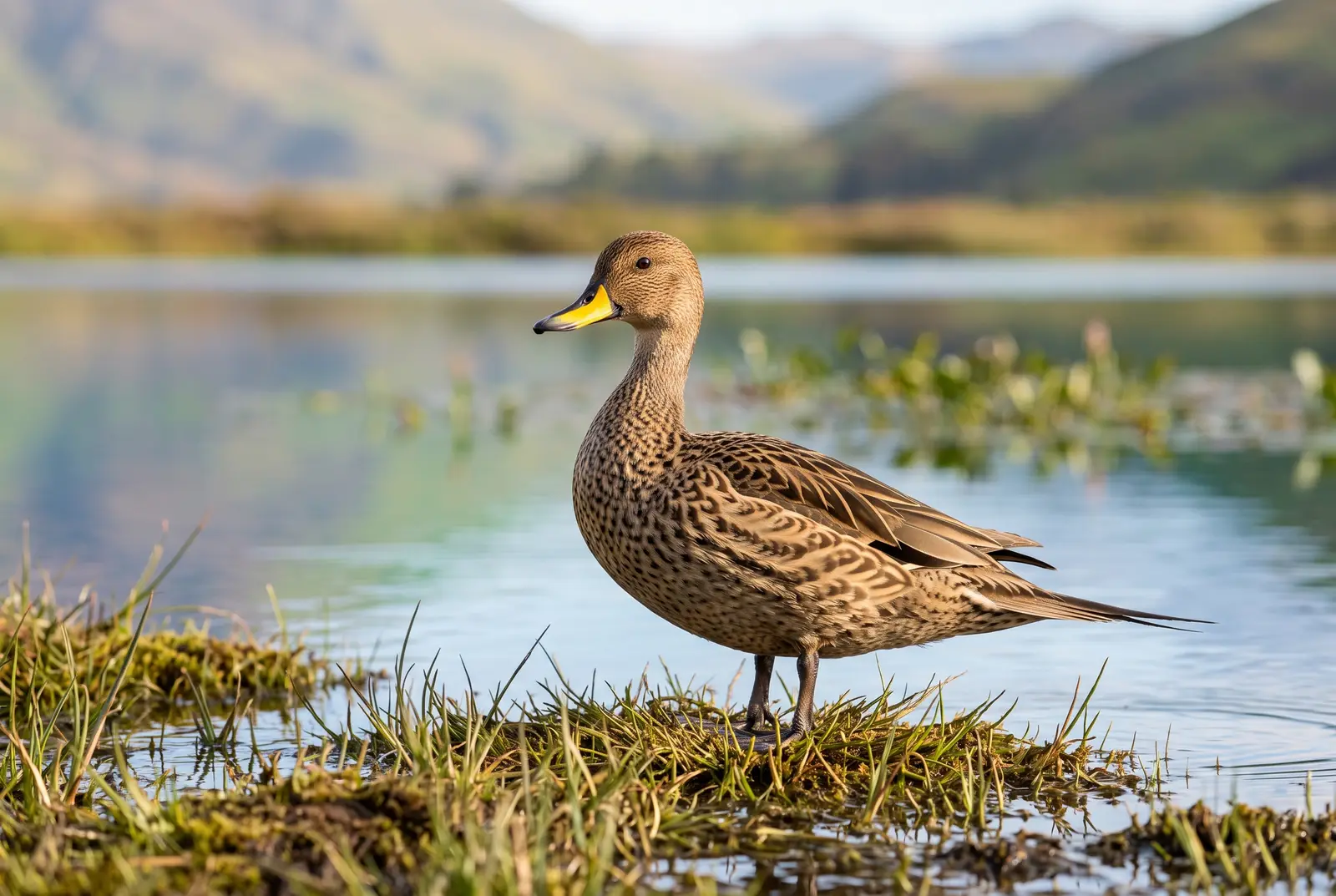
- The yellow-billed pintail is a slim South American dabbling duck with subtly mottled brown plumage and a distinctive bright yellow bill marked by a dark ridge. It measures roughly 43–66 cm and is easily recognised by its long, pointed tail. Unusually for ducks, the male and female look almost identical.
- Habitat
- It lives on freshwater lakes, pools, marshes and slow-moving rivers throughout South America, from lowland wetlands up to high Andean lagoons above 4,000 m.
- Diet
- An omnivore, it gathers seeds, shoots and parts of aquatic plants, supplemented with aquatic invertebrates, insect larvae and small crustaceans.
- Reproduction
- It nests on the ground in dense vegetation near water. The female usually lays 5–8 eggs and incubates them alone for about 26 days, later raising the ducklings by herself.
- Lifespan
- It can live around 15–20 years in human care, though usually less in the wild.
- Did you know?
- The population on South Georgia has taken to scavenging, feeding on the carcasses of seals and even penguins — remarkable behaviour for a duck.
Homeland & habitat
Where the yellow-billed pintail lives
Spin the globe to see where the species comes from and where it lives today.
South AmericaA South American duck of freshwater wetlands, lakes and Andean lagoons, ranging from Colombia south to Tierra del Fuego and the Falkland Islands.
Loading globe…
Native range
Drag to rotate · double-click to recentre on the homeland
10 facts about the yellow-billed pintail
The cards keep rotating — hover with your mouse to pause them.
- GroupWaterfowlVrubozobí · Kachnovití
- Scientific nameanas georgicaLatin name of the species
- Homeland & habitatObývá sladkovodní jezera, tůně, mokřady a pomalu tekoucí řeky napříč Jižní Amerikou — od nížinných mokřadů až po vysoko položené andské laguny nad 4000 m n. m.
- DietVšežravec. Sbírá semena, výhonky a části vodních rostlin, které doplňuje vodními bezobratlými, larvami hmyzu a drobnými korýši.
- ReproductionHnízdí na zemi v husté vegetaci poblíž vody. Samice snáší zpravidla 5–8 vajec a sama je zahřívá přibližně 26 dní; také péči o mláďata pak obstarává sama.
- LifespanV lidské péči se dožívá zhruba 15–20 let, ve volné přírodě obvykle méně.
- Conservation statusLeast ConcernAccording to the IUCN Red List
- Did you know…?Populace z ostrova Jižní Georgie si přivykla i na mršiny — kachny se přiživují na kadáverech tuleňů a dokonce tučňáků, což je u kachen naprostá rarita.
- Where in the zooArea A — the water-lily pond
- How many we keep♂ 1 · ♀ 0total: 1
Conservation status
Species vulnerability index
Least Concern
Near Threatened
Vulnerable
Endangered
Critically Endangered
Support the care of our animals
A symbolic adoption contributes to feeding, veterinary care and the development of the exhibits — and you get a certificate and updates about your animal.
Browse adoptions