Farm animals
Ouessant sheep
Ovis aries
Species originDomesticated
Ouessant sheep
- Description
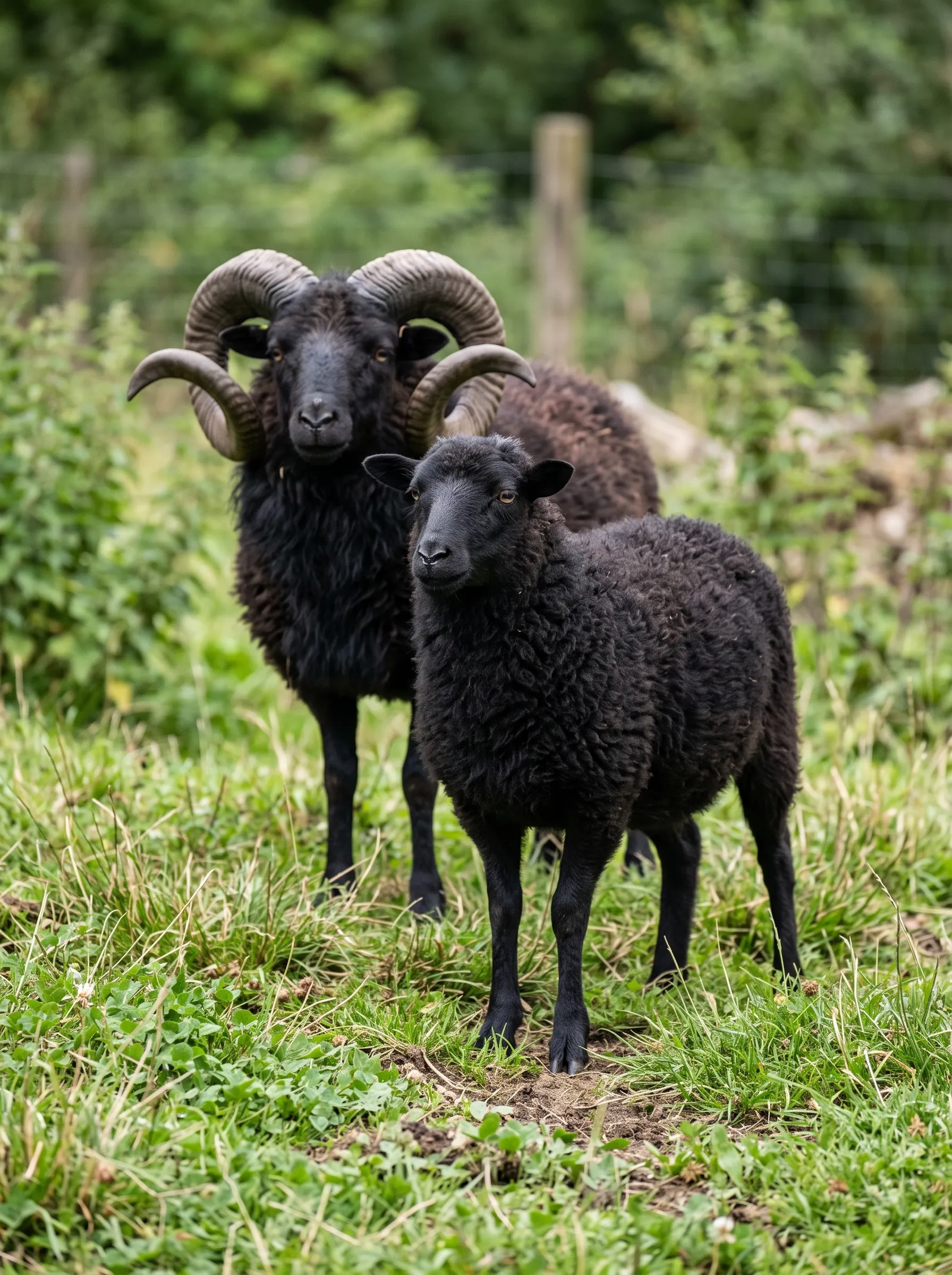
- The smallest sheep breed in the world. Rams stand 45–50 cm at the withers and weigh around 20 kg, ewes are lighter still at 13–16 kg. Deep black is the commonest colour, brown and white are rarer. Rams carry heavy curled horns; ewes are usually polled.
- Habitat
- The breed developed on the windswept island of Ouessant off the coast of Brittany, where it had to make do with poor grazing and salt sea air. It is therefore exceptionally hardy and undemanding.
- Diet
- It grazes grass, herbs, leaves and the shoots of shrubs, and is fed hay in winter. Being so small it neither tramples the pasture nor grazes it down to the soil.
- Reproduction
- Gestation lasts about five months and the ewe usually bears a single lamb, most often in early spring. Twins are the exception.
- Lifespan
- 12–15 years, exceptionally longer.
- Did you know?
- By the middle of the 20th century the breed had almost died out and was saved by a handful of French enthusiasts. Today it is making a comeback in an unexpected role — its small size makes it ideal for gentle grassland management in orchards, on dykes and beneath solar panels.
Homeland & habitat
Where the ouessant sheep lives
Spin the globe to see where the species comes from and where it lives today.
Île d'Ouessant (Brittany, France)The smallest sheep breed in the world, bred on the windswept Breton island of Ouessant; almost extinct by the mid-20th century, it is now kept across Europe.
Loading globe…
Native rangeIntroduced / also today
Drag to rotate · double-click to recentre on the homeland
9 facts about the ouessant sheep
The cards keep rotating — hover with your mouse to pause them.
- GroupFarm animalsSudokopytníci (Artiodactyla) · Turovití (Bovidae)
- Scientific nameOvis ariesLatin name of the species
- Homeland & habitatPlemeno se vyvinulo na větrném ostrově Ouessant u pobřeží Bretaně, kde muselo vystačit s chudou pastvou a slaným mořským vzduchem. Je proto mimořádně otužilé a nenáročné.
- DietSpásá trávu, byliny, listí a výhonky křovin, v zimě seno. Díky drobnému vzrůstu pastvinu nesešlape ani nespase do hlíny.
- ReproductionBřezost trvá zhruba pět měsíců a bahnice rodí obvykle jedno jehně, nejčastěji brzy na jaře. Dvojčata jsou spíš výjimkou.
- Lifespan12–15 let, výjimečně i déle.
- Conservation statusDomesticatedA domesticated form — not found in the wild
- Did you know…?V polovině 20. století plemeno téměř vyhynulo a zachránila ho hrstka francouzských nadšenců. Dnes zažívá návrat v netradiční roli — díky drobnému vzrůstu se používá k šetrné údržbě travnatých ploch v sadech, na hrázích i pod solárními panely.
- Where in the zooArea A — the farm animal yard
Support the care of our animals
A symbolic adoption contributes to feeding, veterinary care and the development of the exhibits — and you get a certificate and updates about your animal.
Browse adoptions