Hoofed animals
South American Tapir
Tapirus terrestris
When to see us feeding
Regular schedule outside weekend events
- Friday–Sunday ·
10 October – 1 November 2026 · Open every day, 9:00–18:00, on weekdays and weekends. The special October programme takes place at weekends.
The regular feeding schedule continues on weekdays throughout October. On weekends from 10 October to 1 November, check the programme and the entrance for times.
Audio guide
Listen to the story of this animal
South American Tapir
- Description
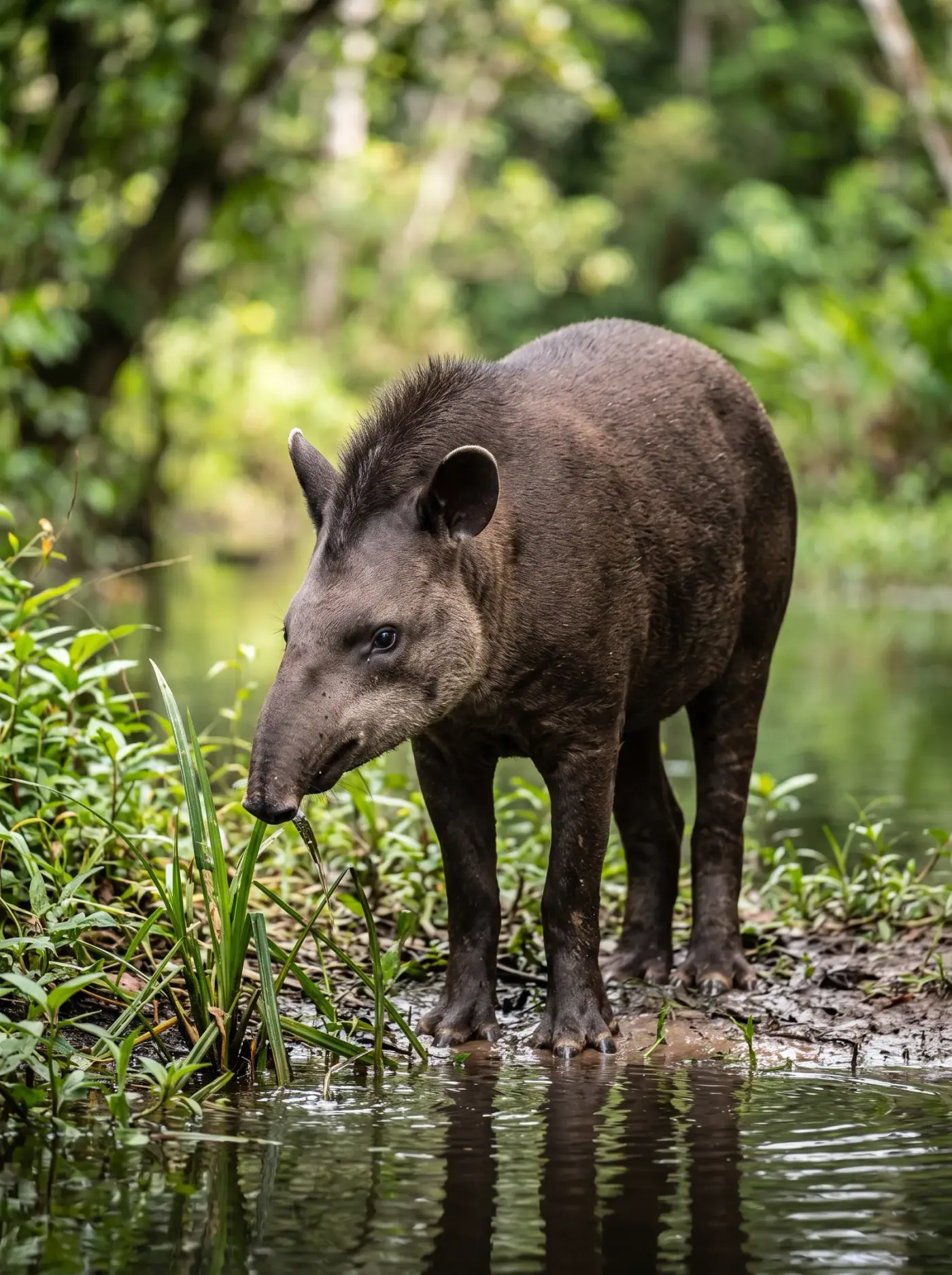
- The South American, or lowland, tapir is the largest land mammal in South America, reaching about 2 metres in length and weighing 150 to 250 kg. Its most distinctive feature is a short, flexible proboscis formed from the upper lip and nose, which it uses to grasp food. The coat is a dark greyish-brown, and a low crest of stiff hair runs along the neck.
- Habitat
- It ranges across South America east of the Andes, from Colombia and Venezuela south to Paraguay and northern Argentina. Tapirs favour tropical and subtropical forests, wetlands, and savannas, and are rarely found far from water.
- Diet
- Tapirs are herbivores that browse on leaves, buds, shoots, fruit, and aquatic plants, plucking their food with the mobile snout. Because they swallow and disperse so many seeds, they play an important role in regenerating the forest.
- Reproduction
- After a long gestation of roughly 13 months (about 390 to 400 days), the female gives birth to a single calf. Newborns wear a striking pattern of white stripes and spots for camouflage, which fades at six to eight months of age.
- Lifespan
- Tapirs typically live around 25 years in the wild and can reach 30 years or more in human care.
- Did you know?
- A strong swimmer and diver, the tapir often takes to water to cool off and to escape predators, sometimes walking along the bottom of a river or lake.
Homeland & habitat
Where the south american tapir lives
Spin the globe to see where the species comes from and where it lives today.
South AmericaThe largest land mammal of South America inhabits tropical and subtropical forests, wetlands and savannas from Colombia and Venezuela across the Amazon basin to northern Argentina.
Drag to rotate · double-click to recentre on the homeland
10 facts about the south american tapir
The cards keep rotating — hover with your mouse to pause them.
- GroupHoofed animalsPerissodactyla (lichokopytníci) · Tapiridae (tapírovití)
- Scientific nameTapirus terrestrisLatin name of the species
- Homeland & habitatTropické a subtropické lesy, mokřady a savany Jižní Ameriky
- DietPřevážně býložravý – listy, plody, větvičky, vodní rostliny
- ReproductionBřezost 390–400 dní. Rodí 1 mládě, které kojí asi 6–8 měsíců.
- LifespanV přírodě kolem 25 let, v zajetí až 30 let.
- Conservation statusVulnerableAccording to the IUCN Red List
- Did you know…?Tapíři jsou plaší a často se ukrývají ve vodě před predátory
- Where in the zooArea B — enclosures among the pools
- How many we keep♂ 1 · ♀ 0total: 1
Conservation status
Species vulnerability index
VU – zranitelný (Vulnerable) podle IUCN.
Support the care of our animals
A symbolic adoption contributes to feeding, veterinary care and the development of the exhibits — and you get a certificate and updates about your animal.
Browse adoptions