Reptiles
Želva uhlířská
chelonoidis carbonaria
Audio guide
Listen to the story of this animal
0:000:00
Želva uhlířská
- Description
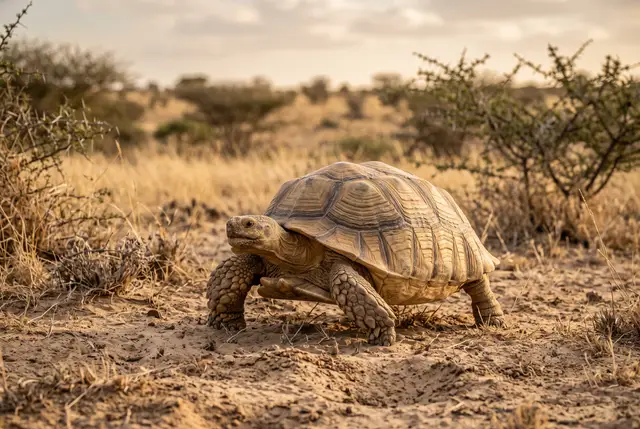
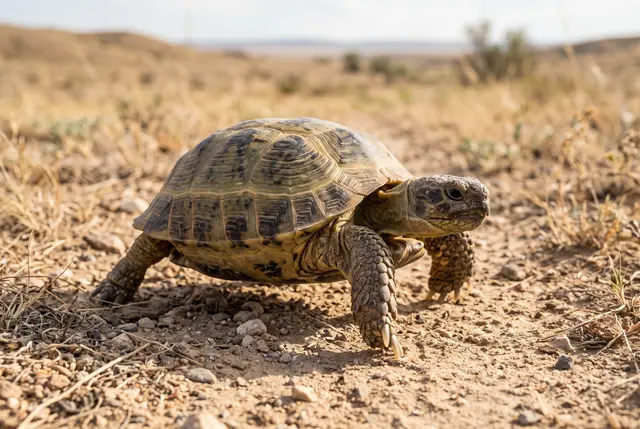
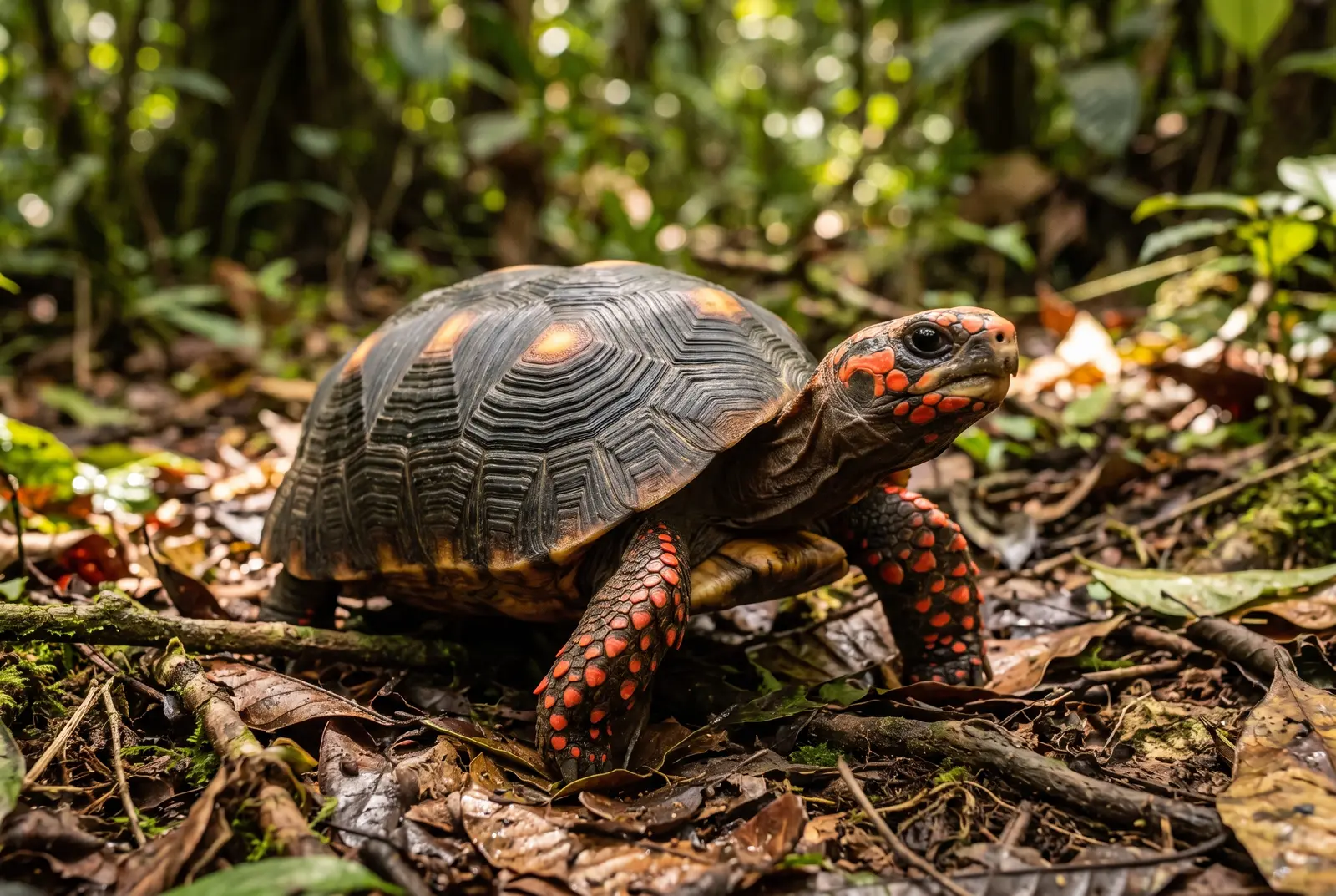
- A medium-sized tortoise with a dark, domed shell whose scutes often have a paler centre. Its most striking feature is the bright red-to-orange scales on the legs, head and tail that give the species its name. Males usually reach 30–40 cm and have a waisted, peanut-shaped shell, while females tend to be smaller and rounder.
- Habitat
- Humid tropical forests, forest edges and moist savannas across northern South America – from Panama through Colombia, Venezuela and the Guianas to Brazil, Bolivia and northern Argentina.
- Diet
- Omnivorous. It feeds mainly on fallen fruit, flowers, leaves and fungi, supplemented by invertebrates, carrion and dung. By eating fruit it helps disperse seeds through the forest.
- Reproduction
- After courtship, during which males make a distinctive clucking sound, the female lays 2–15 elongated eggs in a dug-out nest, often several times a year. The hatchlings emerge after about five months and are fully independent from the start.
- Lifespan
- Commonly lives around 50 years, and considerably longer with good care.
- Did you know?
- The glowing red-orange scales against its dark body look like embers, which is why Czech calls it the „charcoal-burner’s“ tortoise.
Homeland & habitat
Where the želva uhlířská lives
Spin the globe to see where the species comes from and where it lives today.
Northern South AmericaLives in humid forests and savannas across northern South America, from Panama to northern Argentina.
Loading globe…
Native range
Drag to rotate · double-click to recentre on the homeland
9 facts about the želva uhlířská
The cards keep rotating — hover with your mouse to pause them.
- GroupReptilesTestudines (želvy) · Testudinidae (želvovití)
- Scientific namechelonoidis carbonariaLatin name of the species
- Homeland & habitatVlhké tropické lesy, jejich okraje a vlhké savany severní části Jižní Ameriky – od Panamy přes Kolumbii, Venezuelu a Guyany až po Brazílii, Bolívii a severní Argentinu.
- DietVšežravec. Živí se hlavně spadaným ovocem, květy, listy a houbami, doplňuje je bezobratlými živočichy, mršinami i trusem. Pojídáním plodů pomáhá roznášet semena po lese.
- ReproductionPo námluvách, při nichž samci vydávají charakteristické „kvokání“, klade samice do vyhrabané jamky 2–15 podlouhlých vajec, často několikrát za rok. Mláďata se líhnou zhruba po pěti měsících a jsou od začátku zcela samostatná.
- LifespanBěžně se dožívá kolem 50 let, při dobré péči i výrazně více.
- Did you know…?Červené a oranžové šupiny na tmavém těle připomínají žhnoucí uhlíky – odtud české jméno „uhlířská“.
- Where in the zooArea A — the reptile house
- How many we keep♂ 4 · ♀ 2total: 6
Support the care of our animals
A symbolic adoption contributes to feeding, veterinary care and the development of the exhibits — and you get a certificate and updates about your animal.
Browse adoptions