Reptiles
Turtles
Testudines
Audio guide
Listen to the story of this animal
0:000:00
Turtles
- Description
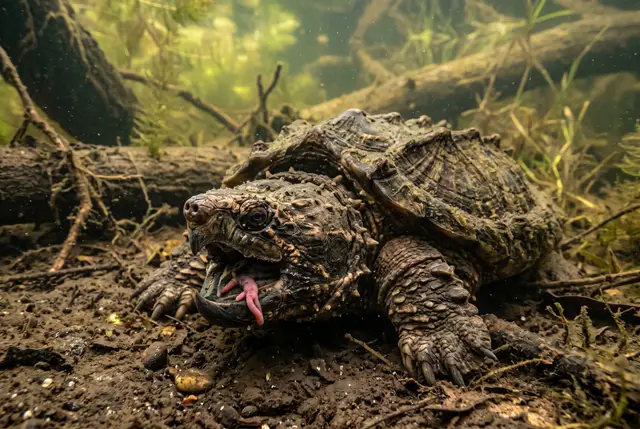
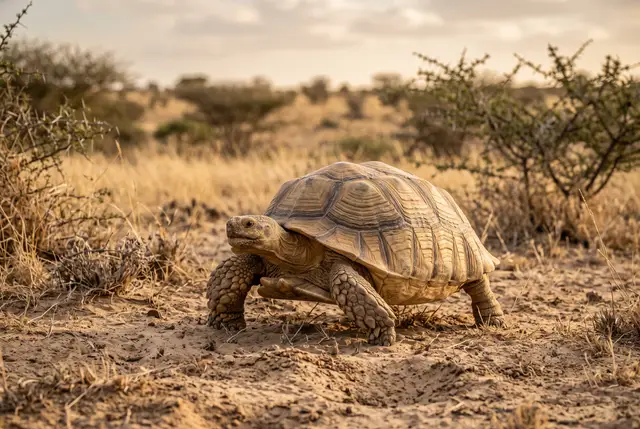
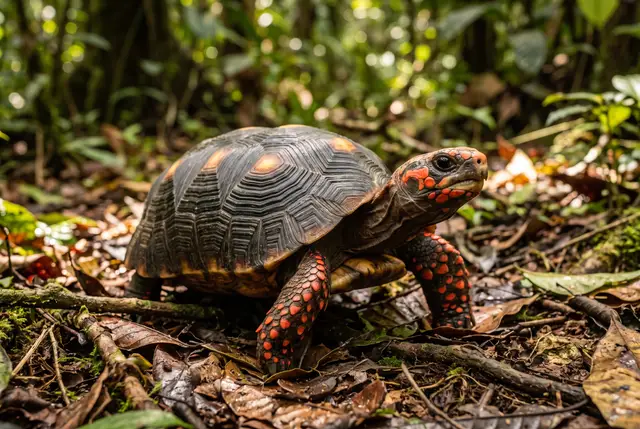
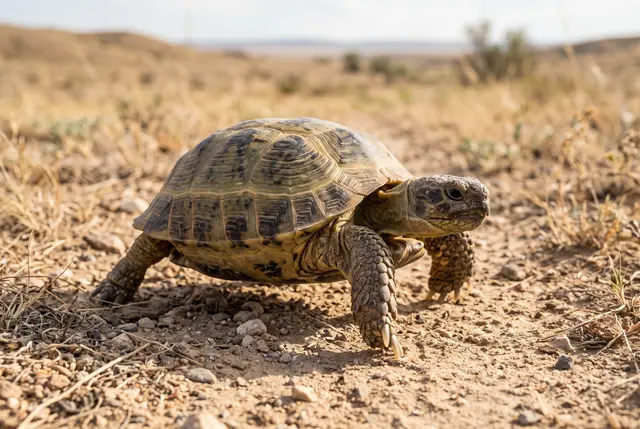
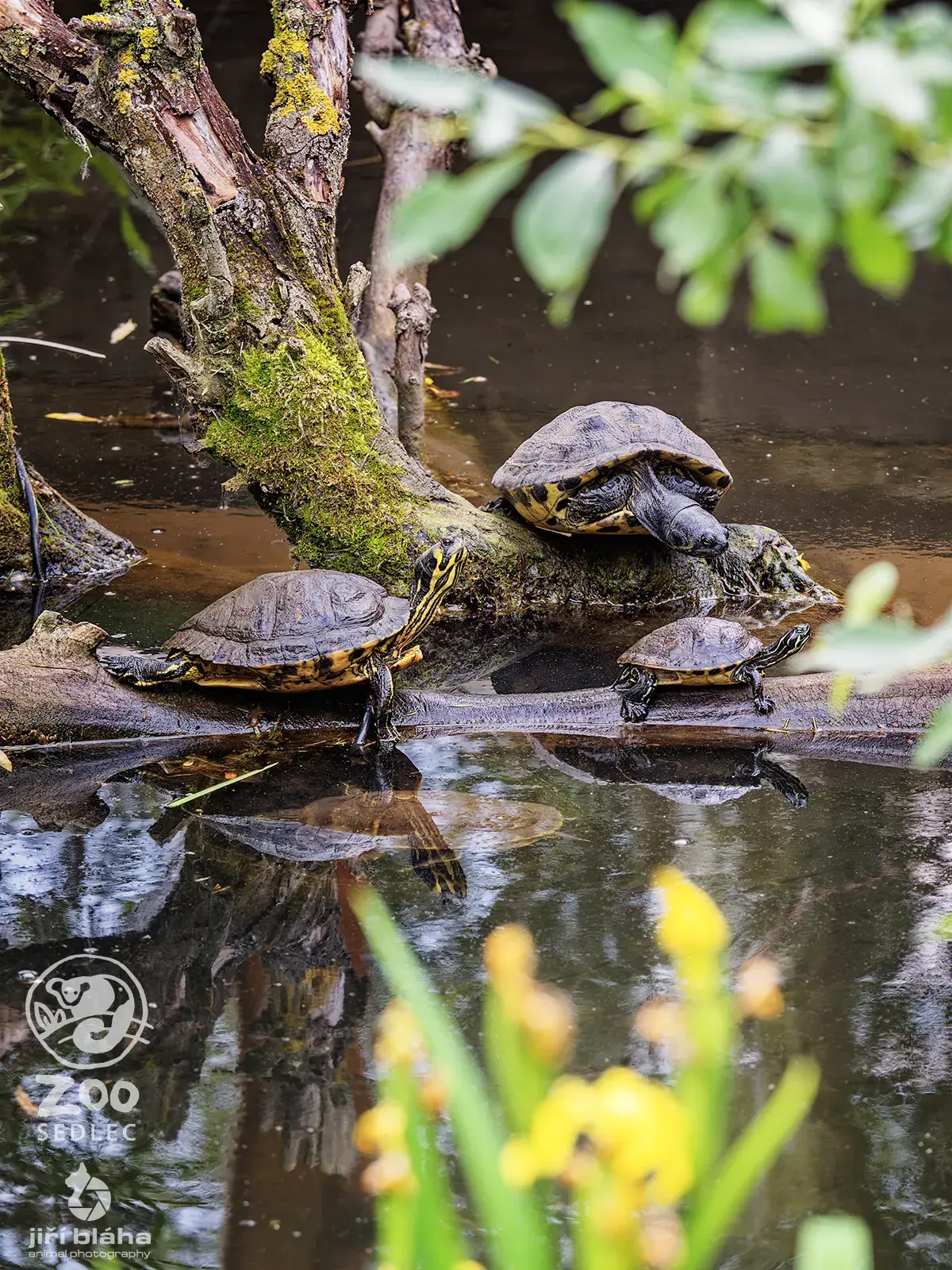
- Turtles (order Testudines) are reptiles instantly recognisable by their bony shell, which is fused to the spine and ribs and covered in horny plates called scutes. They range enormously in size, from tiny species with a shell of only about 8-10 cm to the giant leatherback sea turtle, which can exceed 2 m in shell length and weigh over 500 kg. All turtles have a toothless, keratinised beak instead of teeth.
- Habitat
- Turtles are found on nearly every continent and across the world's oceans, absent only from the coldest polar and high-mountain regions. The group includes land-dwelling tortoises, freshwater terrapins that live in ponds, rivers and marshes, and fully marine sea turtles that roam the open ocean.
- Diet
- As a group turtles are opportunistic omnivores, though the balance varies by species: most land tortoises are largely herbivorous, feeding on grasses, leaves and fruit, while many aquatic turtles are more carnivorous, taking fish, insects, worms, snails and other small animals.
- Reproduction
- All turtles reproduce by laying eggs on land, digging a nest into soil or sand. Clutch size ranges from a single egg to over 100 depending on the species, and incubation lasts from about two months in temperate species to a year in some tropical ones. In many species the temperature of the nest determines whether the hatchlings are male or female.
- Lifespan
- Turtles are among the longest-lived vertebrates. Many species live for several decades, and giant tortoises are famous for reaching well over 100 years; the Seychelles giant tortoise Jonathan is thought to be over 190 years old.
- Did you know?
- A turtle's shell is not a separate house it can climb out of, it is part of its skeleton, with the backbone and ribs fused directly into the shell. Turtles are also an ancient lineage that has existed for more than 200 million years, predating the dinosaurs' extinction by a wide margin.
Homeland & habitat
Where the turtles lives
Spin the globe to see where the species comes from and where it lives today.
All continents and oceansTurtles inhabit nearly the whole world except the polar regions, most abundantly in warmer zones, and include terrestrial, freshwater and marine species.
Loading globe…
Native range
Drag to rotate · double-click to recentre on the homeland
8 facts about the turtles
The cards keep rotating — hover with your mouse to pause them.
- GroupReptiles
- Scientific nameTestudinesLatin name of the species
- Homeland & habitatŽelvy obývají téměř celý svět s výjimkou polárních oblastí, nejvíce jich žije v teplejších pásmech. Najdeme mezi nimi druhy suchozemské, sladkovodní i výhradně mořské, a to od stepí a pouští přes řeky a jezera až po otevřený oceán. Dnes je popsáno více než 350 druhů, z nichž značná část je vážně ohrožena.
- DietPotrava se liší podle způsobu života. Suchozemské želvy jsou převážně býložravé nebo všežravé a spásají rostliny, plody a trávu, zatímco vodní a sladkovodní druhy jsou většinou masožravé a loví ryby a vodní bezobratlé. Řada druhů je ve skutečnosti všežravá a nepohrdne prakticky žádnou dostupnou potravou.
- ReproductionVšechny želvy jsou vejcorodé a samice zahrabávají vejce do jamky vyhrabané na souši. Počet vajec kolísá podle druhu zhruba od 2 do 15 u suchozemských želv, kdežto mořské druhy jich mohou naklást přibližně 150 najednou. Inkubace obvykle trvá kolem 75 až 90 dní a u mnoha druhů rozhoduje o pohlaví mláďat teplota v hnízdě: z chladnějších snůšek se líhnou spíše samci, z teplejších samice.
- LifespanŽelvy patří mezi mimořádně dlouhověké živočichy. Řada druhů se běžně dožívá mnoha desítek let a u prokazatelně ověřených jedinců byl zaznamenán věk přes 180 let. V lidské péči se při dobré péči často dožívají vyššího věku než ve volné přírodě.
- Did you know…?Želvy jsou jednou z nejstarších skupin plazů vůbec, jejich předci se na Zemi objevili už v éře dinosaurů, zhruba před 230 miliony let. U mnoha druhů navíc neurčují pohlaví mláděte chromozomy, ale teplota, při níž se vejce v hnízdě vyvíjejí.
- Where in the zooArea A — the reptile house
Support the care of our animals
A symbolic adoption contributes to feeding, veterinary care and the development of the exhibits — and you get a certificate and updates about your animal.
Browse adoptions