Reptiles
African spurred tortoise
centrochelys sulcata
IUCN Red ListEndangered
Audio guide
Listen to the story of this animal
0:000:00
African spurred tortoise
- Description
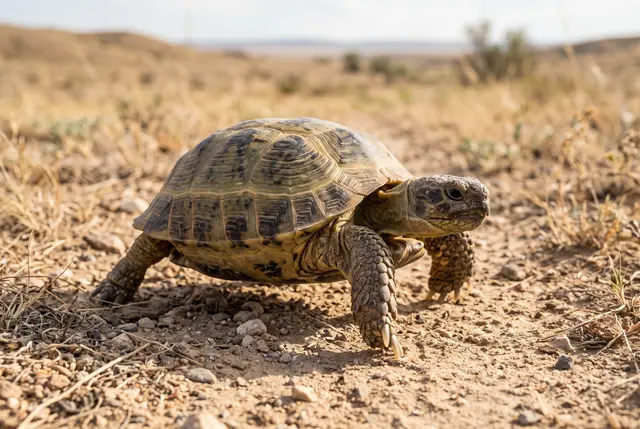
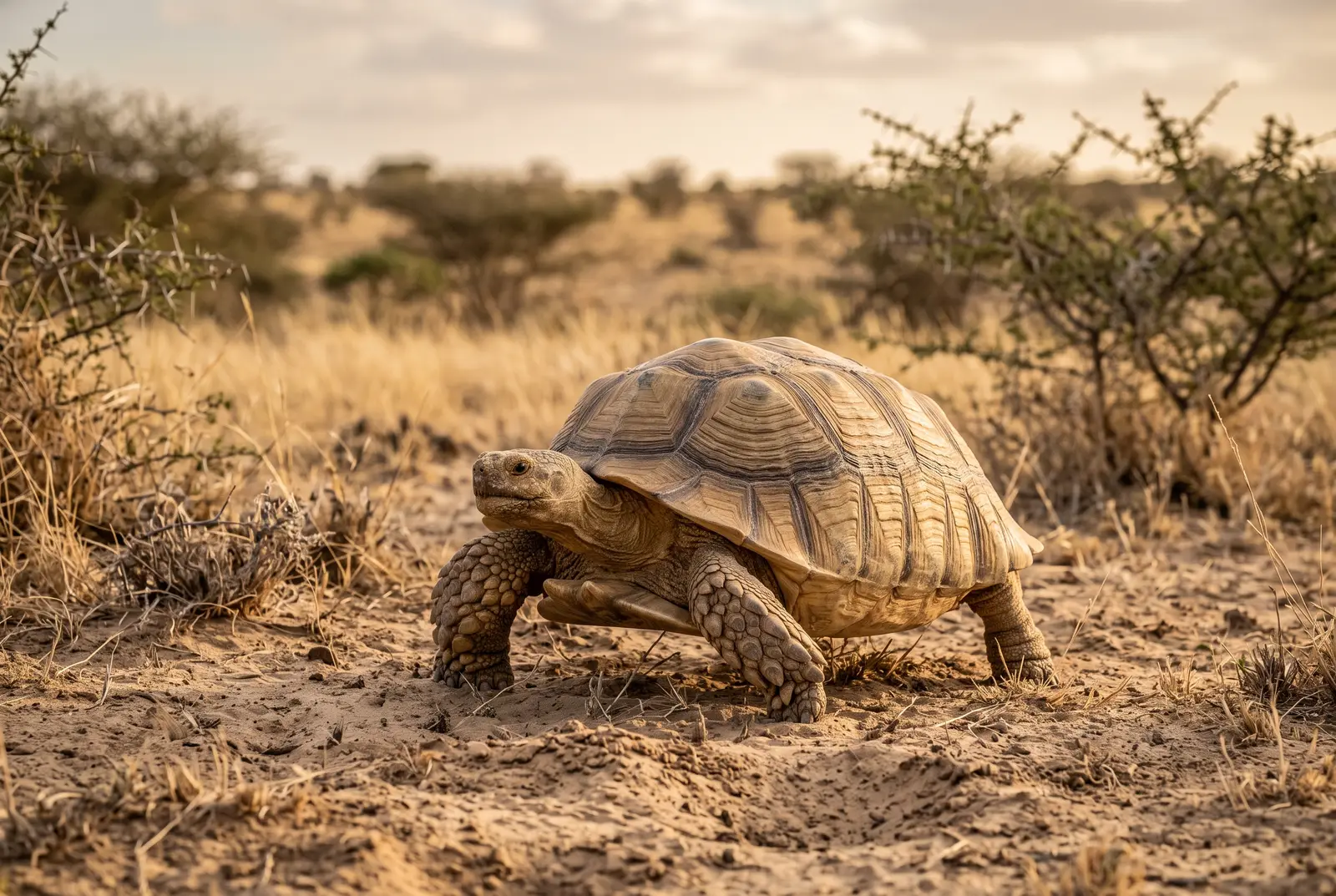
- The African spurred tortoise is the third-largest tortoise in the world and the largest that lives on a mainland. Adults carry a heavy, domed tan carapace 60–80 cm long and weigh 40–90 kg, with males the larger sex. It is named for the prominent spur-like scales on its hind legs.
- Habitat
- It inhabits the semi-deserts, dry savannas and thorn scrub of the Sahel, along the southern fringe of the Sahara. It escapes the daytime heat in deep burrows it digs itself.
- Diet
- A grazing herbivore, it feeds on grasses, succulents, herbs and fallen fruit, from which it obtains most of the moisture it needs and can go for long periods without drinking.
- Reproduction
- After mating, the female digs a nest chamber in the ground and lays 15–30 (occasionally up to 40) eggs. Incubation lasts about eight months and the hatchlings receive no parental care.
- Lifespan
- Typically 50–80 years, and well over 100 years under good care.
- Did you know?
- It excavates burrows several metres long to escape extreme heat and night-time cold, and these tunnels also shelter many other desert animals.
Homeland & habitat
Where the african spurred tortoise lives
Spin the globe to see where the species comes from and where it lives today.
Sahel (sub-Saharan Africa)The largest mainland tortoise in Africa lives in the semi-deserts and dry savannas of the Sahel, along the southern edge of the Sahara.
Loading globe…
Native range
Drag to rotate · double-click to recentre on the homeland
10 facts about the african spurred tortoise
The cards keep rotating — hover with your mouse to pause them.
- GroupReptilesTestudines (želvy) · Testudinidae (želvovití)
- Scientific namecentrochelys sulcataLatin name of the species
- Homeland & habitatObývá polopouště, suché savany a trnité křoviny sahelského pásu na jižním okraji Sahary. Před denním žárem se ukrývá v hlubokých norách, které si sama vyhrabává.
- DietBýložravec – pase se na travách, sukulentech, bylinách a spadaných plodech. Z rostlinné potravy pokryje i většinu své potřeby vody a vydrží dlouho bez napájení.
- ReproductionPo páření samice vyhrabává v zemi hnízdní komůrku a klade 15–30 (výjimečně až 40) vajec. Inkubace trvá zhruba osm měsíců a o vylíhlá mláďata se rodiče nestarají.
- LifespanBěžně se dožívá 50–80 let, v dobré péči i přes 100 let.
- Conservation statusEndangeredAccording to the IUCN Red List
- Did you know…?Dokáže vyhrabat nory dlouhé několik metrů, jimiž uniká extrémnímu horku i nočnímu chladu – ty pak slouží jako úkryt řadě dalších pouštních živočichů.
- Where in the zooArea A — the reptile house
- How many we keep♂ 2 · ♀ 1total: 3
Conservation status
Species vulnerability index
Least Concern
Near Threatened
Vulnerable
Endangered
Critically Endangered
Support the care of our animals
A symbolic adoption contributes to feeding, veterinary care and the development of the exhibits — and you get a certificate and updates about your animal.
Browse adoptions