Reptiles
Alligator snapping turtle
macrochelys temminckii
IUCN Red ListVulnerable
Audio guide
Listen to the story of this animal
0:000:00
Alligator snapping turtle
- Description
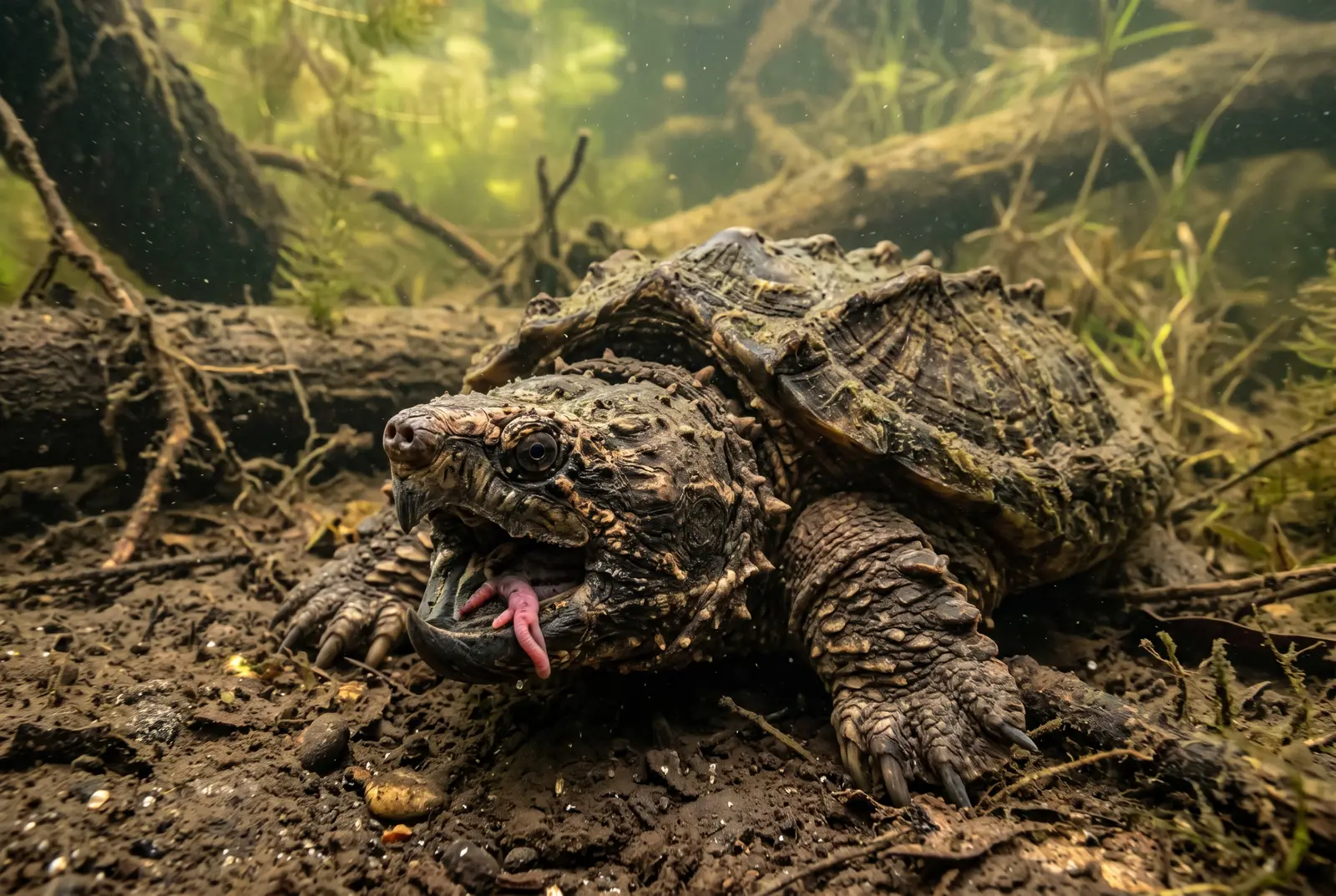
- The alligator snapping turtle is the largest freshwater turtle in North America and one of the most prehistoric-looking reptiles alive. Three rows of spiky ridges run down its massive shell, and its powerful hooked beak can deliver a formidable bite. Large males may weigh over 100 kilograms.
- Habitat
- It lives in deep rivers, lakes, swamps and backwaters of the Mississippi River drainage across the southeastern United States. It spends almost its entire life motionless on the bottom; only egg-laying females regularly come ashore.
- Diet
- An ambush predator, it lies still on the riverbed with its mouth open, wiggling a pink, worm-like appendage on its tongue to lure fish straight between its jaws. It also eats molluscs, crayfish, other turtles, amphibians and carrion.
- Reproduction
- Once a year a female climbs onto the bank and lays 10–50 round eggs in a dug nest. The nest temperature determines the hatchlings' sex. After about 100 days tiny young hatch and fend entirely for themselves.
- Lifespan
- In the wild it lives 20–70 years, and over 100 years under human care. Slow growth and late maturity make it vulnerable to hunting and collection.
- Did you know?
- Its tongue bears a lure that looks just like a living worm – the turtle literally 'fishes' for prey without moving a muscle.
Homeland & habitat
Where the alligator snapping turtle lives
Spin the globe to see where the species comes from and where it lives today.
Southeastern USAThe alligator snapping turtle inhabits rivers, lakes and wetlands of the Mississippi drainage in the southeastern United States.
Loading globe…
Native range
Drag to rotate · double-click to recentre on the homeland
10 facts about the alligator snapping turtle
The cards keep rotating — hover with your mouse to pause them.
- GroupReptilesŽelvy · kajmankovití
- Scientific namemacrochelys temminckiiLatin name of the species
- Homeland & habitatObývá hluboké řeky, jezera, bažiny a slepá ramena v povodí řeky Mississippi na jihovýchodě USA. Téměř celý život tráví nehybně na dně; na souš pravidelně vylézají jen samice kladoucí vejce.
- DietMasožravec lovící ze zálohy. Nehybně leží na dně s otevřenou tlamou a růžovým, červovitě se svíjejícím výběžkem jazyka láká ryby přímo mezi čelisti. Kromě ryb požírá měkkýše, raky, jiné želvy, obojživelníky i mršiny.
- ReproductionJednou ročně samice vyleze na břeh a do vyhrabané jamky naklade 10–50 kulovitých vajec. Pohlaví mláďat určuje teplota v hnízdě. Po zhruba 100 dnech se líhnou drobná mláďata, o která se rodiče vůbec nestarají.
- LifespanVe volné přírodě se dožívá 20–70 let, v lidské péči i přes 100 let. Pomalý růst a pozdní dospělost ji činí zranitelnou vůči lovu a sběru.
- Conservation statusVulnerableAccording to the IUCN Red List
- Did you know…?Její jazyk nese výběžek k nerozeznání od živého červa – želva jím doslova „rybaří“ a láká kořist do tlamy, aniž by se pohnula.
- Where in the zooArea A — the reptile house
- How many we keep♂ 0 · ♀ 1total: 1
Conservation status
Species vulnerability index
Least Concern
Near Threatened
Vulnerable
Endangered
Critically Endangered
Support the care of our animals
A symbolic adoption contributes to feeding, veterinary care and the development of the exhibits — and you get a certificate and updates about your animal.
Browse adoptions