Birds
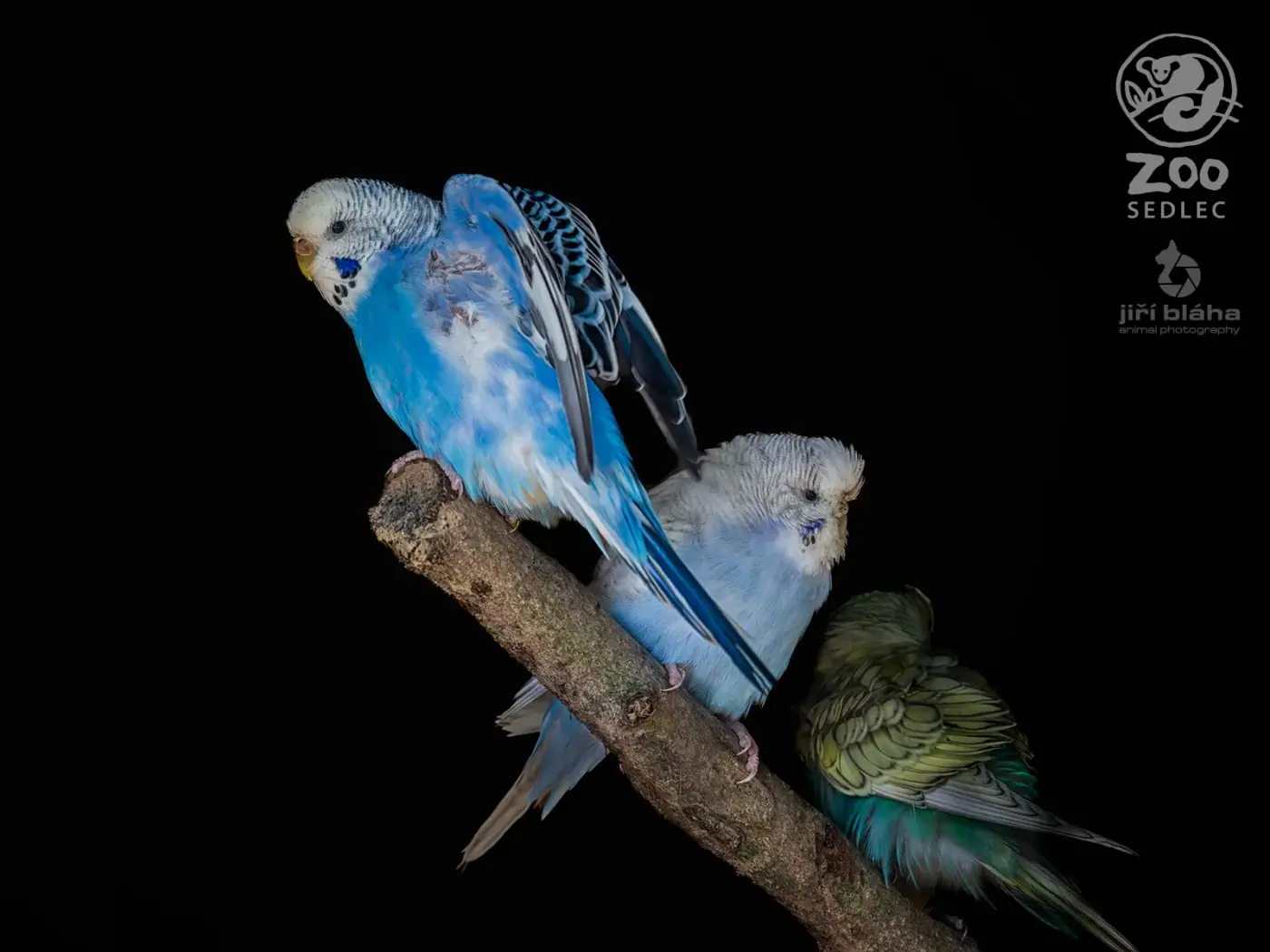
Budgerigar
Melopsittacus undulatus
Audio guide
Listen to the story of this animal
0:000:00
Budgerigar
- Description
- They grow to a body length of approximately 18 cm (including the tail) and in the wild reach a weight of 26-40 g, in captivity up to 60 g. The female is distinguished from the male by its brown cere, while the male has a blue cere.
- Habitat
- They are found practically throughout Australia.
- Diet
- They feed on seeds, flowers, buds, and fruits.
- Reproduction
- They lay between four and eight eggs, which they brood for 18-21 days.
- Lifespan
- Approximately 6-8 years and in captivity up to 10 years.
- Did you know?
- Male budgerigars are among the five parrot species that learn to talk the easiest. In the Guinness Book of Records, the parrot with the most extensive vocabulary is a budgerigar with a vocabulary of 1728 words.
Homeland & habitat
Where the budgerigar lives
Spin the globe to see where the species comes from and where it lives today.
Inland AustraliaThe budgerigar is native to inland Australia, where it roams open grassland and semi-desert in large nomadic flocks; a feral population from escaped birds exists in Florida.
Loading globe…
Native rangeIntroduced / also today
Drag to rotate · double-click to recentre on the homeland
9 facts about the budgerigar
The cards keep rotating — hover with your mouse to pause them.
- GroupBirds
- Scientific nameMelopsittacus undulatusLatin name of the species
- Homeland & habitatDomovem andulky je vnitrozemská Austrálie, kde obývá otevřenou krajinu, travnaté pláně, řídké eukalyptové porosty a polopouštní oblasti. Za potravou a vodou často kočuje na velké vzdálenosti a mimo hnízdění se sdružuje do početných hejn. Do Evropy byla přivezena v polovině 19. století a dnes patří k nejoblíbenějším chovaným ptákům na světě.
- DietAndulka je zrnožravá a živí se převážně semeny trav a bylin, která sbírá na zemi i přímo z rostlin. Doplňkově okusuje i zelené části rostlin a při nedostatku vody dokáže dlouho vydržet s minimem tekutin.
- ReproductionSamice snáší zpravidla 4–6 (výjimečně až 8) drobných bílých vajec, na kterých sedí sama po dobu přibližně 18 dnů. Mláďata opouštějí hnízdní dutinu asi ve věku jednoho měsíce. V přírodě se andulky rozmnožují oportunisticky, hlavně po deštích, kdy je dostatek potravy.
- LifespanV přírodě se andulky vzhledem k predátorům a suchu dožívají zpravidla jen několika let. V lidské péči je běžný věk okolo 7–15 let, výjimečně i více.
- Did you know…?Pohlaví dospělé andulky snadno poznáte podle barvy ozobí nad zobákem: u samců bývá modré, u samic hnědavé či béžové. Andulky navíc patří mezi ptáky schopné napodobovat lidskou řeč.
- Where in the zooArea A — aviaries and exhibits
- How many we keep♂ 10 · ♀ 18total: 28
Support the care of our animals
A symbolic adoption contributes to feeding, veterinary care and the development of the exhibits — and you get a certificate and updates about your animal.
Browse adoptions