Birds
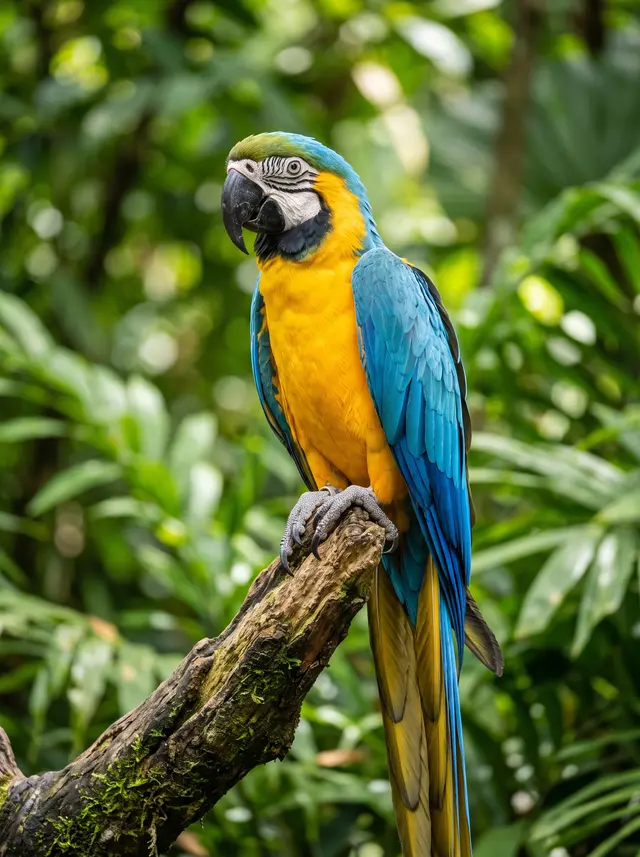
Hyacinth macaw
Anodorhynchus hyacinthinus
When to see us feeding
Regular schedule outside weekend events
- Thursday ·
10 October – 1 November 2026 · Open every day, 9:00–18:00, on weekdays and weekends. The special October programme takes place at weekends.
The regular feeding schedule continues on weekdays throughout October. On weekends from 10 October to 1 November, check the programme and the entrance for times.
Hyacinth macaw
- Description
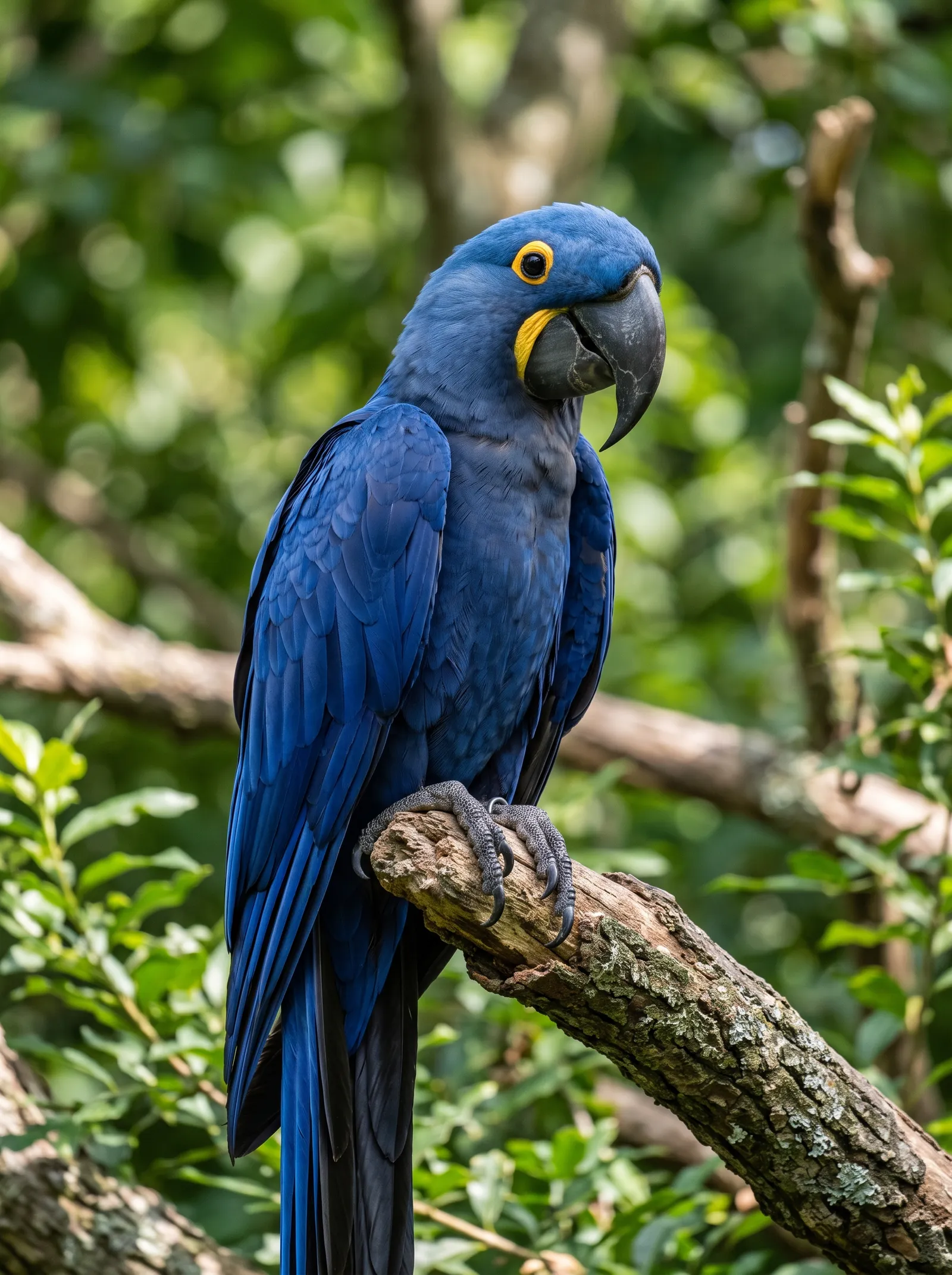
- The largest flying parrot in the world. It measures 95–100 cm and weighs 1.2–1.7 kg. It is deep cobalt blue all over, with only a bold yellow ring around the eye and a further yellow stripe at the base of the lower mandible. The massive black bill is among the strongest of any bird.
- Habitat
- The interior of Brazil — the wetlands of the Pantanal and the savannas of the Cerrado — and marginally Bolivia and Paraguay. It favours palm savanna, gallery forest and open country with scattered trees.
- Diet
- A narrow specialist on the hard nuts of palms, chiefly acuri and bocaiúva. Its bill cracks shells almost no other bird can manage. It prefers to collect acuri nuts from cattle dung — passing through a cow's gut softens them.
- Reproduction
- It nests in the cavities of old trees, most often manduvi, and in rock faces. A clutch holds 1–2 eggs and incubation lasts around 29 days. As a rule only one chick is reared and a pair breeds only every second year, which makes the population very slow to recover.
- Lifespan
- Around 50 years in the wild, over 60 in human care.
- Did you know?
- The hyacinth macaw depends so closely on the acuri palm that without the cattle herds which spread and soften the nuts, food would be far harder to come by in the Pantanal. Protecting the species is thus unexpectedly bound up with how the region is farmed.
Homeland & habitat
Where the hyacinth macaw lives
Spin the globe to see where the species comes from and where it lives today.
Pantanal and Cerrado (Brazil)It lives in palm savanna and gallery forest of inland Brazil, marginally also in Bolivia and Paraguay. It depends closely on palms, whose hard nuts form the basis of its diet.
Drag to rotate · double-click to recentre on the homeland
9 facts about the hyacinth macaw
The cards keep rotating — hover with your mouse to pause them.
- GroupBirdsPapoušci (Psittaciformes) · Papouškovití (Psittacidae)
- Scientific nameAnodorhynchus hyacinthinusLatin name of the species
- Homeland & habitatVnitrozemí Brazílie — mokřady Pantanalu a savany Cerrada — a okrajově Bolívie a Paraguay. Vyhledává palmové savany, galeriové lesy a otevřenou krajinu s roztroušenými stromy.
- DietÚzký specialista na tvrdé ořechy palem, hlavně druhů acuri a bocaiúva. Zobákem rozlouskne skořápku, se kterou si neporadí skoro žádný jiný pták. Ořechy acuri sbírá nejraději z hovězího trusu — projitím trávicím traktem dobytka změknou.
- ReproductionHnízdí v dutinách starých stromů, nejčastěji manduvi, a ve skalních stěnách. Snůška má 1–2 vejce a inkubace trvá kolem 29 dní. Odchová se zpravidla jen jedno mládě a pár hnízdí jen jednou za dva roky, což činí obnovu populace velmi pomalou.
- LifespanVe volné přírodě kolem 50 let, v lidské péči i přes 60.
- Conservation statusVulnerableAccording to the IUCN Red List
- Did you know…?Ara hyacintový je natolik závislý na palmě acuri, že bez stád dobytka, která ořechy roznášejí a změkčují, by se mu v Pantanalu shánělo jídlo mnohem hůř. Ochrana druhu tak nečekaně souvisí s tím, jak se v kraji hospodaří.
- Where in the zooArea A — aviaries and exhibits
Conservation status
Species vulnerability index
Podle IUCN zranitelný druh (Vulnerable). V 80. letech srazil odchyt pro obchod se zvířaty populaci na zhruba tři tisíce ptáků; díky ochraně hnízdišť se počty od té doby zvedly.
Support the care of our animals
A symbolic adoption contributes to feeding, veterinary care and the development of the exhibits — and you get a certificate and updates about your animal.
Browse adoptions