Birds
Australian ringneck
barnardius zonarius
IUCN Red ListLeast Concern
Audio guide
Listen to the story of this animal
0:000:00
Australian ringneck
- Description
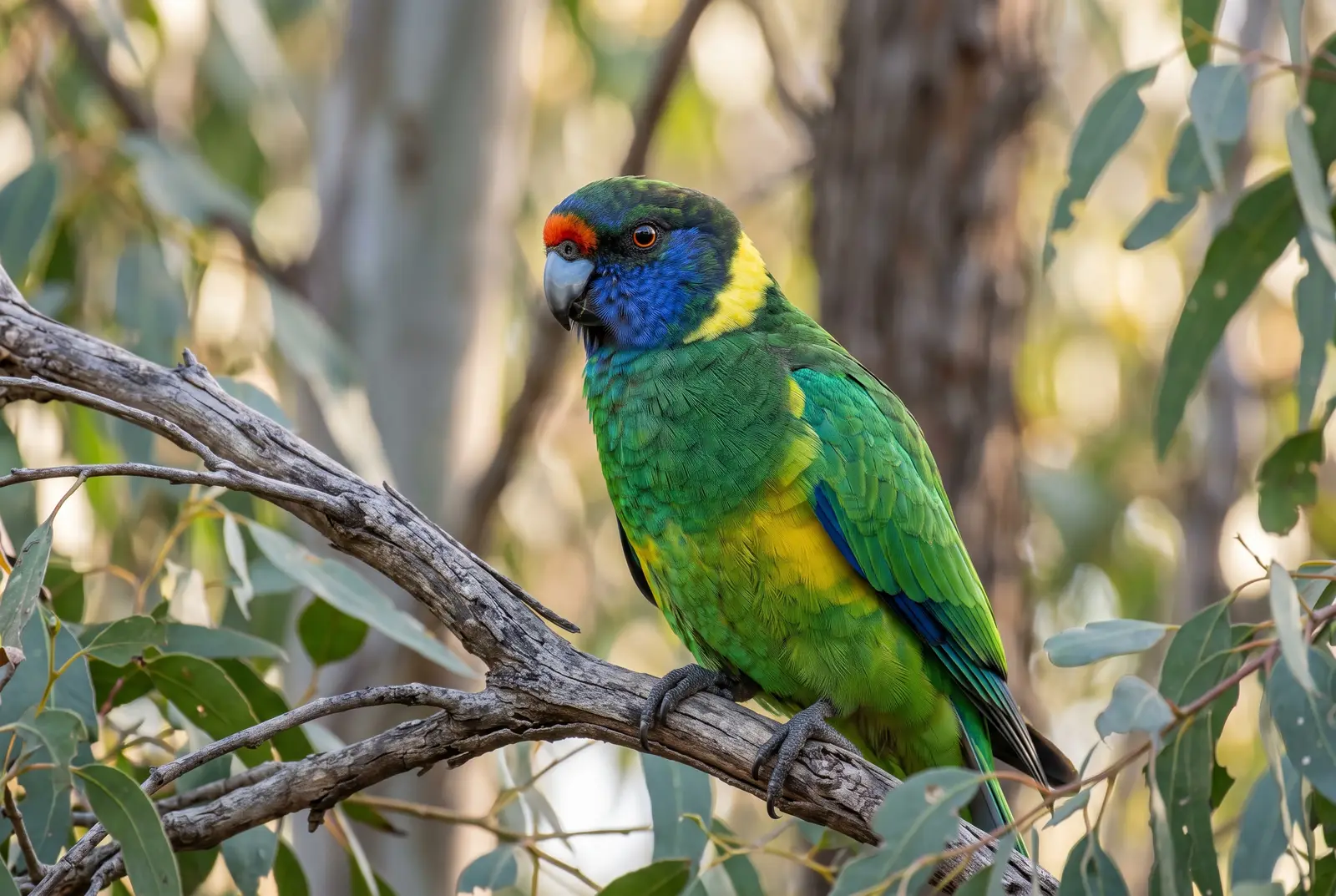
- The Australian ringneck is a medium-sized, slender parrot with a long, tapered tail, growing to roughly 33-44 cm and weighing around 100-170 g. Its most distinctive feature is a yellow band, or collar, across the nape, which gives the species its name. The body is mainly green with bluish tones on the cheeks and wings; in the nominate form, the Port Lincoln parrot, the head is black and the belly yellow. Males and females look similar, though females tend to be a little duller.
- Habitat
- Endemic to Australia, it occupies large parts of the western, central and southern regions of the continent. It favours dry and semi-arid eucalypt woodlands, low mallee scrub, thickets and open farmland, as well as roadside trees, parks and gardens.
- Diet
- It feeds mainly on plant matter — seeds of grasses and trees, fruits, buds, flowers and nectar — and will also take insects and their larvae. It forages both in the tree canopy and on the ground.
- Reproduction
- It nests in tree hollows, usually in eucalypts. The female lays around four to six white eggs and incubates them for about 19-21 days. The young leave the nest after roughly five weeks and are fed by the parents for some time afterwards.
- Lifespan
- Approximately 15-25 years in human care, usually shorter in the wild.
- Did you know?
- One form of the species is nicknamed the "twenty-eight" parrot, because its call sounds like someone saying that number in English.
Homeland & habitat
Where the australian ringneck lives
Spin the globe to see where the species comes from and where it lives today.
Western and central AustraliaEndemic to Australia, inhabiting dry eucalypt woodlands, mallee and open country across the western, central and southern parts of the continent.
Loading globe…
Native range
Drag to rotate · double-click to recentre on the homeland
10 facts about the australian ringneck
The cards keep rotating — hover with your mouse to pause them.
- GroupBirdsPapoušci · Papouškovití
- Scientific namebarnardius zonariusLatin name of the species
- Homeland & habitatDruh je endemitem Austrálie, kde obývá rozsáhlé oblasti západní, střední a jižní části kontinentu. Vyhledává suché a polosuché eukalyptové lesy, nízké porosty mallee, křoviny i otevřenou zemědělskou krajinu, stromořadí podél cest, parky a zahrady.
- DietŽiví se převážně rostlinnou stravou — semeny travin a dřevin, plody, poupaty, květy a nektarem. Nepohrdne ani hmyzem a jeho larvami. Potravu sbírá jak v korunách stromů, tak na zemi.
- ReproductionHnízdí v dutinách stromů, nejčastěji eukalyptů. Samice snáší zpravidla 4 až 6 bílých vajec, na kterých sedí přibližně 19 až 21 dní. Mláďata opouštějí hnízdo asi po pěti týdnech a rodiče je ještě nějakou dobu dokrmují.
- LifespanV lidské péči se běžně dožívá 15 až 25 let, ve volné přírodě je délka života obvykle kratší.
- Conservation statusLeast ConcernAccording to the IUCN Red List
- Did you know…?Jedna z forem barnarda límcového dostala přezdívku „twenty-eight“ (dvacet osm), protože její hlasový projev připomíná anglické vyslovení tohoto čísla.
- Where in the zooArea A — aviaries and exhibits
- How many we keep♂ 1 · ♀ 0total: 1
Conservation status
Species vulnerability index
Least Concern
Near Threatened
Vulnerable
Endangered
Critically Endangered
Support the care of our animals
A symbolic adoption contributes to feeding, veterinary care and the development of the exhibits — and you get a certificate and updates about your animal.
Browse adoptions