Birds
Tenebrosus pheasant
phasianus colchicus tenebrosus
Species originDomesticated
Audio guide
Listen to the story of this animal
0:000:00
Tenebrosus pheasant
- Description
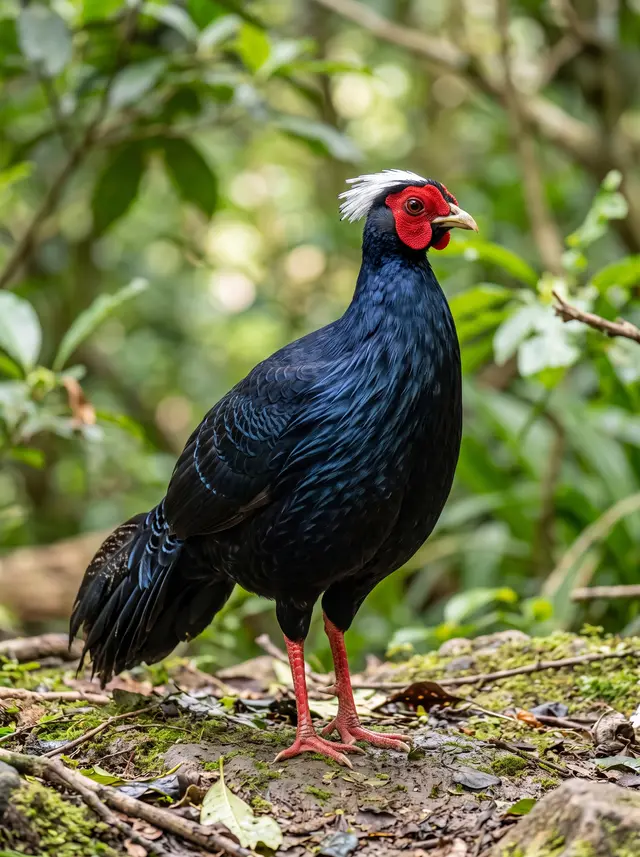
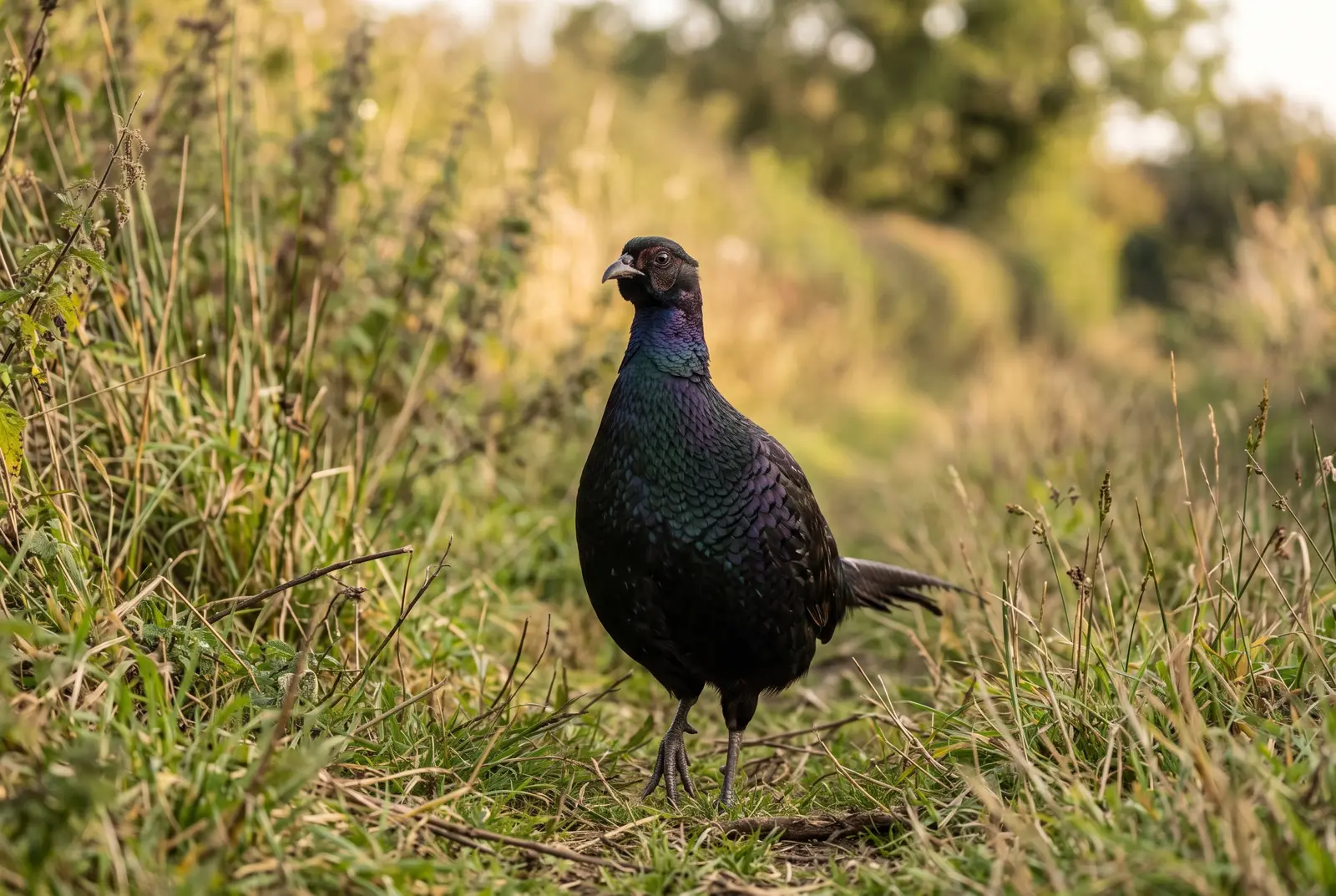
- The tenebrosus pheasant is a dark, captive-bred form of the common pheasant (Phasianus colchicus). The cock has iridescent green-black plumage with purple and blue highlights and lacks the white neck ring of the wild bird. The hen is much darker, a sooty brown. Including its long tail, the male reaches about 75–90 cm and weighs around 1–1.5 kg; the female is a little smaller.
- Habitat
- The common pheasant is native to Asia, ranging from the Caucasus across Central Asia to China. Introduced as a game and ornamental bird throughout Europe and North America, the dark tenebrosus form arose in European breeding stock. It favours fields, hedgerows, woodland edges and reed beds with dense cover.
- Diet
- An omnivore, it forages by scratching on the ground. It feeds on seeds, grain, berries, roots and green plant matter, supplemented with insects, worms and other small invertebrates.
- Reproduction
- A single cock mates with several hens. The hen lays 8–15 eggs in a shallow ground scrape and incubates them alone for about 23–27 days. The chicks are precocial and leave the nest soon after hatching.
- Lifespan
- In the wild, hunting and predators mean birds usually live only 1–3 years, but in human care they commonly reach ten years or more.
- Did you know?
- Tenebrosus is a melanistic colour mutation of the common pheasant — instead of the gaudy plumage and white neck ring, the cock shimmers in dark bottle-green all year round.
Homeland & habitat
Where the tenebrosus pheasant lives
Spin the globe to see where the species comes from and where it lives today.
Europe (captive-bred form of the common pheasant)A dark captive-bred form of the common pheasant, a species native to Asia and widely introduced across Europe; the melanistic tenebrosus mutation arose in European breeding stock.
Loading globe…
Native rangeIntroduced / also today
Drag to rotate · double-click to recentre on the homeland
10 facts about the tenebrosus pheasant
The cards keep rotating — hover with your mouse to pause them.
- GroupBirdsHrabaví · Bažantovití
- Scientific namephasianus colchicus tenebrosusLatin name of the species
- Homeland & habitatBažant obecný pochází z Asie, od Kavkazu přes Střední Asii až po Čínu. Jako lovná a okrasná zvěř byl vysazen po celé Evropě i v Severní Americe; tmavá forma tenebros vznikla v evropských chovech. Obývá pole, meze, okraje lesů a rákosiny s hustým porostem, který mu poskytuje úkryt.
- DietJe všežravec a potravu hledá hrabáním na zemi. Živí se semeny, obilkami, bobulemi, kořínky a zelenými částmi rostlin, které doplňuje hmyzem, žížalami a dalšími drobnými bezobratlými.
- ReproductionJeden kohout se páří s několika slepicemi. Slepice snáší do mělké jamky na zemi 8–15 vajec a sama je zahřívá přibližně 23–27 dní. Kuřata jsou nekrmivá a hnízdo opouštějí krátce po vylíhnutí.
- LifespanVe volné přírodě se kvůli lovu a predátorům dožívá zpravidla jen 1–3 let, v lidské péči však běžně deseti i více let.
- Conservation statusDomesticatedA domesticated form — not found in the wild
- Did you know…?Tenebros je melanistická barevná mutace bažanta obecného — místo pestrého šatu a bílého krčního kroužku se kohout po celý rok leskne tmavou lahvově zelenou barvou.
- Where in the zooArea A — aviaries and exhibits
- How many we keep♂ 1 · ♀ 2total: 3
Support the care of our animals
A symbolic adoption contributes to feeding, veterinary care and the development of the exhibits — and you get a certificate and updates about your animal.
Browse adoptions