Birds
Sandhill Crane
Grus canadensis
Audio guide
Listen to the story of this animal
0:000:00
Sandhill Crane
- Description
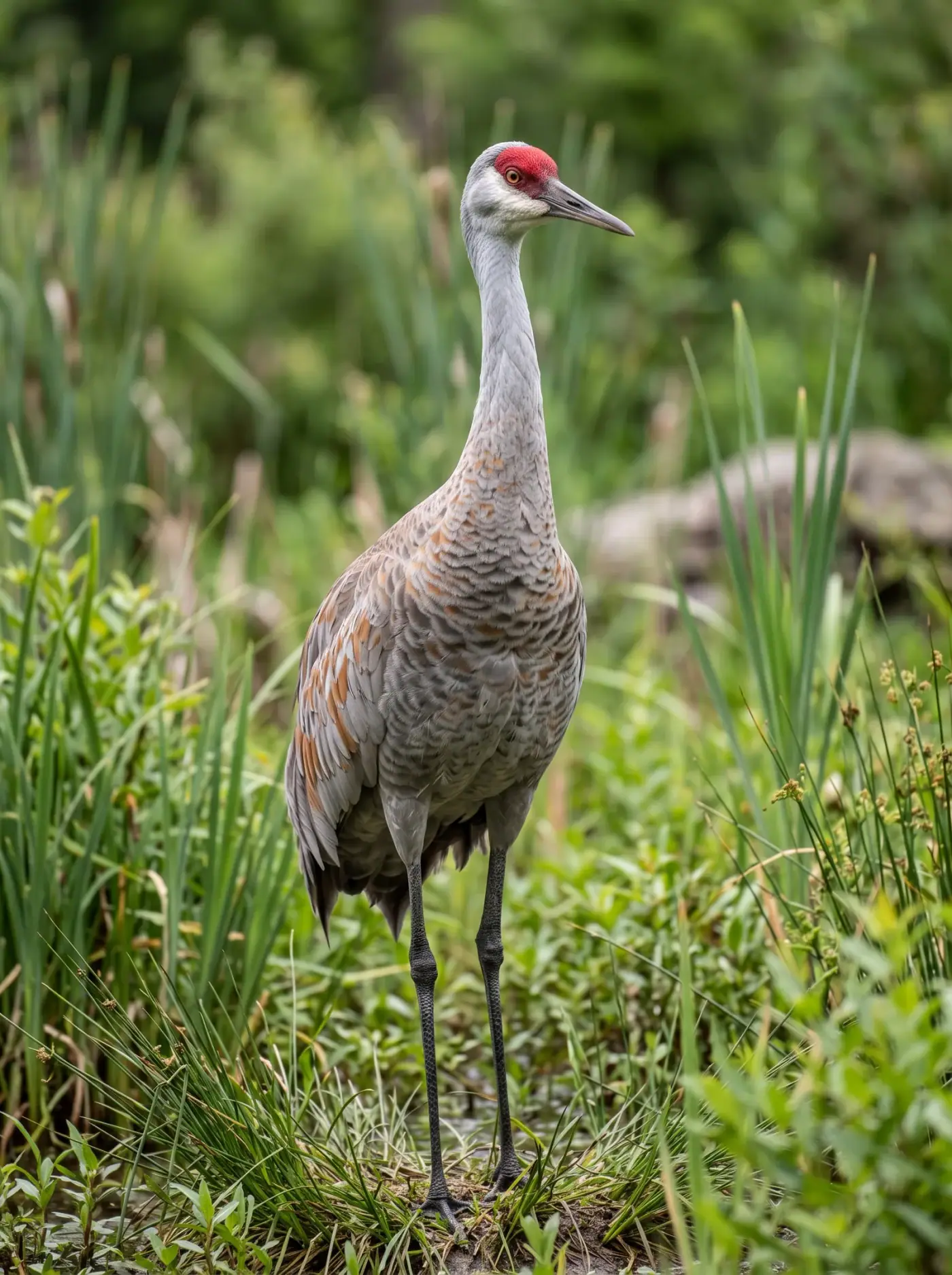
- The sandhill crane is a medium-sized crane standing roughly 80-120 cm tall with a wingspan approaching 2 metres and a weight of about 3-5 kg. Its plumage is mostly grey, often washed with rusty brown, and it has a long neck, long legs, a pointed bill and a distinctive bare patch of red skin on the crown. In flight it holds both its neck and legs fully stretched out.
- Habitat
- It breeds across northern North America, nesting in tundra, wetlands and peat bogs. In autumn it migrates south to the southern United States, Mexico and the northern parts of Central America.
- Diet
- The sandhill crane is omnivorous, feeding on plants, seeds, grain, berries, insects, frogs, and small reptiles and rodents. In farming areas it often gleans leftover crops from fields, such as corn.
- Reproduction
- Pairs are monogamous and stay together for life. The female usually lays 1-3 eggs, which both parents take turns incubating. The chicks are precocial, leaving the nest within a few hours of hatching and quickly learning to run.
- Lifespan
- In the wild it typically lives 20-25 years, and in human care it can reach over 30 years.
- Did you know?
- Sandhill cranes are famous for their spectacular courtship dances, leaping into the air, spreading their wings and giving loud, trumpeting calls.
Homeland & habitat
Where the sandhill crane lives
Spin the globe to see where the species comes from and where it lives today.
North AmericaBreeds in the tundra and wetlands of northern North America and winters in the southern USA and Mexico, with isolated populations in Cuba and Siberia.
Loading globe…
Native range
Drag to rotate · double-click to recentre on the homeland
9 facts about the sandhill crane
The cards keep rotating — hover with your mouse to pause them.
- GroupBirdskrátkokřídlí (Gruiformes) · jeřábovití (Gruidae)
- Scientific nameGrus canadensisLatin name of the species
- Homeland & habitatHnízdí na severu Severní Ameriky – v tundře, na mokřadech a rašeliništích. Na zimu migruje do jižních USA, Mexika a severní části Střední Ameriky.
- DietJe všežravý: rostliny, semena, obilí, bobule, hmyz, žáby, drobní plazi a hlodavci. V zemědělských oblastech často sbírá zbytky z polí (např. kukuřici)
- Reproductionpáry jsou monogamní a věrné po celý život. snáší 1–3 vejce, na kterých se střídají oba rodiče. Mláďata jsou nidifugní – opouštějí hnízdo už několik hodin po vylíhnutí a umí brzy běhat
- LifespanVe volné přírodě se dožívá 20–25 let, v zajetí i přes 30 let.
- Did you know…?Druh je znám impozantními svatebními tanci – jeřábi skáčou, roztahují křídla a vydávají hlasité troubení.
- Where in the zooArea A — aviaries and exhibits
- How many we keep♂ 1 · ♀ 1total: 2
Support the care of our animals
A symbolic adoption contributes to feeding, veterinary care and the development of the exhibits — and you get a certificate and updates about your animal.
Browse adoptions