Birds
Common Crane
Grus grus
Audio guide
Listen to the story of this animal
0:000:00
Common Crane
- Description
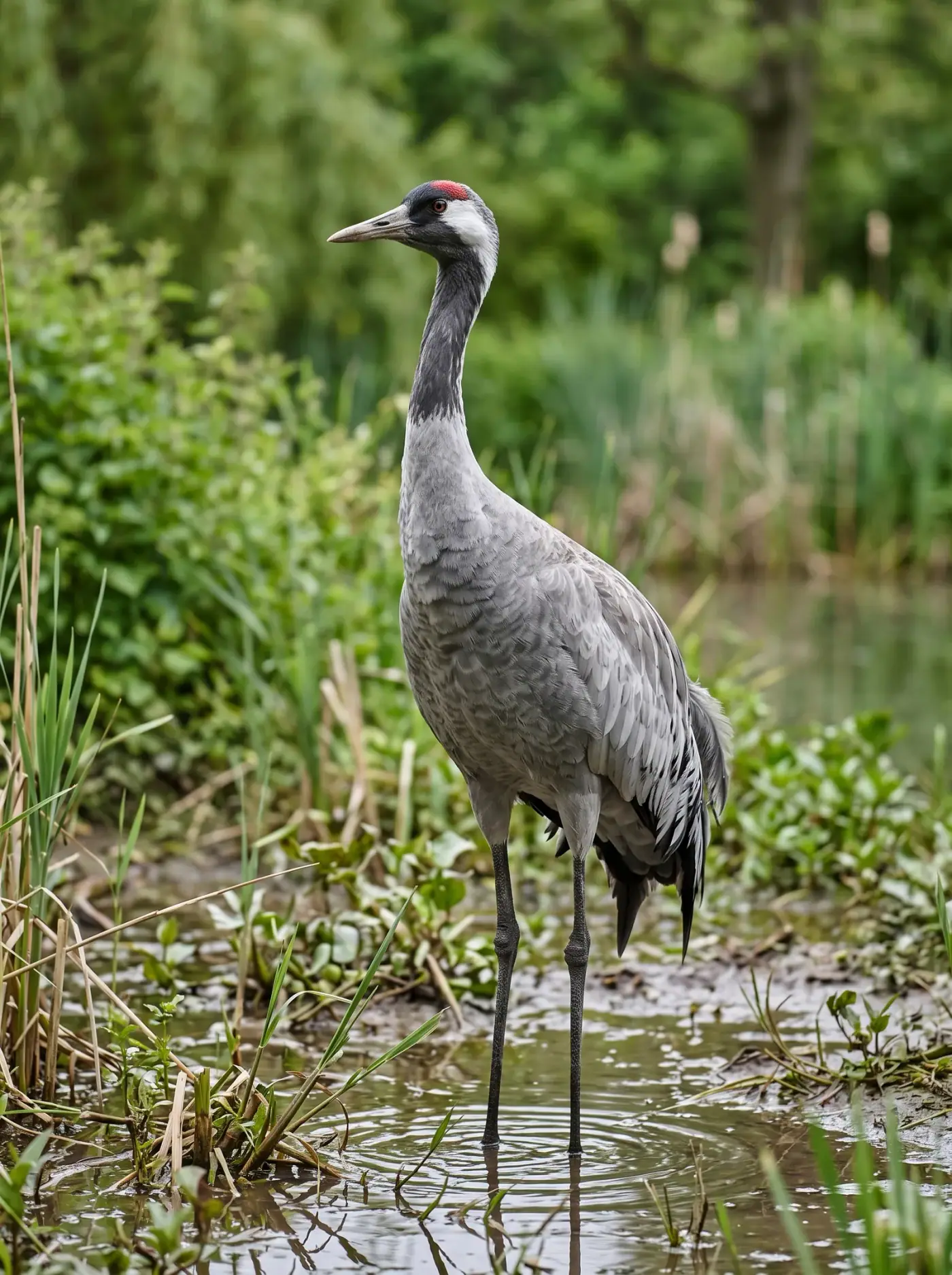
- The Common Crane (also called the Eurasian Crane) is a tall, elegant bird standing 110-130 cm high with a wingspan of up to 220-240 cm and a weight of around 4-6 kg. Its plumage is mainly slate-grey with a black tail and lower neck, a striking white stripe running down the side of the head and neck, and a bare patch of red skin on the crown. In flight it holds its neck and legs fully stretched out and beats its wings in slow, majestic strokes.
- Habitat
- It breeds across northern and central Europe and Asia, favouring wetlands, peat bogs, floodplain forests and damp meadows; in recent years it has once again become a regular breeder in the Czech Republic. In winter the birds migrate to southern Europe (such as Spain and France), North Africa and the Middle East.
- Diet
- The Common Crane is omnivorous. Its plant food includes roots, shoots, grain and berries, while its animal food consists of insects, snails, frogs and small rodents.
- Reproduction
- Pairs are monogamous and form strong bonds that last for life. The female usually lays a clutch of two eggs, which are incubated for about 28-31 days by both parents. The chicks are precocial and leave the nest soon after hatching, following their parents to safe feeding areas.
- Lifespan
- In the wild the Common Crane lives around 20 years, while in human care it can reach up to 40 years.
- Did you know?
- It is one of the largest birds in Europe, and its migrating flocks travel in V-formation accompanied by a loud, trumpeting call that carries over great distances.
Homeland & habitat
Where the common crane lives
Spin the globe to see where the species comes from and where it lives today.
Northern & Central EurasiaThe Common Crane breeds on wetlands and bogs across northern and central Eurasia and winters in southern Europe, North Africa and southern Asia.
Loading globe…
Native rangeIntroduced / also today
Drag to rotate · double-click to recentre on the homeland
9 facts about the common crane
The cards keep rotating — hover with your mouse to pause them.
- GroupBirdskrátkokřídlí (Gruiformes) · jeřábovití (Gruidae)
- Scientific nameGrus grusLatin name of the species
- Homeland & habitatHnízdí v severní a střední Evropě a Asii – zejména na mokřadech, rašeliništích, lužních lesích a vlhkých loukách. V Česku se v posledních letech opět pravidelně hnízdí. Zimuje v jižní Evropě (Španělsko, Francie), severní Africe a na Blízkém východě
- DietJe všežravý, rostlinná složka – kořínky, výhonky, obilí, bobule, živočišná složka – hmyz, plži, žáby, drobní hlodavci.
- ReproductionPáry jsou monogamní a tvoří pevné svazky na celý život. Snůška 2 vajec. Inkubace trvá 27–29 dní, mláďata jsou nidifugní a rodiče je vodí na bezpečná místa
- LifespanVe volné přírodě se dožívá kolem 20 let, v zajetí až 40 let.
- Did you know…?Patří mezi největší ptáky Evropy a jeho táhnoucí hejna jsou doprovázena typickým hlasitým voláním, slyšitelným na velkou vzdálenost
- Where in the zooArea A — aviaries and exhibits
- How many we keep♂ 1 · ♀ 1total: 2
Support the care of our animals
A symbolic adoption contributes to feeding, veterinary care and the development of the exhibits — and you get a certificate and updates about your animal.
Browse adoptions