Birds
Cockatiel
nymphicus hollandicus
IUCN Red ListLeast Concern
Audio guide
Listen to the story of this animal
0:000:00
Cockatiel
- Description
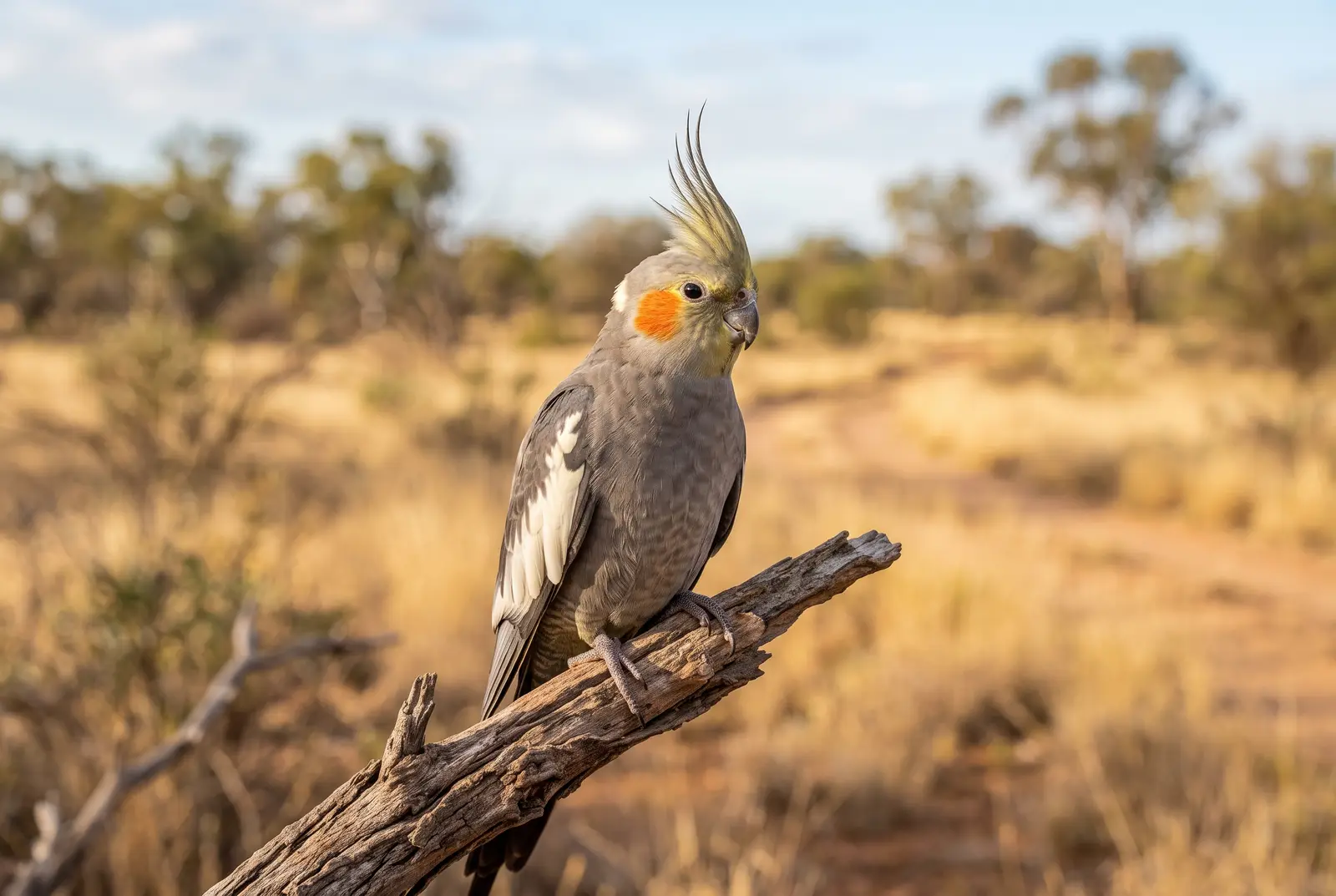
- The cockatiel is a small Australian parrot and the smallest member of the cockatoo family, instantly recognisable by its pointed crest and round orange cheek patches. Males show a bright yellow face and vivid cheeks, while females are more subdued and keep fine barring beneath the tail. It measures 30–33 cm, much of which is its long tapering tail, and ranks among the most popular pet birds in the world.
- Habitat
- The dry interior of Australia — bush, savanna, open scrub and the fringes of watercourses. It avoids the humid coastal forests and often wanders long distances in search of food and water.
- Diet
- Mainly grass and plant seeds gathered on the ground, supplemented with fruit, berries and fresh green shoots.
- Reproduction
- It nests in tree hollows, where the female lays 4–7 eggs. Both parents share the roughly 18–21 day incubation, and the chicks fledge at about 4–5 weeks.
- Lifespan
- Usually 10–15 years in the wild; in human care it commonly reaches 15–20 years and occasionally more than 25.
- Did you know?
- Male cockatiels are talented whistlers — they can learn to whistle whole tunes and mimic simple household sounds.
Homeland & habitat
Where the cockatiel lives
Spin the globe to see where the species comes from and where it lives today.
Australia (interior)Native to the dry interior of Australia, where it roams the bush and savanna in flocks.
Loading globe…
Native range
Drag to rotate · double-click to recentre on the homeland
10 facts about the cockatiel
The cards keep rotating — hover with your mouse to pause them.
- GroupBirdspapoušci (Psittaciformes) · kakaduovití (Cacatuidae)
- Scientific namenymphicus hollandicusLatin name of the species
- Homeland & habitatSuché vnitrozemí Austrálie – buš, savany, otevřená křoviska a okolí vodních toků. Vyhýbá se vlhkým pobřežním lesům a za potravou i vodou často kočuje na velké vzdálenosti.
- DietPřevážně semena trav a bylin, která sbírá na zemi; doplňkově plody, bobule a čerstvé zelené výhonky.
- ReproductionHnízdí v dutinách stromů, kam samice snáší 4–7 vajec. Na inkubaci trvající asi 18–21 dní se střídají oba rodiče a mláďata se opeří přibližně po 4–5 týdnech.
- LifespanV přírodě zpravidla 10–15 let, v lidské péči se běžně dožívá 15–20 let, výjimečně i přes 25 let.
- Conservation statusLeast ConcernAccording to the IUCN Red List
- Did you know…?Samci korel jsou zdatní pískači – dokážou se naučit pískat celé melodie a napodobovat jednoduché zvuky z domácnosti.
- Where in the zooArea A — aviaries and exhibits
- How many we keep♂ 3 · ♀ 3total: 6
Conservation status
Species vulnerability index
Least Concern
Near Threatened
Vulnerable
Endangered
Critically Endangered
Support the care of our animals
A symbolic adoption contributes to feeding, veterinary care and the development of the exhibits — and you get a certificate and updates about your animal.
Browse adoptions