Birds
Smallest of all gallinaceous birds
synoicus chinensis
IUCN Red ListLeast Concern
Audio guide
Listen to the story of this animal
0:000:00
Smallest of all gallinaceous birds
- Description
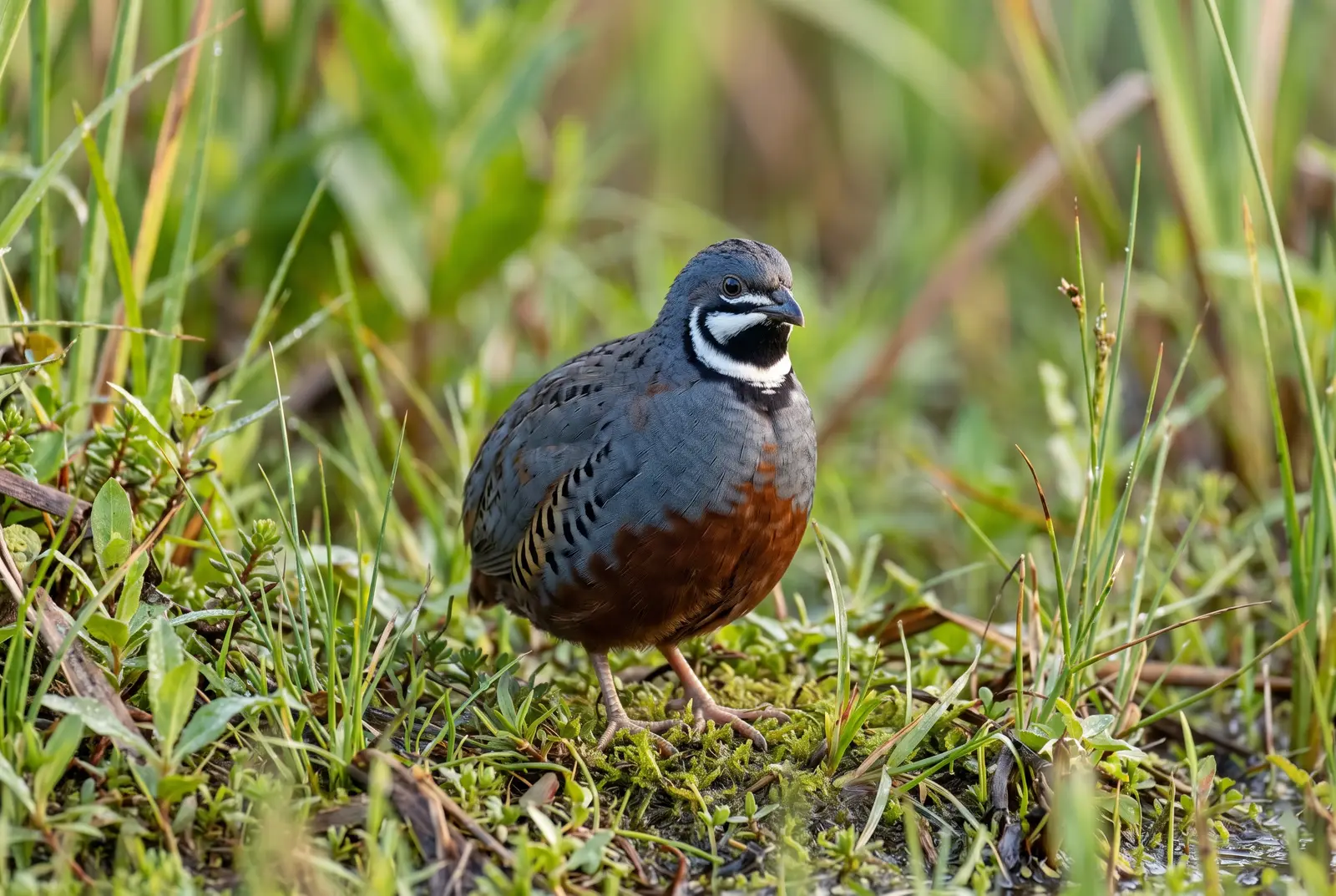
- The smallest of all gallinaceous birds, an adult measures just 12–14 cm and weighs around 28–40 g. The male is strikingly marked in slate blue-grey with a rich chestnut belly and a bold black-and-white throat pattern, while the female is a cryptic brown, finely barred to blend into the grass.
- Habitat
- It favours damp meadows, grassy plains, the margins of rice paddies and wetlands with dense low vegetation, staying hidden close to the ground.
- Diet
- It feeds mainly on small grass and weed seeds, supplemented with insects, larvae and other tiny invertebrates; chicks rely largely on animal food at first.
- Reproduction
- The nest is a shallow ground scrape lined with grass. The female lays 5–13 small eggs and incubates them for about 16–18 days. The chicks are precocial, leaving the nest soon after hatching to feed themselves.
- Lifespan
- In human care it usually lives 3–6 years, and generally less in the wild.
- Did you know?
- Despite its tiny size, the king quail is a favourite in aviaries, where it is often kept with larger birds and acts as a "cleaner", picking up seeds that fall to the ground.
Homeland & habitat
Where the smallest of all gallinaceous birds lives
Spin the globe to see where the species comes from and where it lives today.
South and Southeast Asia to AustraliaLives in grasslands and wetlands from India across Southeast Asia to northern and eastern Australia.
Loading globe…
Native range
Drag to rotate · double-click to recentre on the homeland
10 facts about the smallest of all gallinaceous birds
The cards keep rotating — hover with your mouse to pause them.
- GroupBirdsHrabaví (Galliformes) · Bažantovití (Phasianidae)
- Scientific namesynoicus chinensisLatin name of the species
- Homeland & habitatObývá vlhké louky, travnaté pláně, okraje rýžových polí a mokřady s hustým nízkým bylinným porostem, kde se zdržuje skrytě při zemi.
- DietŽiví se převážně drobnými semeny trav a bylin, která doplňuje o hmyz, larvy a další drobné bezobratlé; kuřata potřebují zpočátku hlavně živočišnou potravu.
- ReproductionHnízdí na zemi v mělké jamce vystlané trávou. Samice snáší 5–13 drobných vajíček a sedí na nich přibližně 16–18 dní. Kuřata jsou prekociální – krátce po vylíhnutí opouštějí hnízdo a sama si hledají potravu.
- LifespanV lidské péči se obvykle dožívá 3–6 let, ve volné přírodě zpravidla méně.
- Conservation statusLeast ConcernAccording to the IUCN Red List
- Did you know…?Přestože jde o drobného ptáka, křepelka čínská je mezi chovateli oblíbená – často se vypouští do voliér s většími ptáky, kde jako „uklízečka“ sbírá ze země spadlá semínka.
- Where in the zooArea A — aviaries and exhibits
- How many we keep♂ 1 · ♀ 1total: 2
Conservation status
Species vulnerability index
Least Concern
Near Threatened
Vulnerable
Endangered
Critically Endangered
Support the care of our animals
A symbolic adoption contributes to feeding, veterinary care and the development of the exhibits — and you get a certificate and updates about your animal.
Browse adoptions