Birds
Sýček obecný
athene noctua
IUCN Red ListLeast Concern
Audio guide
Listen to the story of this animal
0:000:00
Sýček obecný
- Description
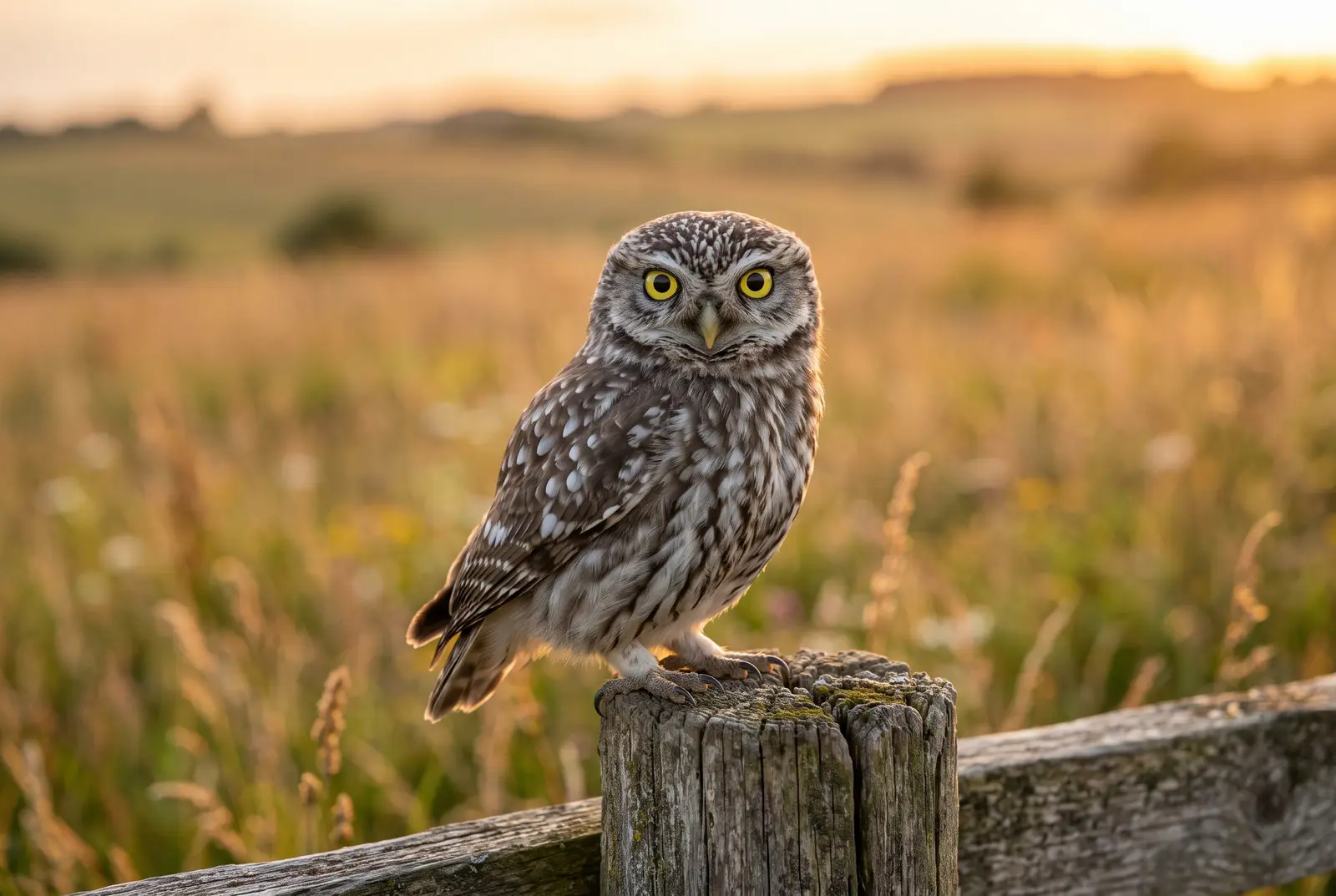
- A small, compact owl 21–23 cm long, with a wingspan of 54–58 cm and a weight of 160–250 g. It has a flat-topped head without ear tufts, piercing yellow eyes and greyish-brown plumage speckled with white. Often active in daylight, it bobs and swivels its head when curious or alarmed.
- Habitat
- Open countryside — pastures, orchards, steppe, semi-desert and the edges of human settlements across Europe, North Africa and temperate Asia.
- Diet
- Insects, earthworms, small rodents, lizards and small birds.
- Reproduction
- Nests in tree holes, walls and burrows; the female lays 3–5 eggs, incubated for about 28–29 days.
- Lifespan
- 3–5 years in the wild, up to 15 years in captivity.
- Did you know?
- In Greek mythology the little owl was the sacred bird of Athena, goddess of wisdom — a link preserved in its scientific name, Athene noctua.
Homeland & habitat
Where the sýček obecný lives
Spin the globe to see where the species comes from and where it lives today.
Europe, North Africa and AsiaThe little owl inhabits open countryside, pastures and orchards across Europe, North Africa and temperate Asia.
Loading globe…
Native rangeIntroduced / also today
Drag to rotate · double-click to recentre on the homeland
10 facts about the sýček obecný
The cards keep rotating — hover with your mouse to pause them.
- GroupBirdsStrigiformes (sovy) · Strigidae (sovy pravé)
- Scientific nameathene noctuaLatin name of the species
- Homeland & habitatOtevřená krajina — pastviny, sady, stepi, polopouště a okraje lidských sídel v Evropě, severní Africe a mírném pásu Asie.
- DietHmyz, žížaly, drobní hlodavci, ještěrky a menší ptáci.
- ReproductionHnízdí v dutinách stromů, ve zdech a norách; samice snáší 3–5 vajec, inkubace trvá zhruba 28–29 dní.
- LifespanV přírodě 3–5 let, v zajetí až 15 let.
- Conservation statusLeast ConcernAccording to the IUCN Red List
- Did you know…?V české lidové pověře byl sýček zlověstným poslem smrti — věřilo se, že jeho noční volání ohlašuje úmrtí; odtud pochází i výraz „sýčkovat“.
- Where in the zooArea A — aviaries and exhibits
- How many we keep♂ 1 · ♀ 0total: 1
Conservation status
Species vulnerability index
Least Concern
Near Threatened
Vulnerable
Endangered
Critically Endangered
Support the care of our animals
A symbolic adoption contributes to feeding, veterinary care and the development of the exhibits — and you get a certificate and updates about your animal.
Browse adoptions