Reptiles
Pond slider
Trachemys scripta
IUCN Red ListLeast Concern
Pond slider
- Description
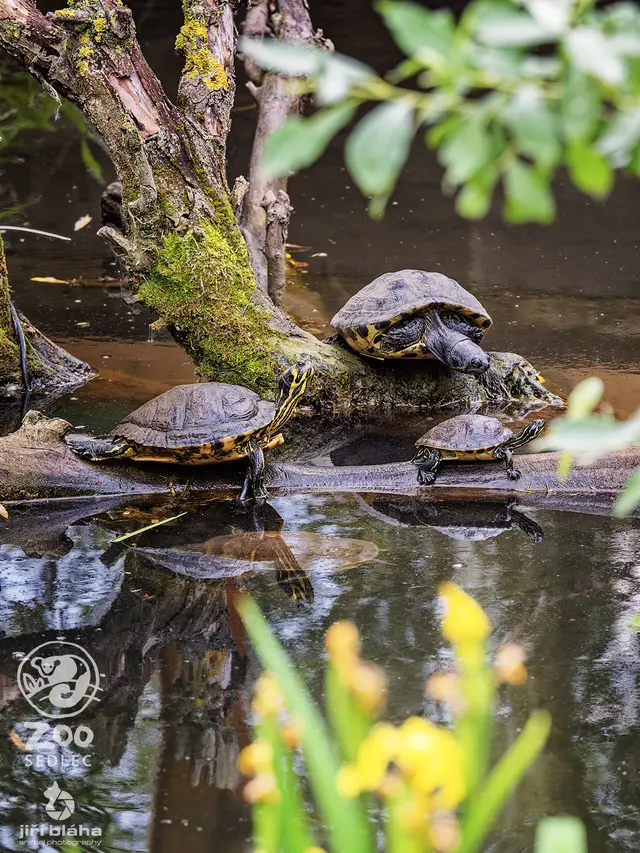
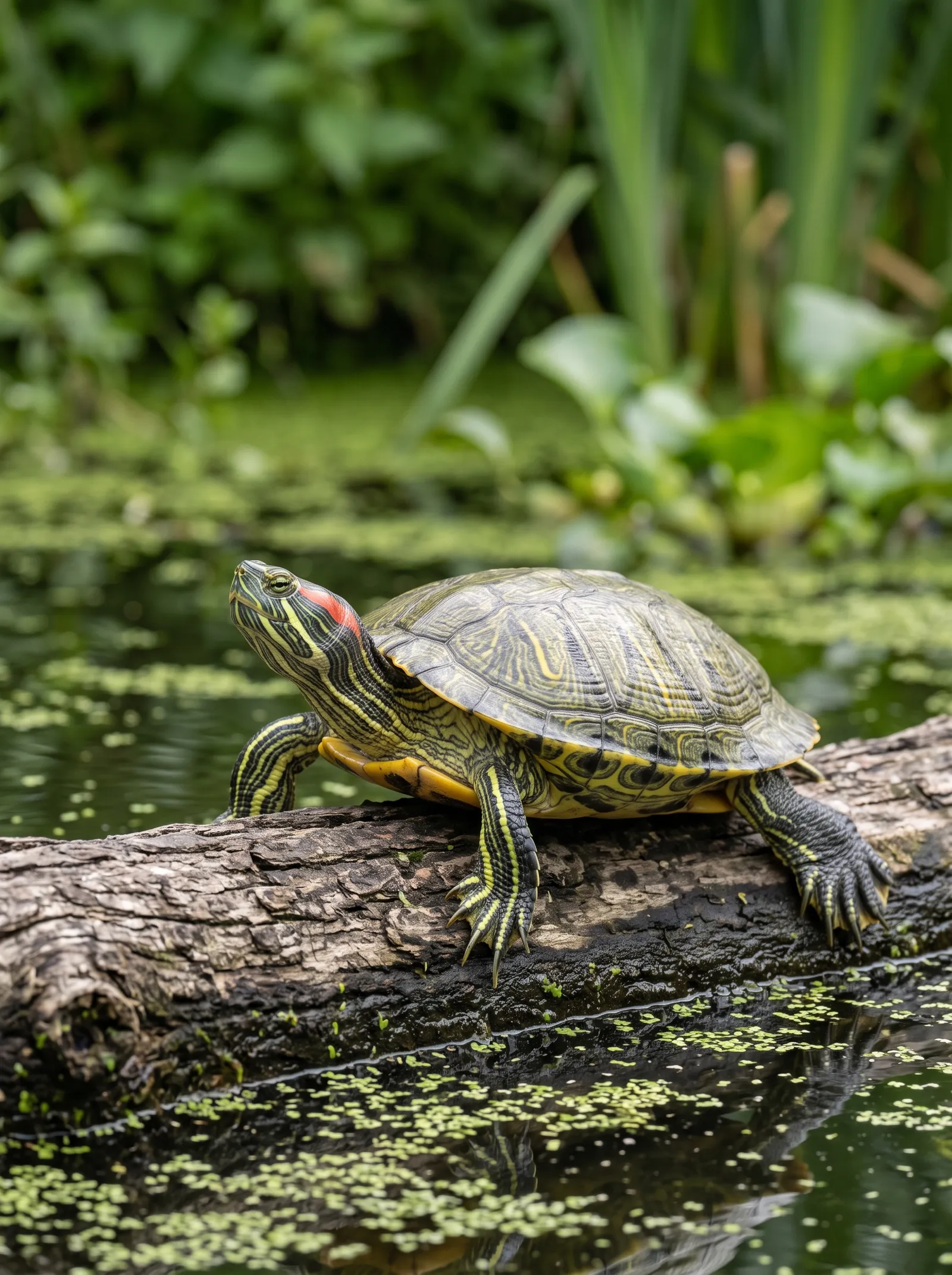
- A freshwater turtle with an oval, fairly flat shell 12–30 cm long; females are markedly larger than males, which in turn have strikingly long claws on the front feet. Yellow veining marks the olive-green shell, and behind the eye sits a bold patch — red, yellow or orange depending on the subspecies.
- Habitat
- Native to the south-eastern United States and northern Mexico, where it inhabits still and slow-flowing water with a muddy bottom, dense vegetation and plenty of basking spots. Released from captivity, it has spread across practically the whole world.
- Diet
- The young are largely carnivorous, hunting aquatic insects, tadpoles and crustaceans. With age they shift to plant food — water plants and algae. Adults are omnivorous.
- Reproduction
- The female lays two to three clutches a year, each of 5–20 eggs, in a hollow dug on the bank. Incubation takes 60–75 days and the temperature in the nest decides the sex of the young — cooler clutches produce males, warmer ones females.
- Lifespan
- 20–30 years, over 40 with good care.
- Did you know?
- It loves to bask on logs and stones, and when space is short the turtles pile up on one another three deep. In the European Union it is listed as an invasive alien species — releasing it into the wild is prohibited, because it displaces the native European pond turtle.
Homeland & habitat
Where the pond slider lives
Spin the globe to see where the species comes from and where it lives today.
South-eastern USA and northern MexicoNative to still waters of the south-eastern USA and northern Mexico, it has spread worldwide after being released from captivity and is listed in the European Union as an invasive alien species.
Loading globe…
Native rangeIntroduced / also today
Drag to rotate · double-click to recentre on the homeland
10 facts about the pond slider
The cards keep rotating — hover with your mouse to pause them.
- GroupReptilesŽelvy (Testudines) · Emydovití (Emydidae)
- Scientific nameTrachemys scriptaLatin name of the species
- Homeland & habitatPůvodem z jihovýchodu Spojených států a severního Mexika, kde obývá klidné a pomalu tekoucí vody s bahnitým dnem, hustou vegetací a dostatkem vyhřívacích míst. Vypouštěním z chovů se rozšířila prakticky po celém světě.
- DietMláďata jsou převážně masožravá a loví vodní hmyz, pulce a korýše. S přibývajícím věkem přecházejí na rostlinnou stravu — vodní rostliny a řasy. Dospělci jsou všežraví.
- ReproductionSamice klade dvě až tři snůšky ročně, každou o 5–20 vejcích, do jamky vyhrabané na břehu. Inkubace trvá 60–75 dní a o pohlaví mláďat rozhoduje teplota v hnízdě — z chladnějších snůšek se líhnou samci, z teplejších samice.
- Lifespan20–30 let, při dobré péči i přes 40 let.
- Conservation statusLeast ConcernAccording to the IUCN Red List
- Did you know…?Ráda se vyhřívá na kmenech a kamenech, a když je míst málo, leze jedna přes druhou i ve třech patrech. V Evropské unii je vedena mezi invazními nepůvodními druhy — vypouštět ji do přírody je zakázané, protože vytlačuje původní želvu bahenní.
- Where in the zooArea A — the reptile house
- How many we keep♂ 5 · ♀ 5total: 10
Conservation status
Species vulnerability index
Least Concern
Near Threatened
Vulnerable
Endangered
Critically Endangered
Podle IUCN málo dotčený druh (Least Concern). V Evropské unii je zařazena na seznam invazních nepůvodních druhů s významným dopadem.
Support the care of our animals
A symbolic adoption contributes to feeding, veterinary care and the development of the exhibits — and you get a certificate and updates about your animal.
Browse adoptions