Birds
Red-and-green macaw
Ara chloropterus
IUCN Red ListLeast Concern
Red-and-green macaw
- Description
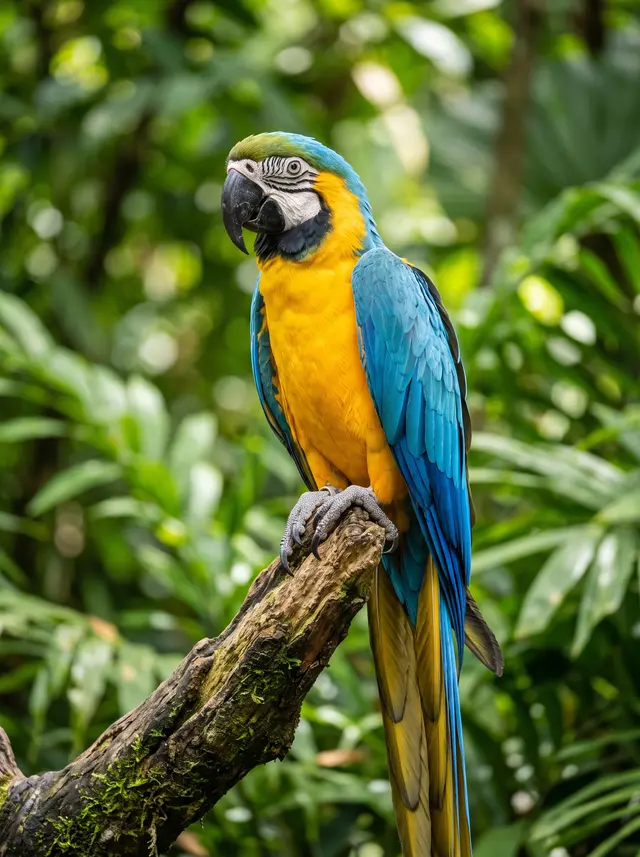
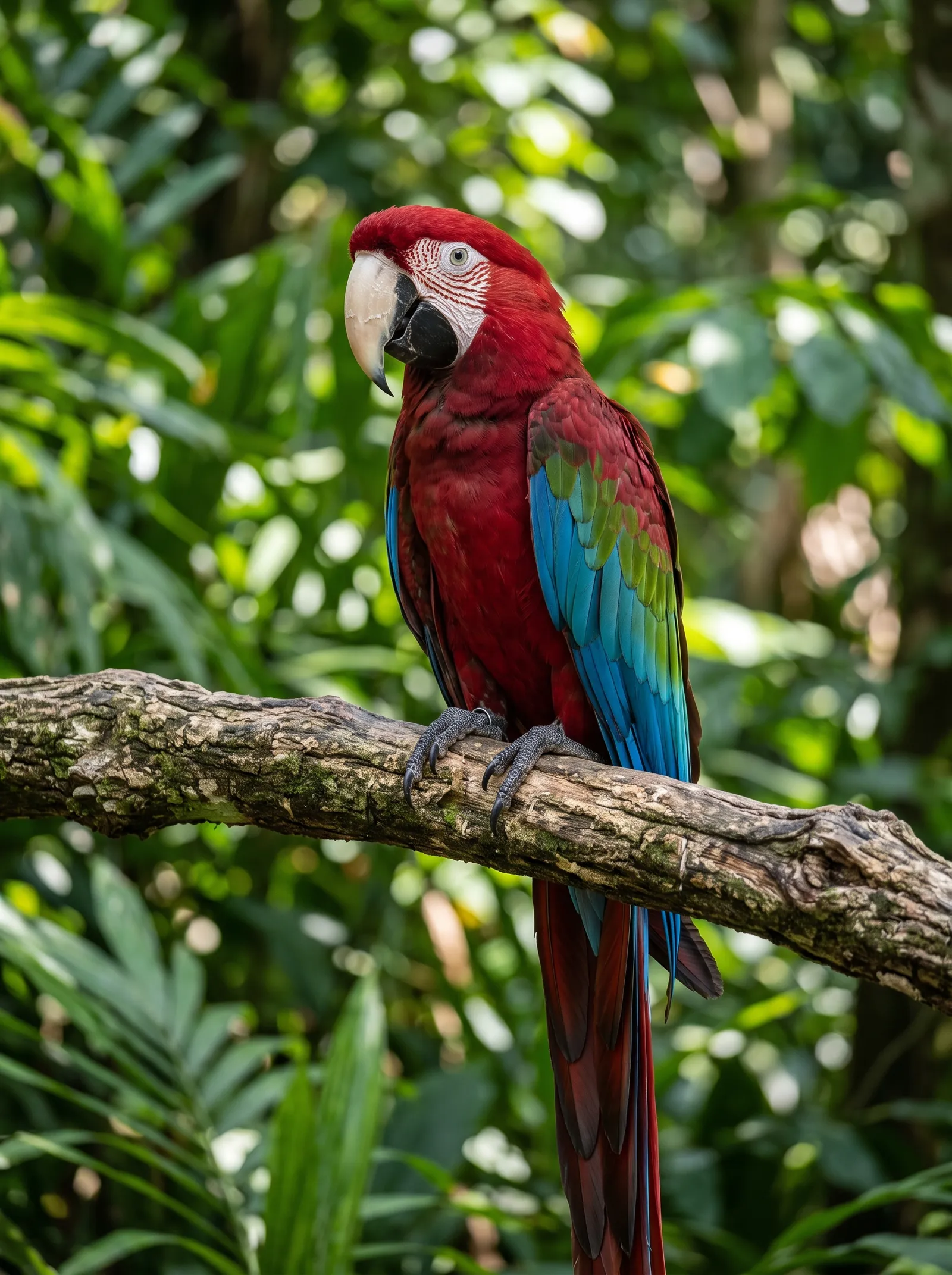
- After the hyacinth macaw the second largest parrot in the world, measuring 90–95 cm and weighing 1.0–1.7 kg. The body is deep crimson, a broad green band runs across the wings and is followed by cobalt-blue flight feathers. The bare white cheeks are marked with fine lines of tiny red feathers, and that pattern is different in every single bird.
- Habitat
- Lowland tropical rainforest and gallery forest of northern and central South America, from Panama through Colombia and Venezuela to Brazil, Bolivia and Paraguay. It keeps to the canopy and seeks out clay banks along rivers.
- Diet
- Seeds, nuts, fruit and flowers. Its massive bill cracks even Brazil nuts, which few other birds attempt. It regularly visits clay river banks and eats the soil for minerals that help neutralise the plant toxins in unripe seeds.
- Reproduction
- A monogamous species whose pairs stay together for life. It nests in high tree cavities or rock crevices, lays 2–3 eggs and the female incubates them for 26–28 days. The young leave the nest after about three months but their parents accompany them for another year.
- Lifespan
- 50–60 years in the wild, often longer in human care.
- Did you know?
- Partners fly so close together that their wings almost touch, and even after years they still feed and preen one another. The feather pattern on the bare face is unique to each bird and keepers use it to tell individuals apart.
Homeland & habitat
Where the red-and-green macaw lives
Spin the globe to see where the species comes from and where it lives today.
Tropical South AmericaIt inhabits lowland rainforest and gallery forest from Panama across the Amazon basin to northern Argentina, keeping to the canopy and seeking out clay banks along rivers.
Loading globe…
Native range
Drag to rotate · double-click to recentre on the homeland
9 facts about the red-and-green macaw
The cards keep rotating — hover with your mouse to pause them.
- GroupBirdsPapoušci (Psittaciformes) · Papouškovití (Psittacidae)
- Scientific nameAra chloropterusLatin name of the species
- Homeland & habitatNížinné tropické deštné a galeriové lesy severní a střední Jižní Ameriky, od Panamy přes Kolumbii a Venezuelu po Brazílii, Bolívii a Paraguay. Drží se korun stromů a v okolí řek vyhledává hliněné stěny.
- DietSemena, ořechy, plody a květy. Mohutným zobákem rozlouskne i tvrdé skořápky para ořechů, na které si většina ptáků netroufne. Pravidelně navštěvuje jílovité říční stěny a hlínu požírá kvůli minerálům, které pomáhají neutralizovat rostlinné jedy z nezralých semen.
- ReproductionMonogamní druh, pár drží pohromadě celý život. Hnízdí ve vysokých dutinách stromů nebo ve skalních výklencích, snůška má 2–3 vejce a sedí na nich 26–28 dní samice. Mláďata opouštějí hnízdo zhruba po třech měsících, ale rodiče je doprovázejí ještě další rok.
- LifespanVe volné přírodě 50–60 let, v lidské péči se dožívá i více.
- Conservation statusLeast ConcernAccording to the IUCN Red List
- Did you know…?Partneři spolu létají tak těsně, že se jejich křídla téměř dotýkají, a i po letech se navzájem krmí a probírají peří. Kresba pírek na holé tváři je u každého ptáka jedinečná a chovatelé podle ní jednotlivce rozeznávají.
- Where in the zooArea A — aviaries and exhibits
Conservation status
Species vulnerability index
Least Concern
Near Threatened
Vulnerable
Endangered
Critically Endangered
Podle IUCN málo dotčený druh (Least Concern), místy ale ubývá kvůli mizení pralesa a odchytu pro obchod se zvířaty.
Support the care of our animals
A symbolic adoption contributes to feeding, veterinary care and the development of the exhibits — and you get a certificate and updates about your animal.
Browse adoptions