Birds
Spectacled owl
Strix nebulosa
IUCN Red ListLeast Concern
Audio guide
Listen to the story of this animal
0:000:00
Spectacled owl
- Description
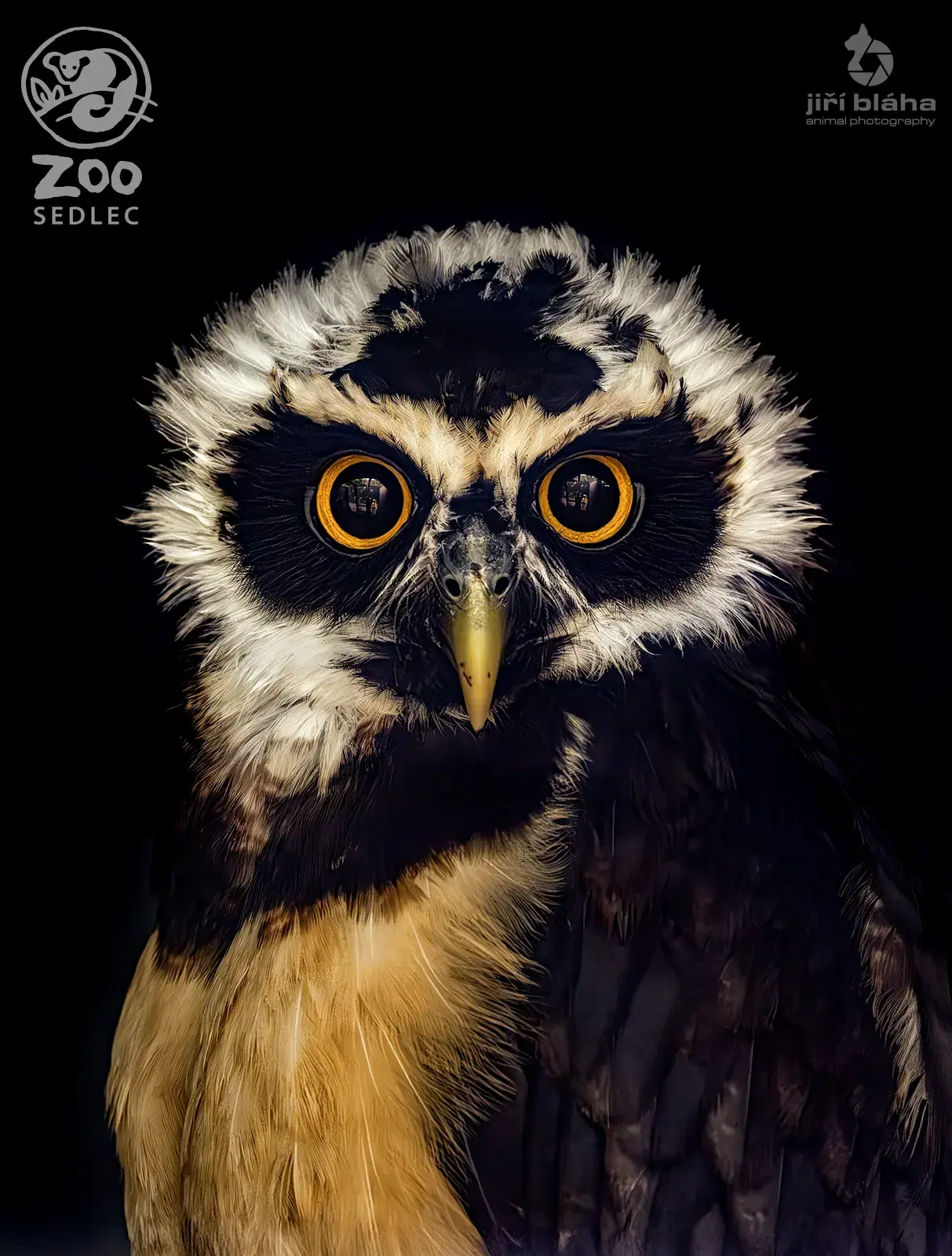
- They grow to approximately 46 cm and weigh approximately 850 g. They have very distinctive coloration, being mostly black-brown with a yellow-brown belly and a striking white pattern on their face that looks strikingly like spectacles.
- Habitat
- Throughout the year, they mainly inhabit old forest stands in Central and South America, ranging from southern Mexico and Trinidad and Tobago to southern Brazil, Paraguay, and northwestern Argentina.
- Diet
- They feed mainly on rodents, small birds, amphibians, and mammals.
- Reproduction
- They lay two eggs, which they brood for 35 days.
- Did you know?
- The males call out with a peculiar voice that resembles the tapping of a hammer on a dry branch. The voice of the female is a shrill scream.
Homeland & habitat
Where the spectacled owl lives
Spin the globe to see where the species comes from and where it lives today.
Holarctic boreal forestsThe great grey owl (Strix nebulosa) inhabits dense coniferous and mixed boreal forests stretching from Scandinavia across Siberia to Alaska and Canada.
Loading globe…
Native range
Drag to rotate · double-click to recentre on the homeland
10 facts about the spectacled owl
The cards keep rotating — hover with your mouse to pause them.
- GroupBirdsStrigiformes (sovy) · Strigidae (sovy pravé)
- Scientific nameStrix nebulosaLatin name of the species
- Homeland & habitatHusté smíšené a jehličnaté lesy severní Evropy, Sibiře a Severní Ameriky.
- DietMalí a středně velcí savci
- Reproductionsnáší 2–4 vejce, inkubace trvá asi 28–34 dní
- LifespanV přírodě 15–20 let, v zajetí až 25 let.
- Conservation statusLeast ConcernAccording to the IUCN Red List
- Did you know…?Je pojmenován podle světlých „brýlových“ znaků kolem očí, které mu dodávají výrazný a charakteristický vzhled.
- Where in the zooArea A — aviaries and exhibits
- How many we keep♂ 1 · ♀ 1total: 2
Conservation status
Species vulnerability index
Least Concern
Near Threatened
Vulnerable
Endangered
Critically Endangered
LC – málo dotčený (Least Concern) podle IUCN
Adopting the spectacled owl helps far beyond the zoo
A symbolic adoption contributes to feeding, veterinary care and the development of the exhibits — and you get a certificate and updates about your animal.
Adopt: Spectacled owl